Tillandsia Bulbosa
Tillandsia Bulbosa is a striking epiphytic air plant known for its glossy, snaking leaves that twist out from a smooth, hollow bulb-like base (Tillandsia bulbosa).
Last reviewed: September 2026
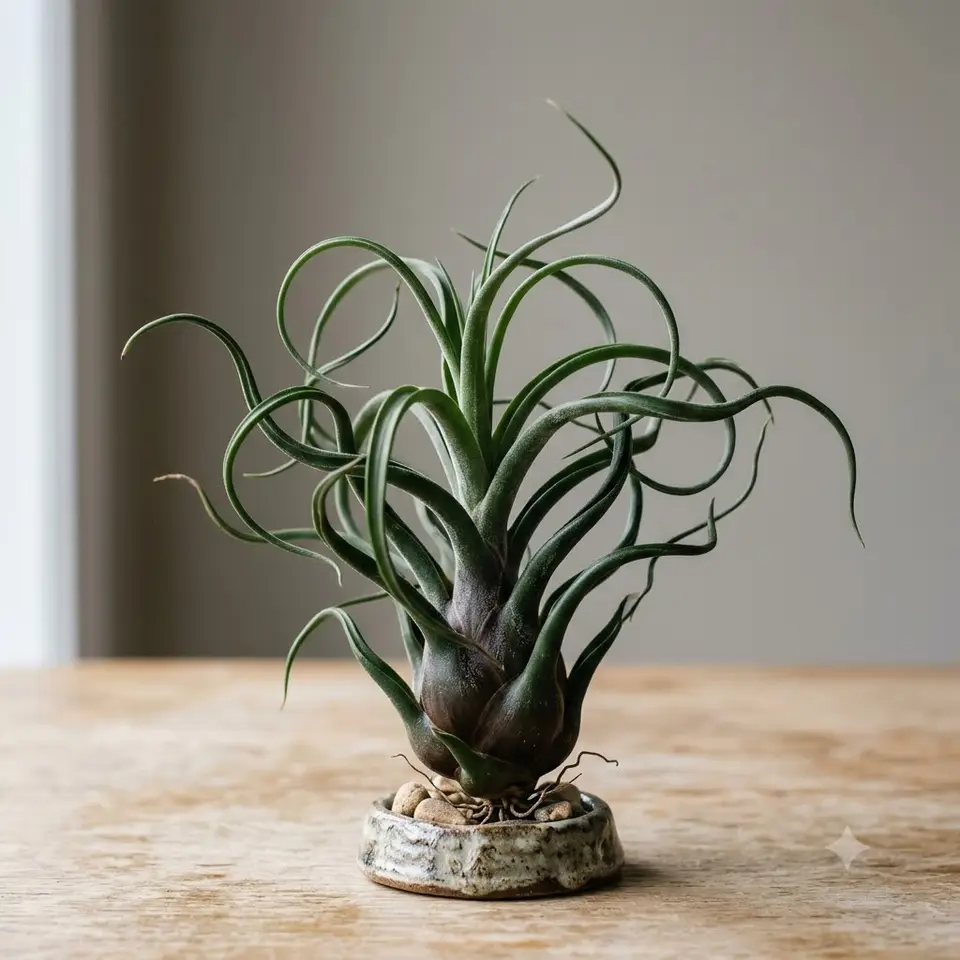 AI illustration
 Overview
Tillandsia Bulbosa is a striking epiphytic air plant known for its glossy, snaking leaves that twist out from a smooth, hollow bulb-like base (Tillandsia bulbosa). Unlike the silvery, desert-adapted air plants, it is a greener, moisture-loving species that grows entirely without soil. Its almost sea-creature appearance makes it a favourite among collectors who want something that looks alive and animated on a shelf.
Origin & Natural Habitat
Tillandsia bulbosa is native to the warm, humid regions of the Neotropics, ranging from southern Mexico and Central America through the Caribbean and into northern South America, including Brazil, Ecuador, and Colombia. In the wild it grows as an epiphyte, clinging to tree branches and trunks in humid lowland and montane forests rather than rooting in the ground. Its hollow base is often colonised by ants in nature, a mutual relationship that gives it its reputation as an "ant plant."
Appearance
The plant forms a rounded, bulbous base a couple of centimetres across, from which several narrow, tubular leaves emerge and curl outward in loose, tentacle-like coils. Leaves are typically deep green, sometimes flushed with maroon or purple, and have a smooth, almost waxy surface with relatively few of the silvery scales seen on desert air plants. A mature plant usually reaches around 10 to 20 cm tall and wide, staying compact. When it prepares to bloom, the upper leaves and bracts blush bright red or purple, followed by a slender tubular violet flower.
Why People Grow It - Qualities & Benefits
- Sculptural, animated form that looks more like a small sea anemone than a typical houseplant
- Grows completely soil-free, so it can be displayed in ways ordinary plants cannot
- Compact size fits on desks, shelves, and small display pieces
- Dramatic colour change and vivid bloom when it flowers, rewarding patient growers
Care
Light: Bright, indirect light. A spot near an east or north window, or a metre or two back from a brighter window, is ideal. Avoid harsh direct midday sun, which can scorch and dry it out too fast.
Water: Soak the whole plant in room-temperature water for 20 to 30 minutes about once a week, and mist lightly between soaks in dry rooms. Air plants absorb water through their leaves, not through roots, so misting alone is not enough to keep them hydrated. After every soak, shake off excess water and set the plant upside-down to dry fully within a few hours, since water trapped in the bulbous base is the number one cause of rot.
Mounting: No soil, ever. Display it mounted on driftwood, cork bark, rock, or a shell, tucked into a wire frame, or resting loose in a shallow bowl. Never plant it in dirt or leave it sitting in a pot of moist medium, as the base will rot.
Temperature & Humidity: Warm conditions between roughly 15 and 29°C suit it best, with moderate to high humidity and, crucially, good airflow so it dries quickly after watering. Keep it away from cold draughts and frost.
Feeding: Feed once a month by adding a dilute bromeliad or air-plant fertiliser to the soak water. Use it at quarter to half the recommended strength, as too much can burn the leaves.
Extra: The make-or-break factor is drying, not watering. Always dry the plant upside-down and never let moisture pool in the hollow base. Non-toxic to cats and dogs - a pet-safe plant.
Propagation
Tillandsia bulbosa propagates through offsets, commonly called pups, which form around the base after the plant has flowered. Once a pup reaches about a third to a half of the parent's size, you can gently twist or cut it away, or simply leave the pups attached to grow into a natural cluster. Each parent plant flowers only once, then slowly declines while its pups take over, so keeping the pups is the way to maintain your plant for years.
Common Problems & Pests
- Rot: a browning, mushy, or falling-apart base caused by water trapped after soaking or poor airflow
- Dehydration: exaggerated leaf curling, browning tips, and a dull, wrinkled look from too little real soaking
- Scale or mealybugs: occasional sap-sucking insects that can be rinsed or wiped off during a soak
Toxicity & Safety
Tillandsia bulbosa is non-toxic to cats and dogs, making it one of the safer plants to keep in a home with curious pets. It contains no known toxic compounds that pose a poisoning risk if a leaf is nibbled. As with any plant, it is not intended to be eaten, and any fertiliser used on it should be kept away from pets and children, but the plant itself is considered pet-safe.
Pros & Cons
Pros
- Genuinely eye-catching, sculptural shape unlike common houseplants
- Pet-safe, soil-free, and compact enough for almost any space
Cons
- Rots easily if the base stays wet or airflow is poor
- Needs proper weekly soaking, not just casual misting, so it is not truly hands-off
Best Suited For
- Collectors who want an unusual, statement air plant with personality
- Pet owners looking for a safe, low-footprint plant they can display creatively
FAQ
Do I really need to soak it, or is misting enough?
Misting alone will slowly starve it of water. A proper 20 to 30 minute soak once a week is what keeps it hydrated, with light misting only as a top-up between soaks in dry air.
Why is my Tillandsia Bulbosa falling apart at the base?
That is almost always rot from trapped water. Make sure you dry it upside-down after every soak, keep water out of the hollow base, and give it good airflow so it dries within a few hours.
Gear for growing tillandsia bulbosa
Links go to Amazon or a partner store (such as Adagio Teas) and may earn us a commission at no extra cost to you. As an Amazon Associate we earn from qualifying purchases. We link gear types, not sponsors' picks: you choose the exact product.