Tillandsia Streptophylla
Tillandsia Streptophylla is a soft-leaved, xeric air plant famous for the dramatic curl of its foliage, which tightens into loose ringlets as the plant dries out (Tillandsia streptophylla).
Last reviewed: September 2026
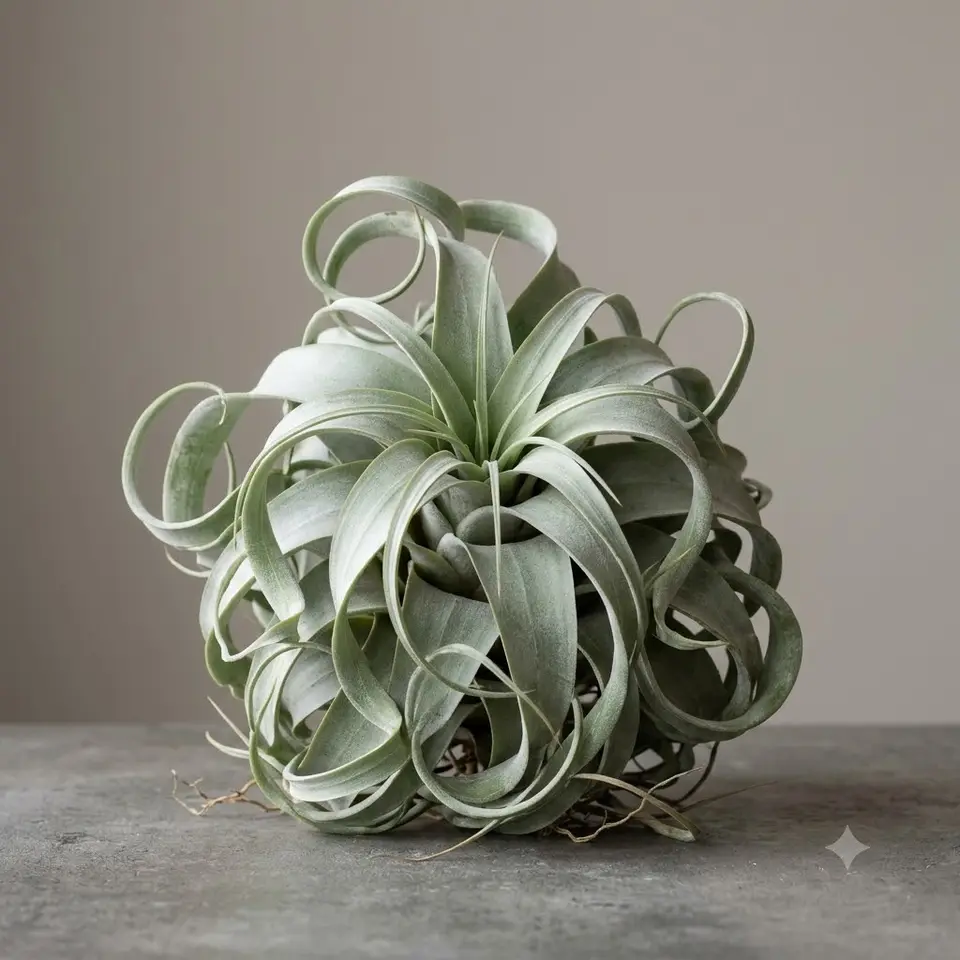 AI illustration
 Overview
Tillandsia Streptophylla is a soft-leaved, xeric air plant famous for the dramatic curl of its foliage, which tightens into loose ringlets as the plant dries out (Tillandsia streptophylla). It grows entirely without soil, drawing moisture and nutrients through tiny scales on its leaves, and it earns its nickname "Shirley Temple" from those curly locks. It is a rewarding collector plant that reads more like living sculpture than a potted houseplant.
Origin & Natural Habitat
This species is native to southern Mexico and parts of Central America, including Guatemala, Honduras and Belize, with populations also recorded in the Caribbean. In the wild it grows as an epiphyte, clinging to tree branches and rocky outcrops in warm, seasonally dry forests. It thrives on bright light, moving air and cycles of wet and dry, rather than constant moisture, which is the key to keeping it happy indoors.
Appearance
The plant forms a bulbous, hollow base that tapers into broad, tapering leaves covered in silvery-grey trichomes (the fuzzy scales that absorb water). When the plant is dry the leaves curl tightly into corkscrew-like ringlets; after a good soak they relax and open out, so the shape visibly shifts with hydration. Mature size is roughly 15 to 30 cm across depending on conditions, and colour ranges from soft silver-green to a blush of pink and lavender when it approaches blooming, when it can send up a bright red-and-purple flower spike.
Why People Grow It - Qualities & Benefits
- Living sculpture: the curling leaves give it a bold, architectural silhouette unlike any potted plant.
- No pot, no soil, no mess - it can be displayed almost anywhere there is light and airflow.
- The leaves visibly change shape with watering, so the plant is interactive and fun to observe.
- A spectacular pink blush and colourful bloom reward patient growers, followed by pups.
Care
Light: Bright, indirect light. A spot near an east or west window, or a well-lit position out of harsh midday sun, keeps the silver colour strong. Too little light leaves it green and floppy; scorching direct sun can bleach or burn the leaves.
Water: Soak the whole plant in room-temperature water for 20 to 30 minutes about once a week, and mist lightly between soaks in dry rooms. Air plants take up water through their leaves, not roots, so misting alone is not enough - a real soak is essential. Just as important, shake off excess water and let it dry fully upside-down for a few hours after each soak; water trapped in the bulbous base is the number-one cause of rot.
Mounting: Never plant it in soil - roots, if any, are only anchors. Display it mounted on driftwood, cork bark, rock or a shell, rested in a shallow bowl, or simply set on a shelf. Keep the base open to airflow so it can dry.
Temperature & Humidity: Warm conditions of roughly 15 to 30°C suit it best; protect it from frost and cold draughts. It appreciates moderate humidity but prizes good airflow even more - stagnant, humid air encourages rot.
Feeding: Feed monthly during the growing season by adding a dilute bromeliad or air-plant fertiliser to the soak water at about quarter strength. Do not overfeed, and never use undiluted houseplant feed.
Extra: The make-or-break habit is drying. Always soak, then invert the plant and let the hollow base drain and dry completely before returning it to display - a wet base rots from the inside out. Non-toxic to cats and dogs - a pet-safe plant.
Propagation
After flowering, the mother plant produces offsets known as pups from around its base. Leave each pup attached until it reaches roughly one third to one half the size of the parent, then gently twist it free, or leave the pups in place to form a natural clump. The original plant slowly declines after blooming, which is normal, but its pups carry on.
Common Problems & Pests
- Rot: a mushy, dark or collapsing base means water sat in the plant - improve drying and airflow.
- Dehydration: leaves that curl hard, wrinkle or develop brown crispy tips signal it needs longer, more frequent soaks.
- Mealybugs or scale can occasionally hide between the leaves; treat by rinsing and dabbing pests with diluted alcohol.
Toxicity & Safety
Tillandsia Streptophylla is non-toxic to cats and dogs - air plants are pet-safe, so a curious nibble will not poison a pet. It contains no known toxic compounds. As with any plant, it is not food and neither the plant, its mounting material, nor fertiliser should be eaten by pets or people.
Pros & Cons
Pros
- Striking, sculptural form that needs no pot or soil.
- Genuinely pet-safe and non-toxic to cats and dogs.
Cons
- Unforgiving of a wet base - rot happens fast if it stays damp.
- Needs true weekly soaking, not just casual misting, so it is not zero-effort.
Best Suited For
- Collectors who enjoy air plants and want a bold, statement specimen.
- Pet households wanting a safe, low-footprint plant for a bright, airy spot.
FAQ
Why are the leaves curling up more than usual?
Tight curling is the plant telling you it is thirsty. The leaves ringlet as they dry and relax again after a good 20 to 30 minute soak, so extra curl usually means it is time to water.
Can I just mist it instead of soaking?
Not reliably. Misting can supplement humidity, but this species needs a proper weekly soak to take up enough water through its leaves. Skip soaking and it slowly dehydrates; skip drying afterward and it rots - both steps matter.
Gear for growing tillandsia streptophylla
Links go to Amazon or a partner store (such as Adagio Teas) and may earn us a commission at no extra cost to you. As an Amazon Associate we earn from qualifying purchases. We link gear types, not sponsors' picks: you choose the exact product.