Totem Pole Cactus
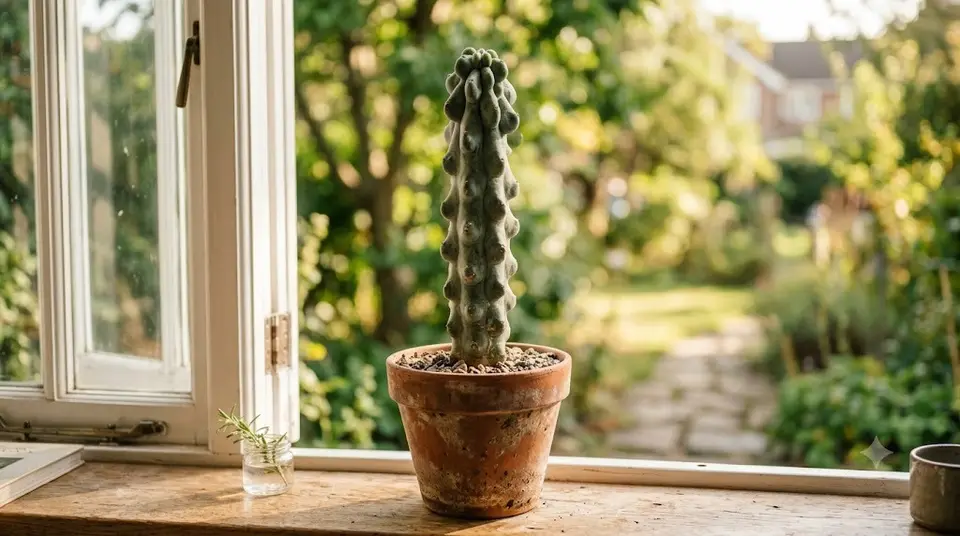
The totem pole cactus is a smooth, spineless, sculptural column covered in soft, knobbly bumps that look carved by hand - like a weathered totem.
Last reviewed: October 2026
 AI illustration
 Overview
The totem pole cactus is a smooth, spineless, sculptural column covered in soft, knobbly bumps that look carved by hand - like a weathered totem. With no spines to speak of and a slow, statuesque habit, it is one of the most hand-friendly and architectural cacti you can grow for a bright spot.
Origin & Natural Habitat
The totem pole is a monstrose (mutant) form of Pachycereus schottii, a columnar cactus from Baja California and northwestern Mexico. The knobbly, spineless 'totem' form is a selected mutation grown from cuttings, as it does not come true from seed.
Appearance
An upright, smooth, spineless green-grey column with a lumpy, bumpy, irregularly ridged surface, as if carved or eroded into a totem. It grows slowly and statuesquely, branching occasionally with age. Because it is spineless and soft-surfaced, it is unusually pleasant and safe to handle.
Why People Love It - Qualities & Benefits
People love the smooth, spineless, sculptural surface, the hand-friendly safety (a rarity among cacti), and its slow, architectural presence. It is a living piece of desert sculpture for a bright windowsill or floor pot.
Care
Light
Bright light with several hours of direct sun keeps the column firm and well-coloured - a sunny position is ideal. Too little light gives pale, soft, stretched growth.
Watering
Soak thoroughly, then let the soil dry out completely before watering again, roughly fortnightly in summer and rarely in winter. Like all cacti it rots if kept wet, so err dry.
Soil & Potting
A gritty, free-draining cactus mix in a pot with drainage. Sharp drainage is essential to prevent rot at the base of the column.
Humidity & Temperature
Warm, dry air suits it; it dislikes humidity. Ordinary room air is fine. Keep it above about 10°C and give a cooler, drier winter rest.
Feeding
A dilute cactus feed once or twice in the growing season is plenty for this slow plant.
Repotting
Repot only every few years when pot-bound, in spring. Being spineless it is easy to handle. A tall column may need a heavier pot for stability.
Propagation
Propagated only from cuttings, since the monstrose form does not come true from seed. Cut a section of column, let the end callus for a week or so, and root it in dry gritty mix.
Common Problems & Pests
Overwatering rot at the base is the main danger. Mealybugs and scale can appear on the smooth surface. Pale, soft, stretched growth means too little light. Occasionally a branch reverts to the normal spiny form, which can be removed.
Toxicity & Safety
The totem pole cactus is not listed as toxic to people or pets, and being spineless it is one of the most hand-friendly cacti to grow - though the species does contain alkaloids, so it is still best to discourage pets from chewing it.
Pros & Cons
Pros: smooth, spineless and safe to handle, striking sculptural surface, slow and low-care, architectural presence. Cons: slow-growing, grown only from cuttings, rots if overwatered, needs good light to stay firm.
Best Suited For
A superb choice for anyone wanting an unusual, spineless, sculptural cactus for a bright windowsill or floor pot - especially those who like the cactus look without the spines.
FAQ
Does it really have no spines? Effectively none - the totem pole form is smooth and spineless, making it pleasant and safe to handle.
Can I grow it from seed? No - the knobbly totem form does not come true from seed, so it is grown from cuttings.
Gear for growing totem pole cactus
Links go to Amazon or a partner store (such as Adagio Teas) and may earn us a commission at no extra cost to you. As an Amazon Associate we earn from qualifying purchases. We link gear types, not sponsors' picks: you choose the exact product.