Philodendron Silver Sword
The Silver Sword is a climbing aroid prized for arrow-shaped leaves that carry a cool, metallic silver-blue sheen (Philodendron hastatum).
Last reviewed: October 2026
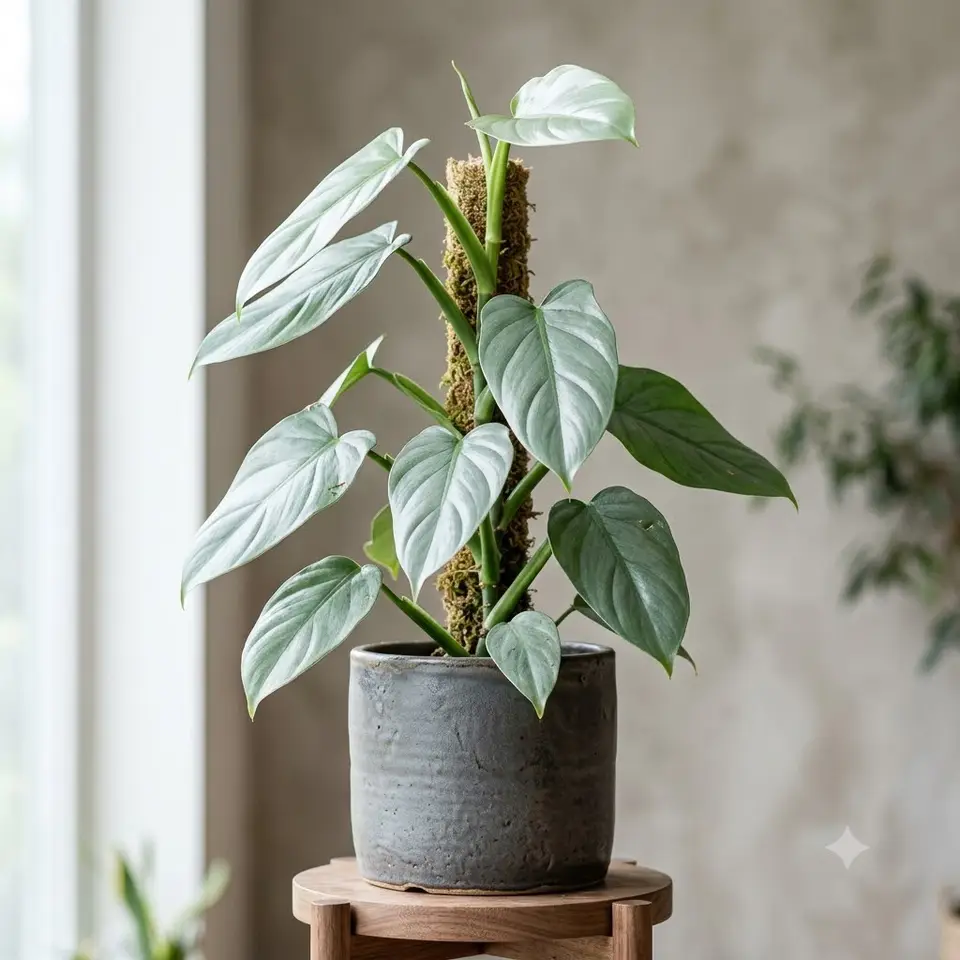 AI illustration
 Overview
The Silver Sword is a climbing aroid prized for arrow-shaped leaves that carry a cool, metallic silver-blue sheen (Philodendron hastatum). It is a vigorous vining plant that shifts dramatically in leaf shape as it matures, which is a big part of its appeal to collectors. Despite the striking look it is forgiving to grow, though the shimmer shows best in bright light and on a support.
Origin & Natural Habitat
Philodendron hastatum is native to a small area of southeastern Brazil, in the Atlantic Forest of Espirito Santo. It grows as a hemiepiphyte, rooting in the ground as a juvenile and then climbing tree trunks toward the light using aerial roots. In the wild the IUCN Red List assesses it as Least Concern, and nearly all plants in cultivation are nursery-propagated.
Appearance
Juvenile leaves are narrow and sword-like with a soft silver-grey shimmer that gives the plant its name. As it climbs and matures the foliage broadens into a more triangular, arrow-shaped (hastate) form with two lobes at the base, and the leaves can reach 30 to 45 cm long. The metallic finish is strongest on new growth and softens to a greener tone as leaves age. Given a moss pole or trellis it climbs steadily and can top 1.5 to 2 m or more indoors, sending out thick aerial roots along the stem.
Why People Grow It - Qualities & Benefits
- Unusual metallic silver-blue foliage that catches the light unlike most green houseplants
- Fast, rewarding grower that visibly gains size and leaf shape when climbing
- More forgiving than many silvery aroids, tolerating occasional lapses in watering
- A recognisable collector plant that stays reasonably priced and readily available
Care
Light: Bright, indirect light. Good light keeps the silver sheen vivid and leaves large. Avoid harsh direct midday sun, which can scorch the foliage, and avoid deep shade, which produces small dull leaves and leggy growth. Water: Water when the top 3 to 5 cm of mix feels dry, then water thoroughly and let excess drain. Keep lightly moist in the growing season but never soggy - roots rot quickly in waterlogged soil. Soil: A chunky, fast-draining aroid mix - for example potting soil loosened with orchid bark, perlite and a little coco coir or charcoal. It needs airflow around the roots and a pot with drainage holes. Temperature & Humidity: Comfortable at 18 to 27°C. Keep it above 13°C and away from cold draughts. It copes with average indoor humidity but grows fuller and faster at 50 to 60% or higher. Feeding: Feed a balanced liquid fertiliser at half strength every 3 to 4 weeks during spring and summer. Ease off in autumn and winter when growth slows. Extra: Give it a moss pole or trellis - climbing support is the single biggest factor in getting larger, better-shaped mature leaves, and it also manages the thick aerial roots. Note that this plant is toxic to cats and dogs, so keep it out of their reach.
Propagation
Propagate from stem cuttings that include at least one node (the bump where a leaf and aerial root emerge). Cut just below a node, let the cut callus for an hour, then root it in water, damp sphagnum moss or straight into a light airy mix. Keep it warm and humid and roots usually appear within a few weeks; pot up once they reach several centimetres.
Common Problems & Pests
- Root rot from overwatering or dense, water-retentive soil - the most common killer
- Loss of silver colour, small leaves and leggy stretching in low light
- Sap-sucking pests such as spider mites, thrips, mealybugs and aphids, especially in dry air
Toxicity & Safety
Toxic to cats and dogs. Like other philodendrons it contains insoluble calcium oxalate crystals throughout its leaves and stems. When an animal chews the plant these needle-like crystals are released and embed in the mouth and throat, causing intense oral irritation, drooling, pawing at the mouth, difficulty swallowing and vomiting. The same crystals irritate human skin and mouths, so wear gloves if you are sensitive and keep the plant away from pets and young children.
Pros & Cons
Pros
- Eye-catching metallic foliage that stands out from typical green houseplants
- Vigorous and satisfying to grow when given a climbing support
Cons
- Toxic to pets and people if chewed
- Needs a pole and bright light to reach its full mature, large-leaved form
Best Suited For
- Aroid collectors who want a silvery philodendron without a high price tag
- Growers who can provide a moss pole, bright indirect light and a pet-free spot
FAQ
Why is my Silver Sword losing its silver shimmer?
The metallic sheen is strongest on new growth in bright light. Older leaves naturally green up over time, but if new leaves also come in dull and small the plant likely needs brighter indirect light and a support to climb.
Do I really need a moss pole?
It will survive trailing or bushy, but it will not develop its larger, more arrow-shaped mature leaves. As a natural climber it grows best - and looks best - when it can attach and climb upward.
Sources
Pet toxicity: checked against the ASPCA Animal Poison Control Center lists of toxic and non-toxic plants for cats and dogs, genus-wide entry "Philodendron Pertusum" (Philodendron spp): toxic to cats and dogs. Lists read on 10 October 2026.
Gear for growing philodendron silver sword
Links go to Amazon or a partner store (such as Adagio Teas) and may earn us a commission at no extra cost to you. As an Amazon Associate we earn from qualifying purchases. We link gear types, not sponsors' picks: you choose the exact product.