Pig's Ear (Cotyledon orbiculata)
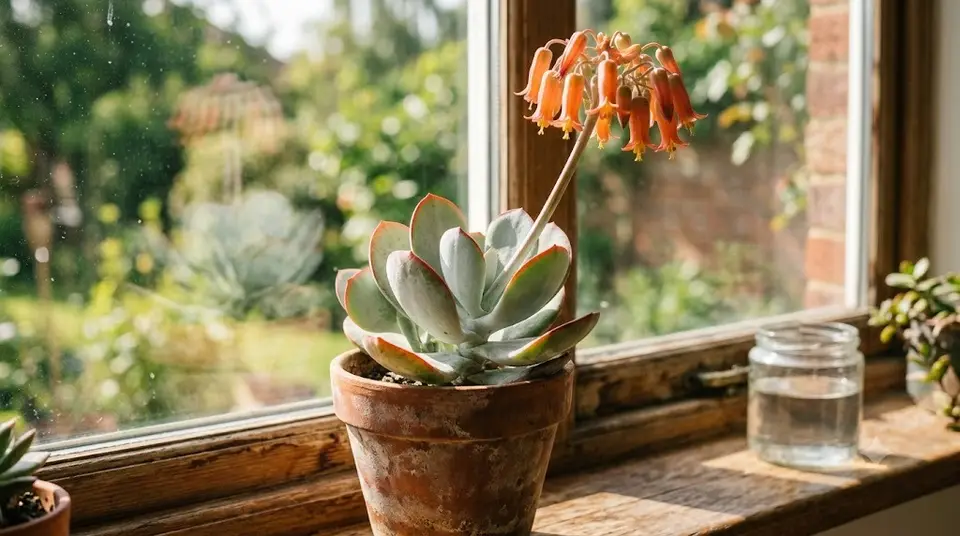
Pig's ear is a bold South African succulent named for its thick, rounded, paddle-shaped leaves - grey-green and dusted with a chalky white bloom, often edged in a fine red line.
Last reviewed: September 2026
 AI illustration
 Overview
Pig's ear is a bold South African succulent named for its thick, rounded, paddle-shaped leaves - grey-green and dusted with a chalky white bloom, often edged in a fine red line. Statuesque and drought-proof, it eventually sends up tall stems of nodding orange bell flowers. It is easy and handsome, but, like all cotyledons, toxic to pets.
Origin & Natural Habitat
Cotyledon orbiculata comes from the dry regions of South Africa, growing on rocky slopes in bright, arid conditions. The chalky bloom on its leaves is sunscreen against fierce light.
Appearance
A shrubby succulent of thick, rounded to paddle-shaped grey-green leaves coated in a powdery white bloom, frequently outlined by a thin red margin. Mature plants throw up tall flower stalks bearing clusters of nodding, tubular orange-to-red bell flowers that sunbirds visit in the wild.
Why People Love It - Qualities & Benefits
People love the sculptural grey paddles, the neat red-edged outline, and the dramatic spikes of orange bells. It is a tough, low-care statement succulent that brings soft colour and bold form to a bright spot.
Care
Light
Bright light with plenty of direct sun keeps the leaves thick, well-bloomed and red-edged and encourages flowering - a sunny windowsill is ideal. In shade it grows loose, green and floppy.
Watering
Water when the soil is fully dry, then soak and drain; the fat leaves store plenty. Water into the soil, not over the leaves (it rubs off the bloom), and keep drier in winter. It rots in constantly damp soil.
Soil & Potting
A gritty, free-draining succulent mix in a pot with drainage.
Humidity & Temperature
Warm, dry air suits it; it dislikes humidity. Ordinary dry room air is ideal; keep it above about 5°C.
Feeding
A dilute succulent feed once or twice in the growing season is ample.
Repotting
Repot every couple of years in spring as it grows, handling by the stem to preserve the chalky bloom on the leaves.
Propagation
Easy from stem or leaf cuttings: let a cutting callus for several days, then set it on gritty soil to root. Stem cuttings are the most reliable.
Common Problems & Pests
Overwatering rot is the main danger. Handling rubs off the attractive white bloom (harmless but permanent on that leaf). Mealybugs can hide in the leaf joints. Leggy, green growth means too little light.
Toxicity & Safety
Pig's ear is a cotyledon, and cotyledons contain bufadienolides that are toxic to cats, dogs, livestock and people if eaten, potentially affecting the heart. Keep it well out of reach of pets and children, and if a pet chews it, contact a vet. Enjoy this one at a safe height in a pet-aware home.
Pros & Cons
Pros: bold grey red-edged paddles, dramatic orange bell flowers, tough and drought-proof, easy to propagate. Cons: toxic to pets, people and livestock if eaten, bloom rubs off if handled, needs strong light for colour and flowers.
Best Suited For
For a bright, sunny windowsill or patio that wants sculptural grey form and seasonal orange bells - best in a pet-free home or kept well out of reach.
FAQ
What's the red line on the leaves? A natural red margin that deepens in strong sun - a sign it is getting enough light.
Is pig's ear toxic to dogs? Yes - as a cotyledon it is toxic to dogs, cats and livestock if eaten; keep it out of reach.
Gear for growing pig's ear (cotyledon orbiculata)
Links go to Amazon or a partner store (such as Adagio Teas) and may earn us a commission at no extra cost to you. As an Amazon Associate we earn from qualifying purchases. We link gear types, not sponsors' picks: you choose the exact product.