Philodendron Verrucosum
Philodendron verrucosum is one of the most coveted velvet-leaf climbers in the aroid world, prized for heart-shaped leaves with an iridescent, almost suede-like surface (Philodendron verrucosum).
Last reviewed: September 2026
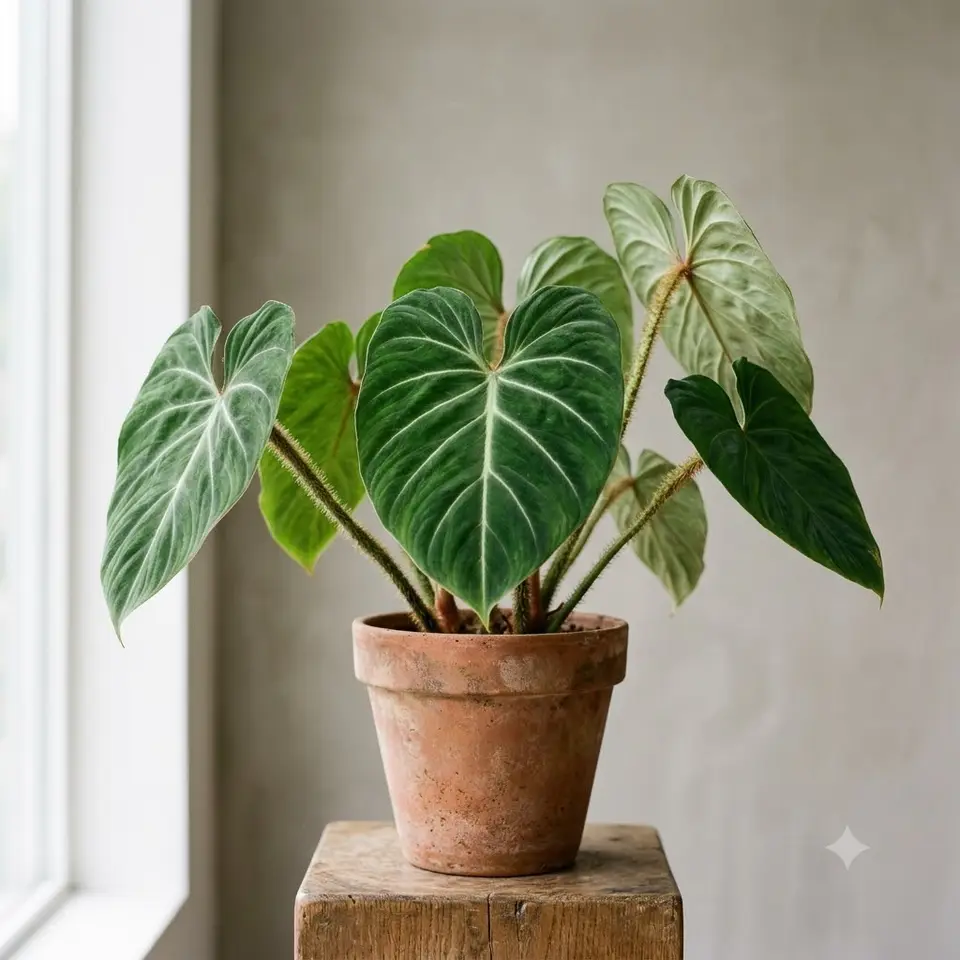 AI illustration
 Overview
Philodendron verrucosum is one of the most coveted velvet-leaf climbers in the aroid world, prized for heart-shaped leaves with an iridescent, almost suede-like surface (Philodendron verrucosum). Its species name points to its most distinctive feature: hairy, bristled petioles that look warty up close. This is a genuine collector plant that rewards attentive care but punishes neglect, so it is best approached once you have a few easier philodendrons under your belt.
Origin & Natural Habitat
Philodendron verrucosum is native to the humid cloud forests of Central and South America, ranging from Costa Rica and Panama down through Colombia, Ecuador and into Peru. It grows as a hemiepiphyte, germinating on the forest floor and then climbing tree trunks, clinging with aerial roots while its mature leaves reach toward filtered canopy light. These forests are consistently warm, shaded and drenched in humidity, which explains why the plant can sulk in dry indoor air.
Appearance
The signature leaves are broadly heart-shaped (ovate-cordate), typically 20 to 40 cm long indoors and considerably larger in ideal conditions or on mature specimens. The upper surface is a deep velvety green with pale, contrasting veins and a shifting sheen that can look bronze or emerald depending on the light. The undersides are often flushed red to maroon, and the petioles are covered in soft, hair-like projections that give the species its name. It is a climbing grower; given a moss pole or bark support, its aerial roots anchor and the leaves size up over time.
Why People Grow It - Qualities & Benefits
- Striking velvet foliage with a depth and sheen that few houseplants match
- Bold pale venation and red-flushed undersides that add contrast in a collection
- A true climber that develops larger, more dramatic leaves as it matures on a pole
- High trophy value among aroid collectors, making it a centrepiece plant
Care
Light: Bright, indirect light. It naturally lives in dappled shade, so protect it from direct sun, which scorches the velvet surface. An east-facing window or a spot a little back from brighter glass works well. Water: Keep the mix lightly and evenly moist but never waterlogged. Water when the top couple of centimetres feel dry, and always let excess drain away. Velvet philodendrons are prone to root rot if left sitting wet. Soil: A chunky, airy aroid mix: orchid bark, perlite and coco coir or peat, with some horticultural charcoal. It wants moisture retention and free drainage at the same time. Temperature & Humidity: Warm and stable, ideally 18 to 27°C, and never below about 15°C. Humidity is the make-or-break factor: aim for 60 to 80%. A cabinet, terrarium or a well-run humidifier is often needed to keep leaves from crisping. Feeding: Feed with a balanced, diluted liquid fertiliser roughly every 3 to 4 weeks during active growth in spring and summer, and ease off in the darker months. Extra: Give it a moss pole to climb; the aerial roots want something to grip, and pole support is what unlocks larger, better-formed leaves. Note that this plant is toxic to cats and dogs due to insoluble calcium oxalate crystals, so chewing causes oral irritation, drooling and vomiting - keep it out of reach.
Propagation
Propagate by stem cuttings that each include at least one node (the point where a leaf and aerial root emerge). Cut cleanly below a node, let the cut callus for an hour or two, then root in damp sphagnum moss, a chunky mix or water, kept warm and very humid. High humidity around the cutting greatly improves the odds. Rooting is slower and fussier than with common philodendrons, so patience matters.
Common Problems & Pests
- Root rot from overwatering or a dense, poorly draining mix
- Crispy leaf edges and stunted new growth caused by low humidity or cold draughts
- Spider mites, thrips, mealybugs and scale, which hide in the velvety texture and along petioles
Toxicity & Safety
Philodendron verrucosum is toxic to cats and dogs. Every part of the plant contains insoluble calcium oxalate crystals; when an animal chews or bites the leaves or stems, these needle-like crystals are released into the mouth and cause immediate irritation. Typical signs include intense oral pain, excessive drooling, pawing at the mouth, difficulty swallowing and vomiting. The sap can also irritate human skin and eyes. Keep this plant well out of reach of pets and children, and wash your hands after handling or taking cuttings.
Pros & Cons
Pros
- Exceptional velvet foliage that is genuinely eye-catching
- Improves dramatically with support, rewarding long-term care
Cons
- Toxic to cats and dogs, so unsafe around curious pets
- Demanding humidity and warmth needs that often require a cabinet or humidifier
Best Suited For
- Experienced hobbyists who can provide steady warmth and high humidity
- Collectors with a terrarium, grow cabinet or humidified room and a pet-free display spot
FAQ
Why does verrucosum mean warty or hairy?
The species name refers to the fuzzy, bristled petioles that hold up each leaf. These soft hair-like projections are a key identifying feature and one of the plant's most charming quirks.
Do I really need high humidity for this plant?
For it to thrive, yes. Velvet-leaved philodendrons hold moisture poorly and drop or crisp their leaves in dry air. Consistent humidity of 60 to 80%, along with warmth and a moss pole, is what keeps foliage full and healthy.
Sources
Pet toxicity: checked against the ASPCA Animal Poison Control Center lists of toxic and non-toxic plants for cats and dogs, genus-wide entry "Philodendron Pertusum" (Philodendron spp): toxic to cats and dogs. Lists read on 10 October 2026.
Gear for growing philodendron verrucosum
Links go to Amazon or a partner store (such as Adagio Teas) and may earn us a commission at no extra cost to you. As an Amazon Associate we earn from qualifying purchases. We link gear types, not sponsors' picks: you choose the exact product.