Pincushion Cactus
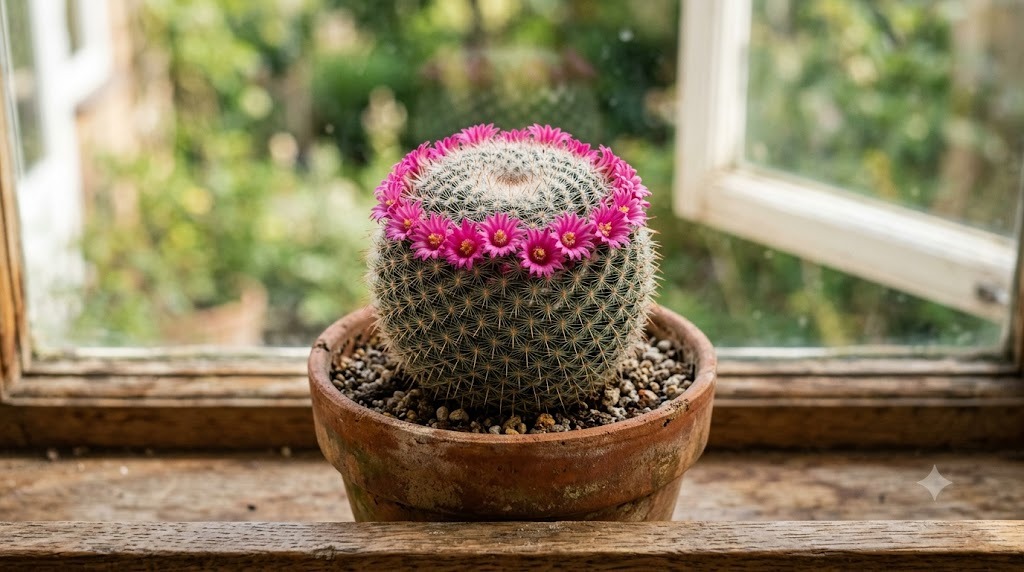
Pincushion cacti (Mammillaria) are small, rounded, easy-going desert cacti that reliably ring themselves with a crown of tiny, jewel-like flowers - one of the most rewarding groups for a beginner.
Last reviewed: July 2026
Overview
Pincushion cacti (Mammillaria) are small, rounded, easy-going desert cacti that reliably ring themselves with a crown of tiny, jewel-like flowers - one of the most rewarding groups for a beginner. Compact and quick to flower, they are perfect for a sunny windowsill collection.
Origin & Natural Habitat
Mammillaria is a large genus native mainly to Mexico and the southwestern US, growing on rocky, sun-baked desert ground. It is one of the most popular cactus genera in cultivation, with dozens of easy species.
Appearance
Small, globular or clustering bodies covered in spiralling tubercles (bumps) rather than ribs, each tipped with spines - some soft and white, some hooked. In spring they produce a neat ring of small pink, white, yellow or red flowers around the crown.
Why People Love It - Qualities & Benefits
They are loved for flowering young and reliably, staying small enough for a windowsill collection, and being genuinely easy. A well-grown pincushion in full bloom, ringed with flowers, is a delight.
Care
Light
Bright light with some direct sun keeps them compact and flowering - a sunny windowsill is ideal. Enough light is the key to the flower ring; in dim conditions they grow soft and won't bloom.
Watering
Soak, then let the soil dry out completely before watering again. Keep them nearly dry through winter - a cool, dry rest is what sets the spring flowers. Overwatering causes rot, so err dry.
Soil & Potting
A gritty, free-draining cactus mix in a pot with drainage. Good drainage is especially important for the small, clustering root systems, which rot easily if kept wet.
Humidity & Temperature
Warm, dry air suits them; they dislike humidity. Ordinary room air is fine. Give a cool (but frost-free) and dry winter to trigger flowering, then resume watering in spring.
Feeding
A dilute cactus feed once or twice in the growing season supports flowering. Do not overfeed; these small plants need little.
Repotting
Repot every couple of years in spring when the cluster fills the pot, handling gently with folded card. Many species offset into a cushion of heads, which can be split at repotting.
Propagation
Very easy: remove an offset (pup) from a clustering species, let it callus for a day or two, and set it on gritty soil to root. Some species also grow readily from seed.
Common Problems & Pests
Rot from overwatering is the main risk, especially in winter. Red spider mite can bronze the tops; mealybugs hide among the tubercles. Failure to flower is almost always too little light or no cool, dry winter rest.
Toxicity & Safety
Pincushion cacti are not toxic to people or pets, but the spines - some hooked - can catch and injure, so keep them out of reach of children and animals. Handle with care.
Pros & Cons
Pros: flowers young and reliably, stays small, easy and forgiving, easy to propagate. Cons: spines (sometimes hooked) can snag, needs a cool dry winter to bloom, small root system rots if overwatered.
Best Suited For
Perfect for beginners and windowsill collectors who want reliable flowers from a small, easy cactus - one of the best groups to start a collection with.
FAQ
Why won't my pincushion flower? It usually needs more light and a cool, dry winter rest to set buds.
Mine has lots of little heads - can I split them? Yes, at repotting: callus each offset, then root it in gritty soil.
Gear for growing pincushion cactus
Links go to Amazon or a partner store (such as Adagio Teas) and may earn us a commission at no extra cost to you. As an Amazon Associate we earn from qualifying purchases. We link gear types, not sponsors' picks: you choose the exact product.