Philodendron Tortum
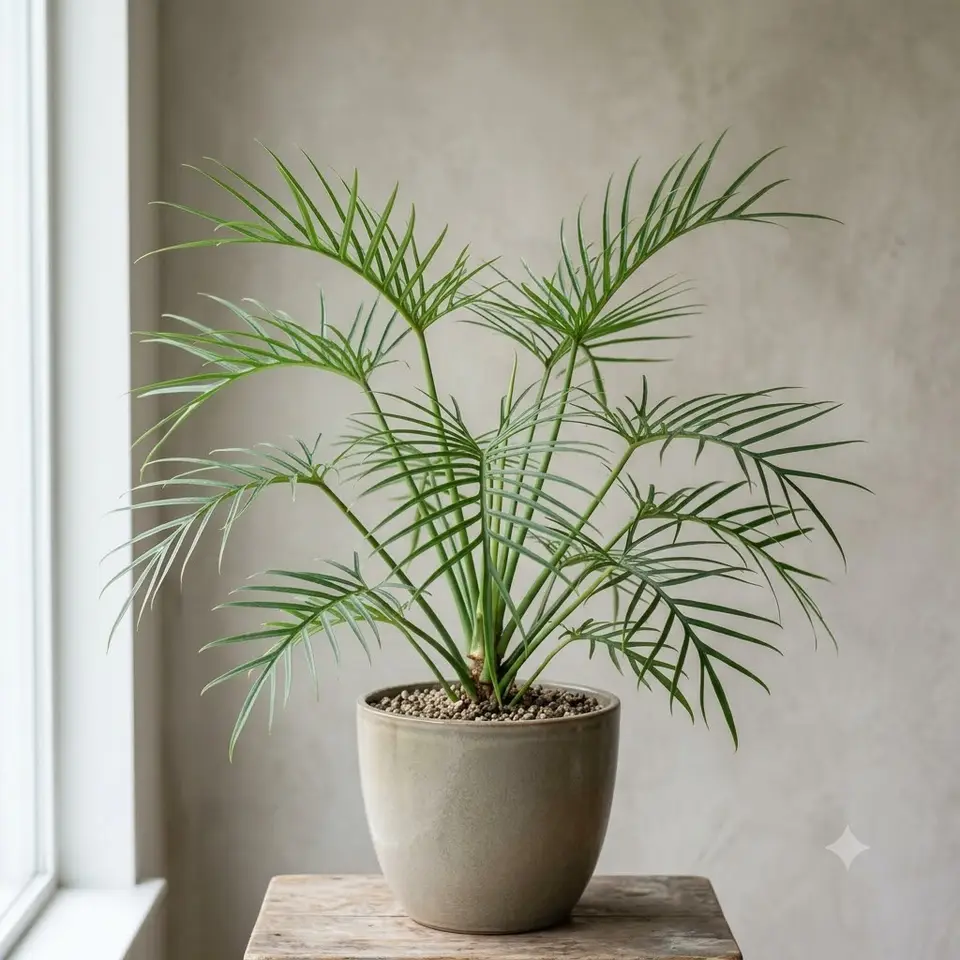
Philodendron Tortum is a collector aroid prized for its skeletal, feathery leaves that look almost fern-like or like green fireworks.
Last reviewed: September 2026
 AI illustration
 Overview
Philodendron Tortum is a collector aroid prized for its skeletal, feathery leaves that look almost fern-like or like green fireworks. Each blade is deeply and finely divided, with narrow segments that twist and curl as the plant matures (Philodendron tortum). It is an upright, self-heading climber that stays compact for years before its stem begins to lengthen and lean.
Origin & Natural Habitat
Philodendron Tortum is native to Brazil, associated with the humid lowland rainforests of the Amazon basin. In the wild it grows as a hemi-epiphyte, rooting in leaf litter on the forest floor and gradually climbing onto tree trunks, sending out aerial roots to anchor itself and gather moisture. It thrives in warm, consistently humid, filtered-light conditions beneath the canopy.
Appearance
The leaves are the whole reason to grow this plant. Mature blades reach roughly 30 to 50 cm long on slender petioles, each one cut almost to the midrib into many thin, ribbon-like lobes that curl and rotate along their length, giving a delicate, spiky, almost windblown look. New growth emerges a soft light green and hardens to a mid to deep green with a slightly leathery feel. The habit is upright and self-heading when young; over time the stem thickens and elongates, producing thick aerial roots and eventually wanting to climb. Indoors a settled plant typically reaches 60 to 120 cm tall, taller with support.
Why People Grow It - Qualities & Benefits
- Striking, sculptural foliage that stands out in any collection and reads as far more exotic than most common houseplants.
- Compact and self-heading for a good while, so it fits shelves and plant stands before it needs a pole.
- Reasonably forgiving of average home light once established, tolerating bright indirect conditions well.
- A satisfying grower that visibly rewards good humidity and warmth with larger, more divided leaves.
Care
Light: Bright, indirect light. An east or a lightly filtered west or south window is ideal. Avoid harsh direct midday sun, which scorches the thin leaf segments; too little light gives sparse, poorly divided leaves. Water: Keep the mix lightly moist but never soggy. Water when the top 3 to 5 cm feels dry, then let it drain fully. Ease off in winter. Sensitive to sitting in water, which quickly leads to root rot. Soil: A chunky, fast-draining aroid mix: bark, perlite and coco coir or peat, with a handful of charcoal. It wants air around the roots and should never stay waterlogged. Temperature & Humidity: Warm, 18 to 28°C. Protect from cold below 13°C and from cold drafts. Prefers humidity above 60%; higher humidity produces the fullest, most divided leaves, so a pebble tray or humidifier helps. Feeding: Feed with a balanced diluted liquid fertiliser roughly every 4 weeks in spring and summer. Stop or reduce feeding in the darker, cooler months. Extra: Give it a moss pole or support once it starts to lean, and let the aerial roots do their job rather than cutting them all off. Wipe dust from the leaves and rotate the pot for even growth. Note: this plant is toxic to cats and dogs due to insoluble calcium oxalate crystals; chewing causes oral irritation, drooling and vomiting, so keep it out of reach of pets.
Propagation
Propagate by stem cuttings that include at least one node, ideally with a nub of aerial root. Cut just below a node with a clean, sterile blade, let the cut callus for an hour or two, then root in water, damp sphagnum moss or a light aroid mix. Keep it warm and humid; roots usually appear within a few weeks, after which you can pot it up. Top cuttings root most reliably.
Common Problems & Pests
- Root rot from overwatering or a dense, water-holding mix; yellowing lower leaves and a mushy base are the warning signs.
- Sap-sucking pests, especially spider mites in dry air, plus mealybugs, thrips and scale hiding in the leaf divisions.
- Crispy brown leaf tips and edges from low humidity, underwatering or salt buildup; pale, thin, less-divided leaves usually mean not enough light.
Toxicity & Safety
Toxic to cats and dogs. Like other Philodendrons, every part of the plant contains insoluble calcium oxalate crystals. When a pet bites or chews the leaves or stem, these microscopic needle-like crystals are released and embed in the tissues of the mouth and throat, causing intense oral irritation and burning, pawing at the mouth, excessive drooling, difficulty swallowing and vomiting. The same irritation applies to humans, especially children. Keep the plant out of reach and wash your hands after pruning; contact a vet or poison line if a pet ingests any part.
Pros & Cons
Pros
- Unusual, sculptural foliage that anchors a collection.
- Stays compact and manageable for a good while indoors.
Cons
- Toxic to cats, dogs and people, so a poor fit for homes with curious pets.
- Wants warmth and higher humidity to look its best, and eventually needs a support pole and root management.
Best Suited For
- Intermediate hobbyists and aroid collectors who can offer warmth, humidity and bright indirect light.
- Pet-free households, or homes where the plant can be kept genuinely out of reach.
FAQ
Why are my Tortum leaves less divided than the photos I see?
Under-division is almost always a light and maturity issue. Young plants naturally have simpler leaves, and low light produces flatter, less feathery blades. Move it to brighter indirect light and be patient; each new leaf should be more finely cut than the last as the plant matures.
Do I have to give it a moss pole?
Not immediately. It grows as a self-heading upright plant while young, but as the stem lengthens it starts to lean and put out thick aerial roots. Adding a moss pole then keeps it stable, encourages larger leaves and gives those aerial roots something to grip.
Sources
Pet toxicity: checked against the ASPCA Animal Poison Control Center lists of toxic and non-toxic plants for cats and dogs, genus-wide entry "Philodendron Pertusum" (Philodendron spp): toxic to cats and dogs. Lists read on 10 October 2026.
Gear for growing philodendron tortum
Links go to Amazon or a partner store (such as Adagio Teas) and may earn us a commission at no extra cost to you. As an Amazon Associate we earn from qualifying purchases. We link gear types, not sponsors' picks: you choose the exact product.