Philodendron Squamiferum
Philodendron Squamiferum is a striking climbing aroid prized by collectors for one unmistakable feature: fuzzy red-maroon hairs that cover its petioles like coarse fur.
Last reviewed: September 2026
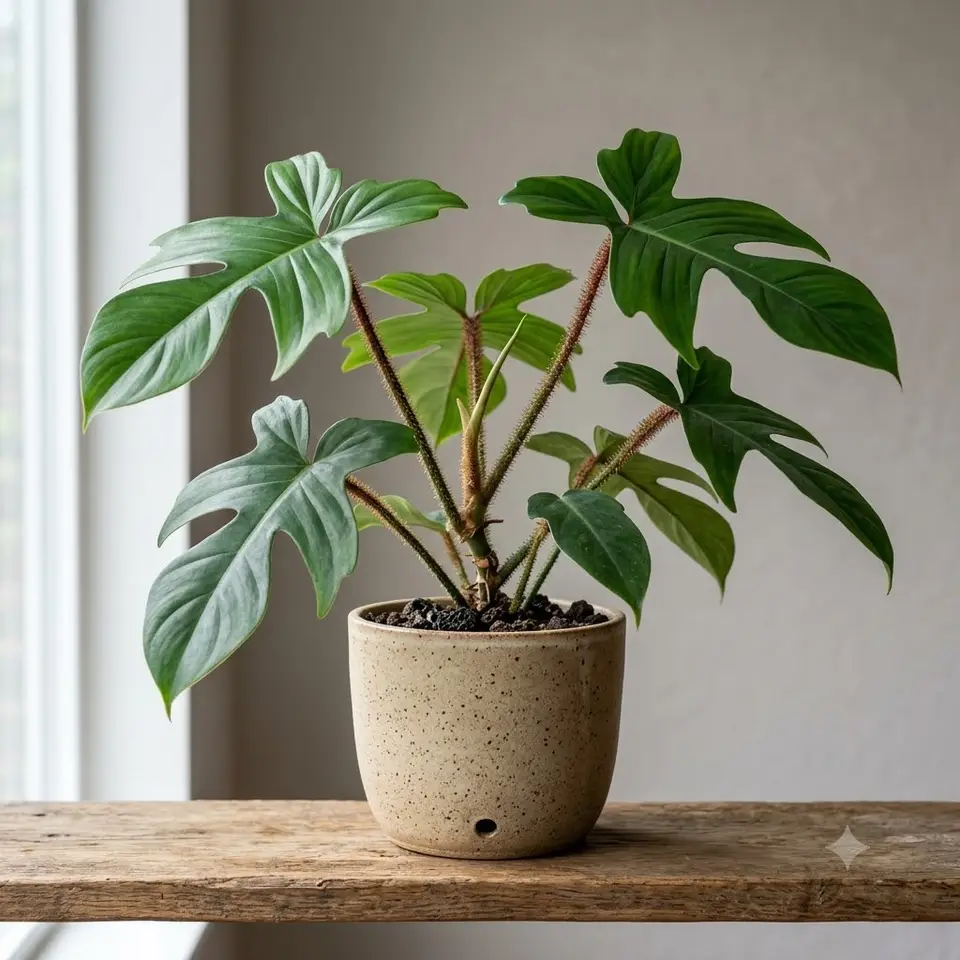 AI illustration
 Overview
Philodendron Squamiferum is a striking climbing aroid prized by collectors for one unmistakable feature: fuzzy red-maroon hairs that cover its petioles like coarse fur. Paired with glossy, deeply lobed oak-shaped leaves, it reads as both architectural and slightly wild (Philodendron squamiferum). It is a hemiepiphytic vine, meaning it naturally climbs tree trunks rather than growing as a tidy bush.
Origin & Natural Habitat
The species is native to the tropical rainforests of northeastern South America, principally French Guiana, Suriname, and the northern reaches of Brazil. In the wild it grows as a climbing hemiepiphyte, germinating on the forest floor and then scaling tree trunks toward brighter light. Its home is warm, humid, and shaded by a dense canopy, with roots anchoring into bark and decaying organic matter rather than deep soil.
Appearance
Mature leaves are pandurate to five-lobed, resembling a broad oak or fiddle silhouette, and can reach roughly 25 to 45 cm long on established plants. They are a deep glossy green with a slightly leathery texture. The signature trait sits on the petioles (leaf stalks): they are densely covered in soft, hair-like red to maroon scales that give the plant its name (squamiferum means scale-bearing). It grows as a climbing vine and, given a support, can reach 1.5 to 2 m or more indoors, sending out thick aerial roots along the stem as it climbs.
Why People Grow It - Qualities & Benefits
- The fuzzy red petioles are genuinely unusual and make it a standout conversation piece among aroids.
- Bold, deeply lobed foliage adds a sculptural, jungle-like presence to a room.
- It is more forgiving than many rare collector philodendrons, tolerating a range of indoor conditions.
- A vigorous climber that rewards a moss pole with larger, better-formed mature leaves over time.
Care
Light: Bright, indirect light. It tolerates medium light but grows leggy and produces smaller leaves in dim spots. Keep out of harsh direct sun, which scorches the foliage. Water: Water when the top 3 to 5 cm of mix dries out. Let excess drain fully. It dislikes soggy, waterlogged roots, so err on the side of slightly drier rather than constantly wet. Soil: A chunky, fast-draining aroid mix - roughly equal parts potting soil, orchid bark, and perlite, ideally with some coco coir or charcoal. Good aeration around the roots is essential. Temperature & Humidity: Comfortable at 18 to 27°C. Avoid cold drafts and anything below about 13°C. Prefers 60% or higher humidity; it copes with average household air but grows fuller and healthier with added humidity. Feeding: Feed with a balanced diluted liquid fertiliser roughly every 4 to 6 weeks during spring and summer. Stop or reduce feeding in autumn and winter when growth slows. Extra: Give it a moss pole or plank to climb - the aerial roots want to attach, and a supported plant develops much larger, more dramatic leaves than one left to trail. Important: this plant is toxic to cats and dogs due to insoluble calcium oxalate crystals, so keep it out of reach of pets.
Propagation
Propagate from stem cuttings that include at least one node (the point where a leaf and aerial root emerge). Take a cutting below a node, let the cut end callus for an hour or two, then root it in water, damp sphagnum moss, or straight into a light aroid mix. Keep it warm and humid; roots typically appear within a few weeks, after which you can pot it up.
Common Problems & Pests
- Yellowing leaves usually signal overwatering or poor drainage; check that the mix is not staying soggy.
- Small, widely spaced leaves and long bare stems point to insufficient light or the lack of a support to climb.
- Watch for spider mites, mealybugs, and thrips, especially in dry indoor air - inspect the undersides of leaves and treat early.
Toxicity & Safety
Philodendron Squamiferum is toxic to cats and dogs. Like other philodendrons, its tissues contain insoluble calcium oxalate crystals. When an animal chews or bites the leaves or stems, these needle-like crystals are released and embed in the soft tissues of the mouth and throat, causing intense oral irritation, drooling, pawing at the mouth, difficulty swallowing, and vomiting. It is also irritating to humans if ingested, and the sap can bother sensitive skin. Keep it well out of reach of pets and small children, and wash your hands after pruning.
Pros & Cons
Pros
- Distinctive fuzzy red petioles that few other houseplants can match.
- Relatively resilient and beginner-friendly for a collector-grade philodendron.
Cons
- Toxic to pets and children, so placement needs thought.
- Needs a climbing support and decent humidity to look its best, and can sprawl or get leggy without them.
Best Suited For
- Aroid enthusiasts and collectors who want an unusual textured philodendron.
- Growers who can offer a moss pole, warmth, and moderate humidity in a pet-free or out-of-reach spot.
FAQ
Why are the stems hairy and red?
Those hairs are soft scale-like outgrowths on the petioles, and they are the defining feature of the species (its name literally means scale-bearing). The reddish-maroon colour is natural and healthy, not a sign of pests or disease.
Does it need a moss pole?
It does best with one. As a natural climber, it produces its largest, most deeply lobed leaves when its aerial roots can attach to a support. Left unsupported it will still grow, but tends to sprawl and stay small-leaved.
Sources
Pet toxicity: checked against the ASPCA Animal Poison Control Center lists of toxic and non-toxic plants for cats and dogs, genus-wide entry "Philodendron Pertusum" (Philodendron spp): toxic to cats and dogs. Lists read on 10 October 2026.
Gear for growing philodendron squamiferum
Links go to Amazon or a partner store (such as Adagio Teas) and may earn us a commission at no extra cost to you. As an Amazon Associate we earn from qualifying purchases. We link gear types, not sponsors' picks: you choose the exact product.