Peacock Begonia
The Peacock Begonia is a prized collector's begonia famous for leaves that shimmer an electric, metallic blue in low light.
Last reviewed: September 2026
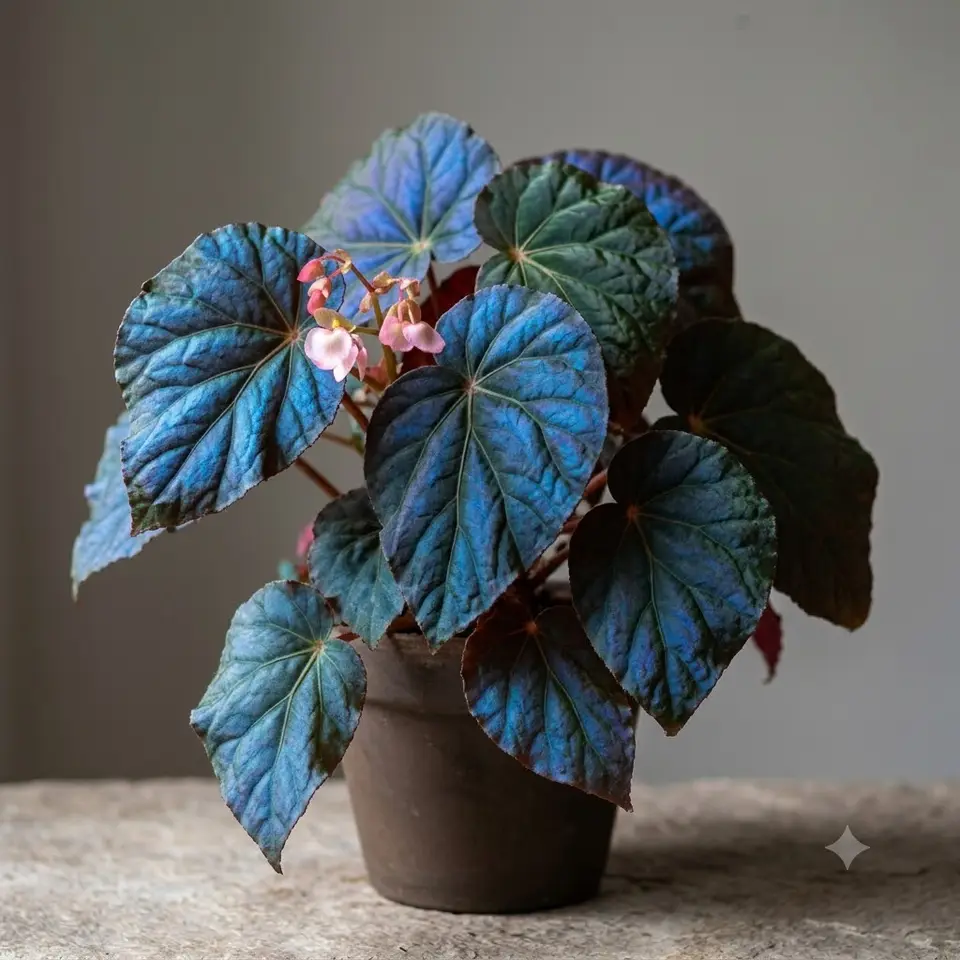 AI illustration
 Overview
The Peacock Begonia is a prized collector's begonia famous for leaves that shimmer an electric, metallic blue in low light. That blue is not a pigment but structural colour, produced by specialised light-bending chloroplasts (iridoplasts) that help the plant harvest dim understory light. Collectors chase it precisely because the effect is so unusual and so tied to specific growing conditions (Begonia pavonina).
Origin & Natural Habitat
It is native to the cool, humid highland forests of Malaysia, notably the mountains of the Malay Peninsula. In the wild it grows as a rhizomatous understory plant on shaded, damp slopes and forest floors where light is filtered and air moisture stays consistently high.
Appearance
The leaves are broadly ovate with a slightly puckered, asymmetric begonia shape, reaching roughly 8 to 15 cm long. In shade they flash an iridescent blue-green sheen, while under brighter light they read as a deep matte green with the blue muted. It is a compact, spreading rhizomatous grower, typically staying under 30 to 40 cm tall as a clump, and it can produce small pale pink to white flowers.
Why People Grow It - Qualities & Benefits
- The rare, almost otherworldly blue iridescence that shifts with the light
- Compact size that fits perfectly in terrariums and cabinets
- A genuine conversation piece and a status plant among aroid and begonia collectors
- Thrives in the same enclosed, humid setups collectors already run for other rarities
Care
Light: Low to medium bright indirect light. Strong or direct light washes out the blue iridescence and can scorch the foliage, so keep it shaded like its forest-floor home.
Water: Keep the mix evenly moist but never soggy. Water when the top layer starts to dry, and use room-temperature water; this plant hates both drought stress and standing water.
Soil: A light, airy, moisture-retentive mix - for example peat or coco coir with perlite, fine bark, and a little sphagnum. Good drainage is essential to avoid rhizome rot.
Temperature & Humidity: Warm and stable, around 18 to 26°C. Humidity is the make-or-break factor: it wants 70% or higher, which realistically means a terrarium, cabinet, or covered setup. In open, dry room air the leaves crisp and the plant sulks.
Feeding: Feed with a balanced liquid fertiliser diluted to quarter or half strength every few weeks during active growth, and stop when growth slows in cooler months.
Extra: The single biggest quirk is that the signature blue only appears in genuinely low light, so you constantly balance colour against overall vigour. It does not go fully dormant like a tuberous begonia, but growth slows markedly in cooler, darker months. Toxic to cats and dogs (soluble oxalates, most concentrated in the underground rhizome) - keep out of reach of pets and children.
Propagation
Propagate by rhizome division or by rhizome and stem cuttings placed on moist sphagnum or in an airy mix inside a humid, enclosed container. Leaf cuttings can also work, though they are slower and less reliable. Warmth and near-saturated humidity give the best rooting success.
Common Problems & Pests
- Powdery mildew and botrytis (grey mould) in stagnant, overly wet air - keep gentle airflow even inside enclosures
- Rhizome and stem rot from overwatering or a heavy, poorly draining mix
- Mealybugs, thrips, and occasionally spider mites, plus crisping leaf edges whenever humidity drops
Toxicity & Safety
Like all begonias, the Peacock Begonia is toxic to cats and dogs. It contains soluble oxalates, with the highest concentration in the underground rhizome and roots. Chewing can cause oral irritation, intense drooling, and vomiting, and in pets that ingest larger amounts of the underground parts there is potential for more serious effects. The sap may also irritate sensitive skin, so wash your hands after handling cuttings and keep the plant away from curious pets and children.
Pros & Cons
Pros
- Truly unique blue iridescent foliage unlike almost any other houseplant
- Compact and terrarium-friendly, ideal for enclosed collector setups
Cons
- Demanding humidity needs make it a poor fit for open room culture
- Fussy and prone to mildew, rot, and pests if conditions drift
Best Suited For
- Experienced collectors with a terrarium, cabinet, or high-humidity growing space
- Anyone who wants a standout rarity and is willing to fine-tune light and moisture
FAQ
Why does my Peacock Begonia look green instead of blue?
The blue is structural colour that only shows in low light. Under brighter conditions the leaves read as ordinary deep green, so if you want the iridescence, move it to a shadier spot.
Can I grow it without a terrarium?
It is very difficult. This plant needs consistently high humidity, and in dry room air the leaves crisp and it declines. A terrarium, glass cabinet, or covered enclosure is strongly recommended.
Sources
Pet toxicity: checked against the ASPCA Animal Poison Control Center lists of toxic and non-toxic plants for cats and dogs, genus-wide entry "Begonia" (Begonia spp.): toxic to cats and dogs. Lists read on 10 October 2026.
Gear for growing peacock begonia
Links go to Amazon or a partner store (such as Adagio Teas) and may earn us a commission at no extra cost to you. As an Amazon Associate we earn from qualifying purchases. We link gear types, not sponsors' picks: you choose the exact product.