Peanut Cactus
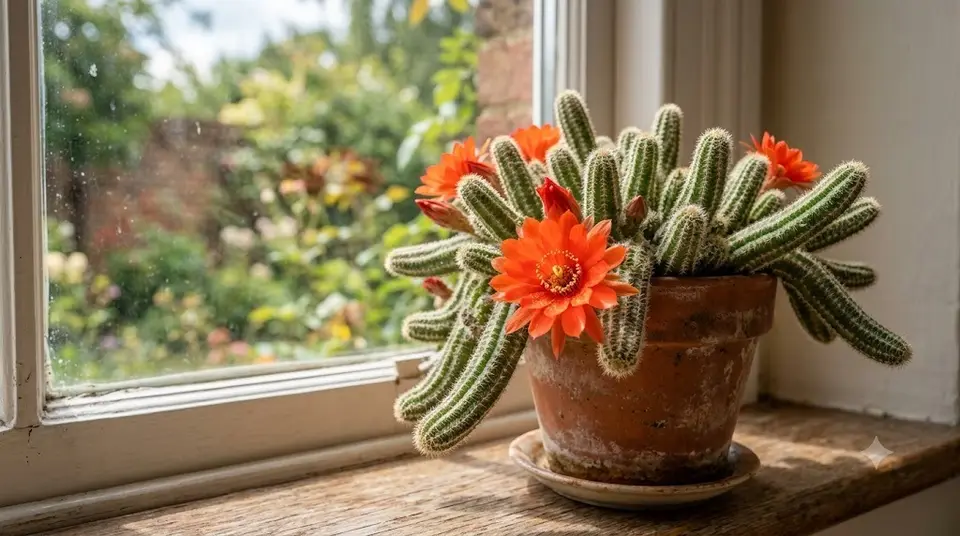
The peanut cactus is a small, fast-clustering cactus whose finger-like stems really do look like a heap of peanuts - until spring, when the little plant vanishes under huge, brilliant orange-red flowers.
Last reviewed: July 2026
 AI illustration
 Overview
The peanut cactus is a small, fast-clustering cactus whose finger-like stems really do look like a heap of peanuts - until spring, when the little plant vanishes under huge, brilliant orange-red flowers. Easy, tough and quick to multiply, it is one of the most rewarding small cacti a beginner can grow.
Origin & Natural Habitat
Echinopsis chamaecereus comes from the mountains of northwestern Argentina, growing on rocky slopes at altitude. Its mountain home makes it tolerant of cool conditions and a very reliable spring flowerer.
Appearance
Clusters of soft, finger-thick, peanut-shaped pale green stems with fine bristly spines, sprawling and mounding over the pot edge. In spring it produces funnel-shaped, vivid orange to scarlet flowers that can be wider than the stems themselves.
Why People Love It - Qualities & Benefits
People love how fast and easily it clusters, how generously it flowers while still tiny, and how forgiving it is. Segments detach and root almost on their own, so it is a classic pass-along cactus.
Care
Light
Bright light with several hours of direct sun keeps the stems compact and drives the spring flower show - a sunny windowsill is ideal. In dim light it grows thin, pale and shy to bloom.
Watering
Soak, then let the soil dry out completely before watering again. Keep it nearly dry through a cool winter rest - that rest is what sets the spring flowers. Err dry; the soft stems rot if kept wet.
Soil & Potting
A gritty, free-draining cactus mix in a pot with drainage. Shallow pots suit the sprawling, shallow-rooted clusters well.
Humidity & Temperature
Cool to warm, dry air suits it; it dislikes humidity. Thanks to its mountain origins it takes a cool, dry, frost-free winter well - which is exactly what triggers flowering.
Feeding
A dilute cactus feed once or twice in the growing season is plenty. Do not overfeed the small stems.
Repotting
Repot every couple of years in spring when the cluster fills the pot, handling gently - the segments detach at a touch. Detached pieces are propagation material, not a loss.
Propagation
About as easy as cacti get: a detached stem segment laid on gritty soil roots within weeks. One plant quickly becomes a windowsill full.
Common Problems & Pests
Overwatering rot is the main risk, especially in winter. Red spider mite can bronze the stems in hot dry spells. Segments dropping at a touch is normal - pot them up. No flowers usually means too little light or no cool winter rest.
Toxicity & Safety
The peanut cactus is not toxic to people or pets, and its bristles are soft by cactus standards, but it is still best kept out of reach of pets that might chew or knock the fragile stems.
Pros & Cons
Pros: flowers young and spectacularly, clusters fast, extremely easy to propagate, tolerant of cool rooms. Cons: stems detach very easily, needs a cool dry winter to bloom, rots if overwatered.
Best Suited For
A perfect starter cactus for a bright windowsill - fast, generous with flowers and endlessly shareable with friends.
FAQ
Why did a stem fall off when I touched it? That's normal - segments detach easily; lay them on gritty soil and they root into new plants.
How do I get the big red flowers? Plenty of sun plus a cool, dry winter rest sets the spring buds.
Gear for growing peanut cactus
Links go to Amazon or a partner store (such as Adagio Teas) and may earn us a commission at no extra cost to you. As an Amazon Associate we earn from qualifying purchases. We link gear types, not sponsors' picks: you choose the exact product.