Calathea Makoyana
Calathea Makoyana, better known as the Peacock Plant or Cathedral Windows, is a showpiece foliage plant grown for its translucent, feather-patterned leaves that lift and lower with the daily light cycle (Calathea makoyana, now often reclassified as Goeppertia makoyana).
Last reviewed: September 2026
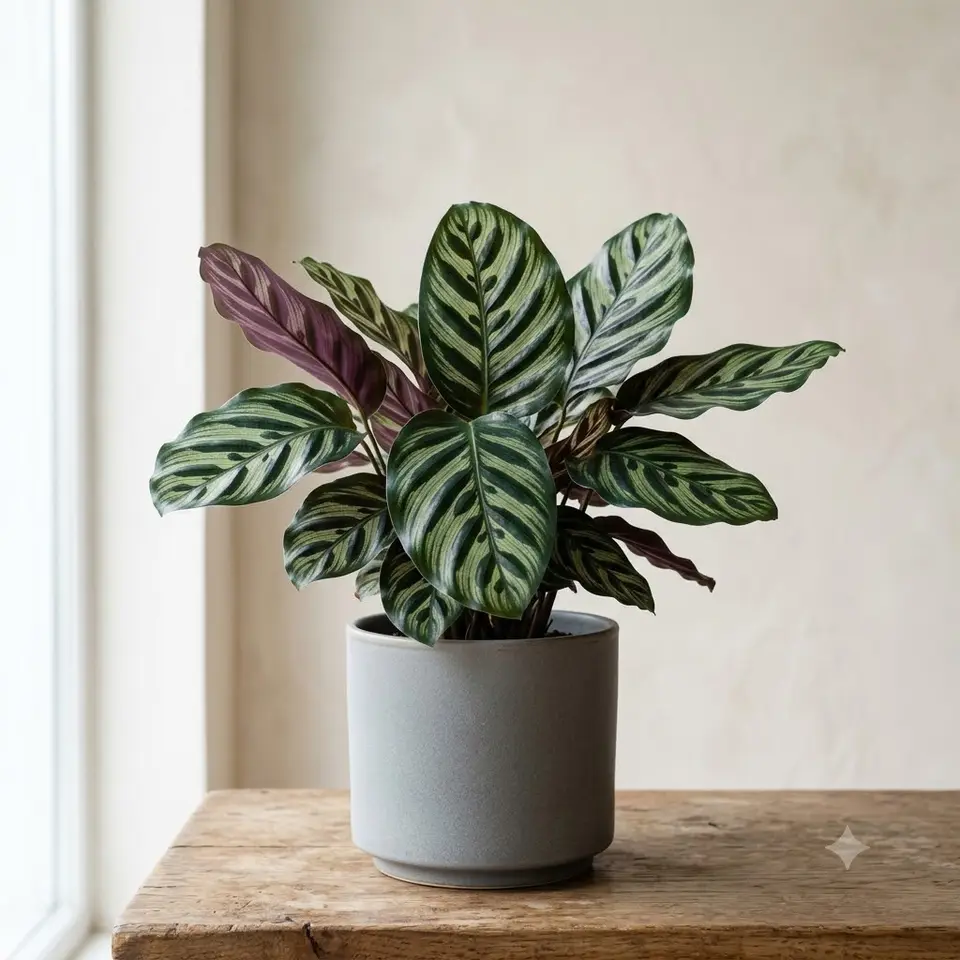 AI illustration
 Overview
Calathea Makoyana, better known as the Peacock Plant or Cathedral Windows, is a showpiece foliage plant grown for its translucent, feather-patterned leaves that lift and lower with the daily light cycle (Calathea makoyana, now often reclassified as Goeppertia makoyana). It is a true collector's prayer plant - stunning to look at and honestly demanding to keep happy. Rewarding for anyone willing to fuss over humidity and water quality.
Origin & Natural Habitat
Calathea makoyana is native to eastern Brazil, where it grows on the shaded floor of warm, humid tropical forests. In the wild it lives beneath the canopy, catching only soft, filtered light and sitting in consistently moist, well-drained leaf litter. That background explains everything about its care: it expects warmth, high humidity, dappled shade, and steady moisture, and it resents cold, dry air and harsh sun.
Appearance
The leaves are the whole point. Each is broad, oval to slightly oblong, and can reach roughly 12 to 20 cm long on a mature plant, held on slender upright stalks. The upper surface is pale, almost translucent green, painted with fine dark-green feathering that traces the veins and an outer band of oval "brushstrokes," while the underside repeats the same pattern in deep purple-maroon. Held up to the light the leaf looks like stained glass, which is where the "Cathedral Windows" name comes from. Growth is clumping and upright, and indoors the plant usually settles at around 40 to 60 cm tall and wide. Leaves fold upward at night and open again by day - the classic prayer-plant movement.
Why People Grow It - Qualities & Benefits
- Some of the most striking natural leaf patterning of any houseplant, with a jewel-like translucency when backlit.
- Living, moving foliage - the daily open-and-close of the leaves makes it feel like a plant with a personality.
- Non-toxic and pet-safe, so it suits homes with cats and dogs.
- Stays compact and tidy, making it a dramatic tabletop or shelf feature rather than a space-hog.
Care
Light: Bright, indirect light only. It evolved on the forest floor, so an east-facing window or a spot a little back from a brighter window is ideal. Direct sun scorches and bleaches the delicate patterning, while deep shade dulls it and slows growth.
Water: Keep the mix lightly and evenly moist, never soggy and never bone-dry - let just the top of the soil dry before watering again. This is the plant's biggest sore point: it is genuinely sensitive to the fluoride, chlorine, and salts in tap water, which show up as brown, crispy leaf edges. Use rainwater, distilled, or filtered water where you can.
Soil: A light, airy, moisture-retentive mix - for example a peat-free or coco-based potting mix loosened with perlite and a little orchid bark or fine composted material. It should hold moisture but drain freely so the roots never sit in water.
Temperature & Humidity: Warm and stable, ideally 18 to 27°C, and never below about 15°C. High humidity is not optional - aim for 60% or more. In dry rooms a humidifier is the reliable fix; misting helps only briefly and can invite leaf spotting. Keep it away from cold draughts, heating vents, and radiators.
Feeding: Feed lightly through the growing season (spring to early autumn) with a balanced houseplant fertiliser at roughly half strength, about once a month. This plant is easily over-fed, and salt build-up worsens the brown-edge problem, so err on the weak side and stop in winter.
Extra: The make-or-break quirk is water and air quality together - crispy edges almost always trace back to hard tap water or dry air, so fix those first before anything else. Good news for pet owners: Calathea Makoyana is non-toxic to cats and dogs.
Propagation
Propagate by division, ideally at repotting time in spring. Gently ease the plant from its pot, tease the root ball apart into clumps that each have healthy roots and several leaves, and pot each division into fresh, airy mix. Keep the new plants warm, humid, and out of direct sun while they settle - expect a sulk for a week or two before new growth appears. It does not root from leaf cuttings.
Common Problems & Pests
- Brown, crispy leaf edges and tips - usually hard or fluoridated tap water, low humidity, or fertiliser salt build-up.
- Spider mites - thrive in dry indoor air; check leaf undersides for fine webbing and stippling, and raise humidity to deter them.
- Curling, drooping, or fading leaves - a sign of underwatering, cold draughts, or too much direct light; yellowing lower leaves often point to overwatering.
Toxicity & Safety
Calathea Makoyana is non-toxic to cats and dogs. As a member of the Marantaceae (prayer-plant) family, it is a genuinely pet-safe choice and one of the safer statement plants for households with animals or small children. The plant itself poses no poisoning risk, though as with any houseplant the potting soil and fertiliser are not meant to be eaten, and a curious pet chewing foliage may still get a mild digestive upset simply from the plant matter.
Pros & Cons
Pros
- Exceptional, backlit leaf patterning that few other houseplants can match.
- Non-toxic and pet-safe, with compact, tidy growth.
Cons
- Fussy about humidity and very sensitive to tap-water minerals, so brown edges are common.
- Not forgiving of neglect - inconsistent watering, cold, or dry air shows up fast in the leaves.
Best Suited For
- Experienced plant keepers who enjoy the ritual of humidity, filtered water, and attentive care.
- Pet-owning households wanting a dramatic, non-toxic statement plant for a warm, humid room or bathroom.
FAQ
Why does my Calathea Makoyana keep getting brown, crispy edges?
Most often it is water quality and humidity. This plant is sensitive to fluoride, chlorine, and salts in tap water, and to dry indoor air. Switch to rainwater, distilled, or filtered water, raise humidity to 60% or more, and ease off on fertiliser to reduce salt build-up.
Is Calathea Makoyana safe to have around cats and dogs?
Yes. It is non-toxic to cats and dogs, which makes it one of the more pet-friendly statement plants. Just keep in mind that soil and fertiliser are never meant to be eaten, and chewing on foliage may still cause a curious pet a mild tummy upset.
Sources
Pet toxicity: checked against the ASPCA Animal Poison Control Center lists of toxic and non-toxic plants for cats and dogs, genus-wide entry "Calathea" (Calathea spp.): non-toxic to cats and dogs. Lists read on 10 October 2026.
Gear for growing calathea makoyana
Links go to Amazon or a partner store (such as Adagio Teas) and may earn us a commission at no extra cost to you. As an Amazon Associate we earn from qualifying purchases. We link gear types, not sponsors' picks: you choose the exact product.