Calathea Ornata
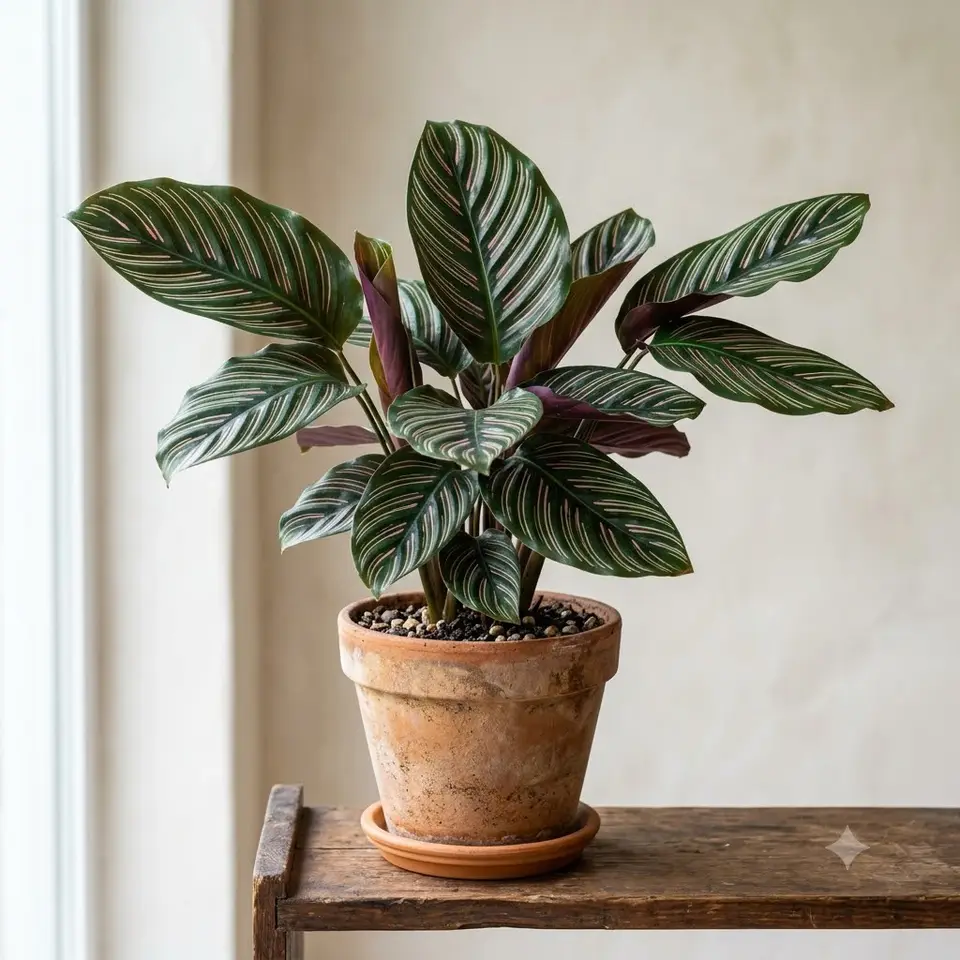
Calathea Ornata, often sold as the "pinstripe plant", is a striking tropical foliage plant prized for the fine rose-pink lines brushed across its deep green leaves (Calathea ornata, now often reclassified as Goeppertia ornata).
Last reviewed: October 2026
 AI illustration
 Overview
Calathea Ornata, often sold as the "pinstripe plant", is a striking tropical foliage plant prized for the fine rose-pink lines brushed across its deep green leaves (Calathea ornata, now often reclassified as Goeppertia ornata). It belongs to the prayer-plant family Marantaceae, and like its relatives it folds its leaves upward at night in a movement called nyctinasty. It is a genuine collector's plant: beautiful, expressive, and honestly a little demanding.
Origin & Natural Habitat
Calathea Ornata is native to the tropical forests of northwestern South America, chiefly Colombia and Venezuela. In the wild it grows on the shaded forest floor beneath the canopy, in warm, consistently humid air with dappled light and rich, moist, organic soil. Understanding that native setting explains almost every care requirement: it never evolved for dry rooms, harsh sun, or cold draughts.
Appearance
The plant forms a clumping rosette of long, oval to lance-shaped leaves held on upright stems, typically reaching 60 to 90 cm tall indoors, occasionally more in ideal conditions. Each glossy leaf is dark green above with delicate, evenly spaced pink to pale-rose pinstripes running from the midrib to the edge, while the underside is a rich burgundy purple. Young leaves often show the brightest pink, which can mature to creamy white or silver as the leaf ages. The overall habit is bushy and full, with new growth unfurling from tightly rolled leaf spears at the centre of the clump.
Why People Grow It - Qualities & Benefits
- Bold, painterly foliage with pink pinstripes and purple undersides that few other houseplants match
- Living movement: leaves rise at night and lower by day, giving the plant a quietly animated presence
- Non-flowering appeal that stays decorative all year without relying on blooms
- Genuinely pet-safe, so it suits homes with curious cats and dogs
Care
Light: Bright, indirect light. It thrives a step back from an east or north window, or behind a sheer curtain on a brighter exposure. Direct sun scorches the leaves and fades the pink pattern, while deep shade slows growth and dulls the colour. Water: Keep the soil lightly and evenly moist, never soggy and never bone dry. This is the plant most sensitive to water quality: fluoride, chlorine, and mineral salts in hard tap water cause the classic crispy brown edges. Use filtered, distilled, or rainwater - leaving tap water out overnight only lets chlorine escape, not fluoride or salts - and always let excess drain freely. Soil: A light, airy, moisture-retentive mix. A blend of peat-free coir or peat with perlite and a little fine orchid bark works well, holding moisture while still draining. Avoid heavy, compacting soils that stay waterlogged. Temperature & Humidity: Warm and stable, ideally 18 to 27°C, and never below about 15°C. High humidity is essential - aim for 60% or more. In dry rooms a humidifier is the reliable fix; pebble trays and grouping plants help a little but rarely enough on their own. Feeding: Feed with a balanced, diluted liquid houseplant fertiliser roughly every four to six weeks during spring and summer, and pause in winter. It is a light feeder, and over-fertilising builds up salts that worsen leaf-tip burn. Extra: The single biggest quirk is water sensitivity - if you only change one thing, switch to filtered or rainwater and watch the crispy edges ease. Reassuringly, Calathea Ornata is non-toxic to cats and dogs, making it a safe choice for pet households.
Propagation
The realistic and reliable method is division. During spring repotting, gently remove the plant, tease apart the root ball into clumps that each carry several healthy leaves and their own roots, and pot each division into fresh moist mix. Keep the new divisions warm, humid, and lightly watered while they settle, and avoid feeding until fresh growth appears. Stem or leaf cuttings do not work for this plant.
Common Problems & Pests
- Crispy brown leaf edges and tips, usually from low humidity, dry soil, or minerals and fluoride in tap water
- Spider mites, which thrive in dry indoor air - check leaf undersides for fine webbing and stippling
- Yellowing or drooping leaves from overwatering, cold draughts, or soggy roots
Toxicity & Safety
Calathea Ornata is non-toxic and pet-safe. As a member of the Marantaceae family it poses no poisoning risk to cats or dogs, and it is one of the reasons prayer plants are so popular with pet owners. The plant itself is safe to keep around animals and children; as with any houseplant, the potting soil and any fertiliser should not be eaten, and nibbled foliage may still cause mild digestive upset simply from the fibre.
Pros & Cons
Pros
- Genuinely pet-safe and non-toxic to cats and dogs
- Distinctive pink-striped, purple-backed leaves with charming daily leaf movement
Cons
- Fussy about humidity and quick to develop crispy edges in dry rooms
- Sensitive to tap-water minerals and fluoride, so it needs filtered or rainwater
Best Suited For
- Confident plant lovers who enjoy an expressive, slightly high-maintenance foliage plant
- Pet owners who want dramatic tropical leaves without any toxicity worry
FAQ
Why does my Calathea Ornata keep getting crispy brown edges?
Almost always it is a mix of dry air and tap-water minerals. Raise the humidity to 60% or more, keep the soil evenly moist, and switch to filtered, distilled, or rainwater. New leaves should then emerge clean, though existing damage will not heal.
Is Calathea Ornata safe if my cat chews on it?
Yes. It is non-toxic to cats and dogs, so it will not poison a pet that nibbles a leaf. Very large amounts of any plant fibre can still cause mild stomach upset, so it is best not to encourage chewing, but there is no toxicity risk.
Sources
Pet toxicity: checked against the ASPCA Animal Poison Control Center lists of toxic and non-toxic plants for cats and dogs, genus-wide entry "Calathea" (Calathea spp.): non-toxic to cats and dogs. Lists read on 10 October 2026.
Gear for growing calathea ornata
Links go to Amazon or a partner store (such as Adagio Teas) and may earn us a commission at no extra cost to you. As an Amazon Associate we earn from qualifying purchases. We link gear types, not sponsors' picks: you choose the exact product.