Calathea Roseopicta
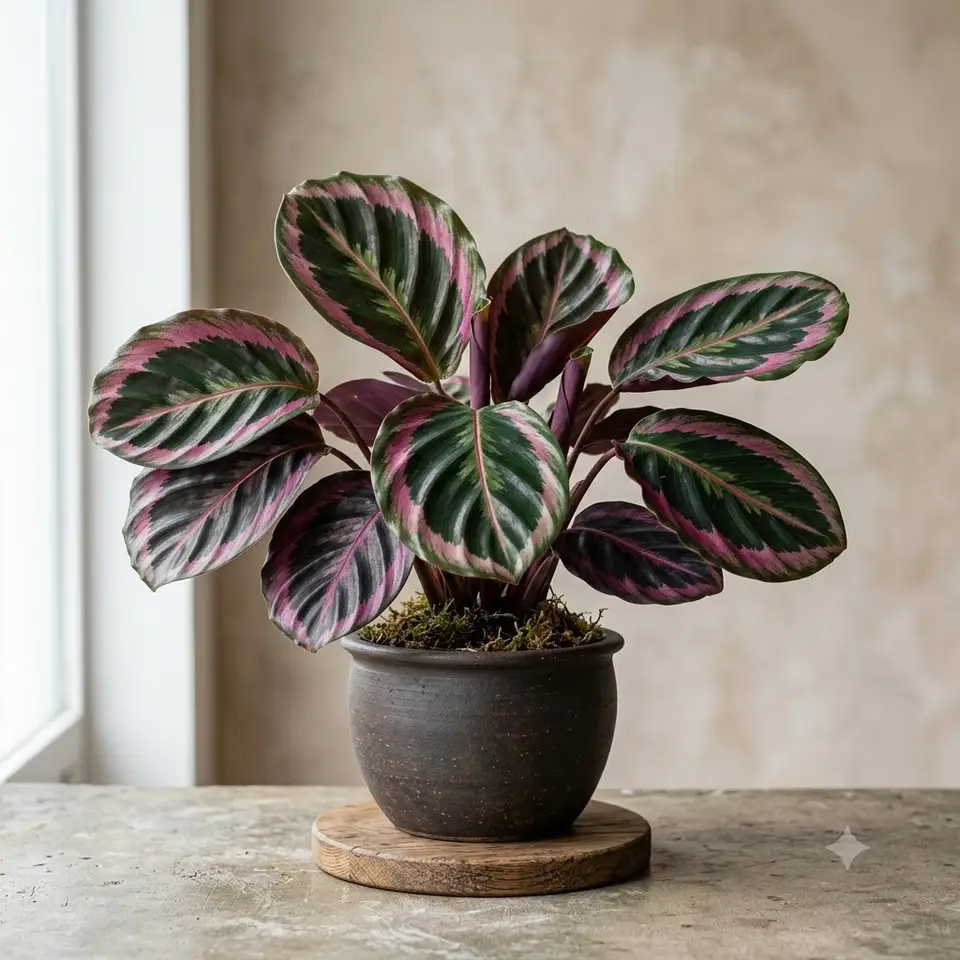
Calathea Roseopicta, often sold as the rose-painted calathea, is a compact, showy foliage plant prized for its rounded leaves brushed with feathery pink and silver markings (Calathea roseopicta).
Last reviewed: September 2026
 AI illustration
 Overview
Calathea Roseopicta, often sold as the rose-painted calathea, is a compact, showy foliage plant prized for its rounded leaves brushed with feathery pink and silver markings (Calathea roseopicta). It belongs to the prayer plant family and folds its leaves upward each evening in a slow, visible movement called nyctinasty. Botanists have reclassified many calatheas into the genus Goeppertia, so you may also see it listed as Goeppertia roseopicta, but the trade name Calathea remains by far the most common.
Origin & Natural Habitat
The species is native to the tropical lowland rainforests of northwest Brazil, in the western Amazon basin. In the wild it grows on the shaded forest floor, sheltered under the canopy where light is filtered, humidity stays consistently high, and the leaf litter keeps the root zone evenly moist and warm. Those understory conditions explain almost everything about its care indoors: it never evolved to cope with dry air, harsh sun, or cold, mineral-heavy water.
Appearance
The leaves are broadly oval to nearly round, typically 15 to 20 cm long, held on slender upright stalks. The upper surface is deep green with a bold feathered band of rose-pink to creamy silver radiating from the midrib, and the fine edge is often outlined in a thin dark line. The undersides are a rich burgundy to purple, which shows clearly when the leaves lift at night. Growth is clumping and low, spreading from a shallow rhizome rather than climbing, and a mature plant reaches roughly 40 to 50 cm tall and about as wide, making it a tidy tabletop specimen.
Why People Grow It - Qualities & Benefits
- Striking painted foliage with pink and silver feathering that reads as a living work of art
- Nightly leaf movement (nyctinasty) that makes it feel interactive and alive
- Stays compact and non-climbing, ideal for shelves, desks, and smaller rooms
- Genuinely pet-safe, so it suits households with cats and dogs
Care
Light: Bright, indirect light. Protect it from any direct sun, which scorches the leaves and bleaches the colour. It tolerates medium light but the pink markings fade and growth slows in a dim corner. Water: Keep the mix lightly and evenly moist, never waterlogged and never bone dry. This is the fussy part - it is sensitive to fluoride, chlorine, and salts in tap water, which cause browning. Use rainwater, distilled, or filtered water at room temperature, and let the top centimetre begin to dry before watering again. Soil: A light, airy, moisture-retentive mix. A peat-free blend of coco coir or peat with perlite and a little fine bark works well - it should hold moisture but still drain freely so the shallow roots never sit in water. Temperature & Humidity: Warm and stable, roughly 18 to 27°C. Avoid anything below about 15°C, and keep it away from cold draughts, radiators, and heat vents. Humidity is critical: aim for 60% or higher. In dry indoor air the leaf edges crisp brown, so a humidifier or a well-lit terrarium-style spot gives far better results than misting alone. Feeding: Feed lightly during spring and summer with a balanced liquid fertiliser at roughly half strength, about once a month. Over-feeding builds up salts that burn the sensitive roots and leaf tips, so err on the weak side and flush the pot occasionally. Extra: The single biggest key to success is water quality plus humidity - hard tap water and dry air are what kill most rose-painted calatheas. Reassuringly, this plant is non-toxic and pet-safe, making it a genuinely safe choice around cats and dogs.
Propagation
Propagate by division in spring, ideally when repotting. Ease the plant from its pot, gently tease the rhizome and root clump apart into sections that each carry several healthy leaves and their own roots, then pot each division into fresh airy mix. Keep the new pieces warm, humid, and evenly moist while they settle. Calatheas do not root from leaf or stem cuttings, so division is the only reliable home method.
Common Problems & Pests
- Crispy brown leaf edges and tips, usually from low humidity, dry soil, or minerals and fluoride in tap water
- Yellowing or limp leaves from overwatering, cold, or soggy compost around the shallow roots
- Spider mites, which thrive in dry air and stipple the leaves - check the undersides regularly and raise humidity to deter them
Toxicity & Safety
Calathea Roseopicta is non-toxic and pet-safe. It is a member of the Marantaceae (prayer plant) family and is not poisonous to cats or dogs, so it is a reassuring choice for pet households. The plant itself carries no toxicity concern; as a matter of common sense, potting mix and fertiliser are not meant to be eaten, but the leaves pose no poisoning risk.
Pros & Cons
Pros
- Beautiful, distinctive painted foliage and charming nightly leaf movement
- Non-toxic and safe around cats and dogs
Cons
- Fussy about humidity and water quality, with crispy edges appearing quickly if conditions slip
- Intolerant of cold, draughts, and direct sun, so placement has to be just right
Best Suited For
- Attentive plant lovers who can provide filtered water and steady humidity
- Pet owners wanting a striking but genuinely non-toxic foliage plant
FAQ
Why are the leaf edges turning brown and crispy?
Almost always dry air or water quality. Low humidity is the usual culprit, followed by minerals, chlorine, and fluoride in tap water. Raise humidity toward 60% or more, keep the soil evenly moist, and switch to rainwater, distilled, or filtered water to stop new browning.
Why do the leaves fold up at night?
That is natural behaviour called nyctinasty. The plant raises and lowers its leaves on a daily rhythm from a small joint at the base of each leaf. Healthy movement is a good sign - leaves that stay flat and limp day and night can indicate a watering or temperature problem.
Sources
Pet toxicity: checked against the ASPCA Animal Poison Control Center lists of toxic and non-toxic plants for cats and dogs, genus-wide entry "Calathea" (Calathea spp.): non-toxic to cats and dogs. Lists read on 10 October 2026.
Gear for growing calathea roseopicta
Links go to Amazon or a partner store (such as Adagio Teas) and may earn us a commission at no extra cost to you. As an Amazon Associate we earn from qualifying purchases. We link gear types, not sponsors' picks: you choose the exact product.