Calathea Rattlesnake
The Rattlesnake Plant is a striking prayer plant grown for its long, wavy-edged leaves patterned with alternating dark and light green markings that recall the skin of a snake (Goeppertia insignis, still widely sold as Calathea lancifolia).
Last reviewed: September 2026
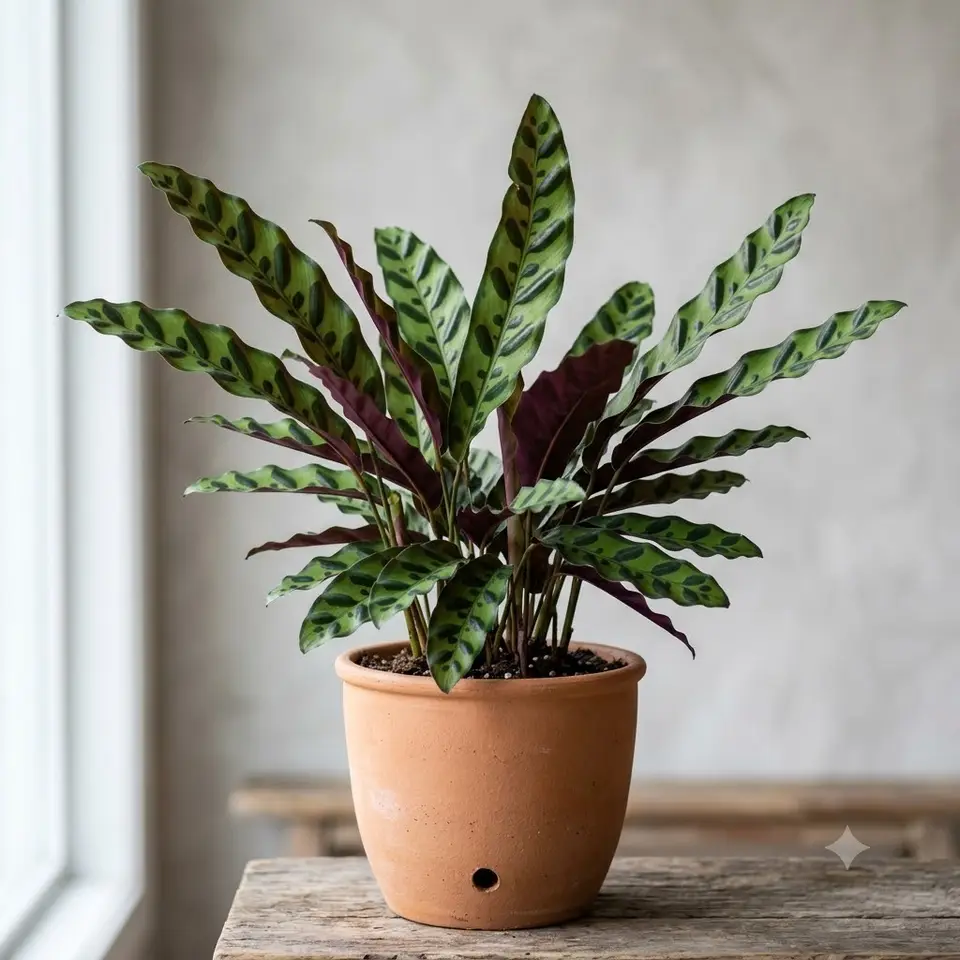 AI illustration
 Overview
The Rattlesnake Plant is a striking prayer plant grown for its long, wavy-edged leaves patterned with alternating dark and light green markings that recall the skin of a snake (Goeppertia insignis, still widely sold as Calathea lancifolia). Like other members of its family it performs nyctinasty, folding its leaves upward at dusk and lowering them again by morning. It rewards attentive care with dense, upright, deeply patterned foliage.
Origin & Natural Habitat
Calathea Rattlesnake is native to Brazil, where it grows in the shaded understorey of the Atlantic Forest in the region around Rio de Janeiro. In the wild it lives on the humid, leaf-littered forest floor, sheltered from direct sun by the canopy above and surrounded by consistently warm, moist air. Understanding that home helps explain its houseplant preferences: filtered light, steady warmth, and humidity rather than dry indoor air.
Appearance
The leaves are long and narrow, roughly lance-shaped, typically 25 to 45 cm long with gently rippling, wavy margins. Each pale green blade carries a repeating pattern of darker green ovals that alternate large and small along the central vein, while the undersides are a rich maroon-purple that shows as the leaves lift at night. Growth is upright and clumping, with new leaves unfurling from the centre of the rosette. Indoors a healthy plant reaches about 45 to 75 cm tall and spreads to a similar width over time.
Why People Grow It - Qualities & Benefits
- Bold, hand-painted foliage pattern that few other houseplants can match
- Genuinely pet-safe, so it suits homes with curious cats and dogs
- Nightly leaf movement makes it a living, changing plant rather than a static one
- Stays compact enough for shelves, desks, and grouped humidity displays
Care
Light: Bright, indirect light. Protect it from direct sun, which scorches the leaves and washes out the pattern; a spot near an east window or set back from a brighter one is ideal. Water: Keep the mix evenly moist but never waterlogged, letting only the top centimetre or two dry between waterings. This species is sensitive to fluoride, chlorine, and mineral salts in tap water, so use rainwater, distilled, or filtered water where you can. Soil: A light, airy, moisture-retentive mix - for example peat or coir with perlite and a little orchid bark - in a pot with drainage holes. Temperature & Humidity: Warm rooms of about 18 to 27°C suit it best; avoid anything below 15°C and keep it away from cold draughts and heating vents. Aim for humidity of 50 to 60% or higher. Feeding: Feed monthly through spring and summer with a balanced houseplant fertiliser diluted to half strength; pause in autumn and winter. Extra: The key quirk is that crispy leaf edges are almost always a water-quality or humidity problem, not a light one, so fix the water before anything else. Calathea Rattlesnake is non-toxic and safe for cats and dogs.
Propagation
The reliable method is division. When repotting in spring, gently tease the root ball apart into clumps, making sure each section keeps healthy roots and at least a few leaves, then pot each division into fresh mix and keep it warm, humid, and lightly moist while it re-establishes.
Common Problems & Pests
- Crispy brown leaf edges from low humidity, dry air, or mineral-heavy tap water
- Curling or limp leaves signalling underwatering, cold, or humidity that is too low
- Spider mites, which thrive in dry air; watch for fine webbing and stippled leaves
Toxicity & Safety
Calathea Rattlesnake is non-toxic to both cats and dogs. As a member of the Marantaceae family it is one of the genuinely pet-safe prayer plants, with no toxic compounds reported, so an accidental nibble is not a poisoning risk. The plant itself is safe, though the potting soil and any fertiliser should not be eaten, as those can cause mild digestive upset in pets or people.
Pros & Cons
Pros
- Exceptional patterned foliage with maroon undersides and nightly leaf movement
- Safe to grow around pets and children
Cons
- Fussy about humidity and water quality, prone to crispy edges
- Not a set-and-forget plant; needs consistent moisture and warmth
Best Suited For
- Pet owners who want dramatic foliage without a toxicity worry
- Attentive growers who enjoy fine-tuning humidity and water quality
FAQ
Why does my Rattlesnake Plant keep getting crispy brown edges?
Most often it is the water or the air rather than the light. Switch to rainwater, distilled, or filtered water, keep the soil evenly moist, and raise the humidity around the plant; new growth should come in clean.
Is the Calathea Rattlesnake safe for cats and dogs?
Yes. It is non-toxic to both, so it is a good choice for pet households. Just keep pets from digging in the soil, since eating potting mix or fertiliser can upset their stomach.
Gear for growing calathea rattlesnake
Links go to Amazon or a partner store (such as Adagio Teas) and may earn us a commission at no extra cost to you. As an Amazon Associate we earn from qualifying purchases. We link gear types, not sponsors' picks: you choose the exact product.