Calathea Lancifolia
Calathea Lancifolia, better known as the rattlesnake plant, is a striking foliage species prized for its long, wavy-edged leaves marked with alternating light and dark green blotches and deep purple undersides (Calathea lancifolia, syn. Goeppertia insignis).
Last reviewed: September 2026
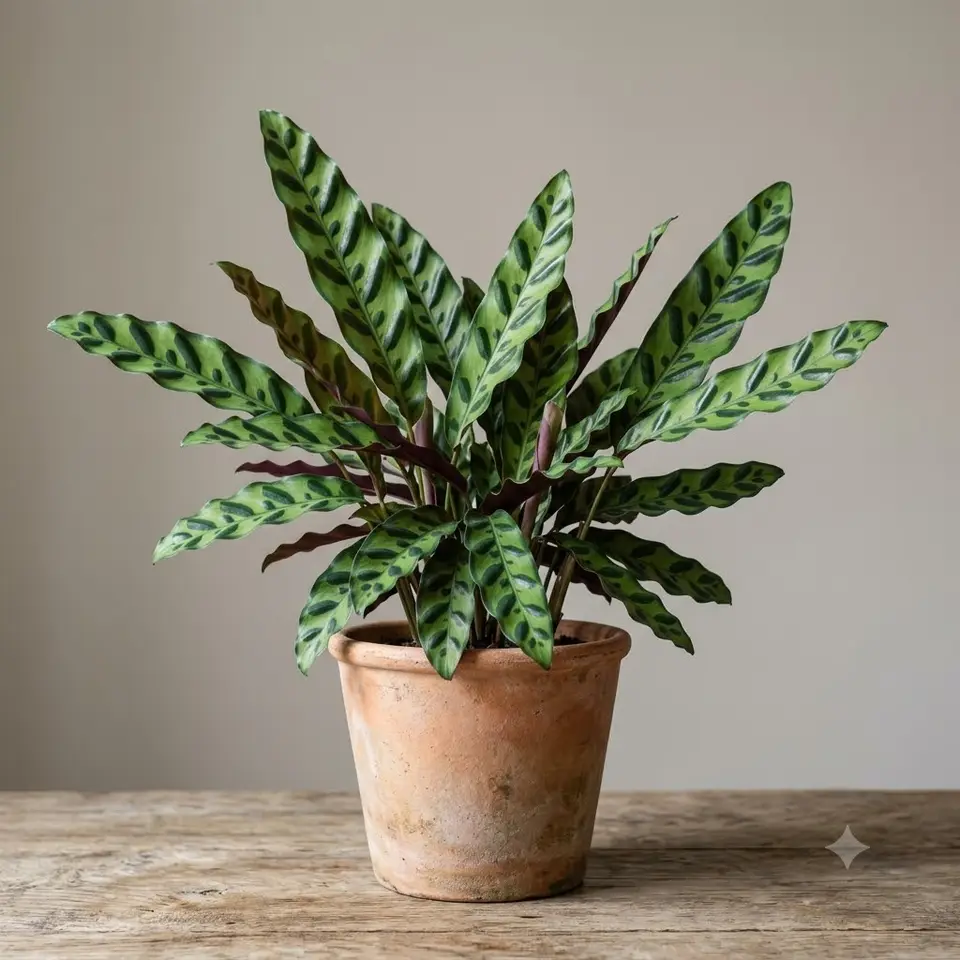 AI illustration
 Overview
Calathea Lancifolia, better known as the rattlesnake plant, is a striking foliage species prized for its long, wavy-edged leaves marked with alternating light and dark green blotches and deep purple undersides (Calathea lancifolia, syn. Goeppertia insignis). It belongs to the prayer plant family, so its foliage rises and lowers on a daily rhythm as light shifts. It is a rewarding but genuinely demanding plant that punishes dry air and hard tap water.
Origin & Natural Habitat
The species is native to the rainforests of eastern Brazil, where it grows on the shaded forest floor beneath the canopy. In that habitat it experiences warm, stable temperatures, consistently high humidity, filtered light and soft, mineral-poor rainwater. Understanding these origins explains almost every quirk of its care - it evolved for a sheltered, humid, low-light understorey rather than a dry living room.
Appearance
The leaves are long, narrow and lance-shaped, typically reaching 30 to 45 cm in length on slender upright stalks. Each leaf has a distinctive wavy, ruffled margin and a pale green surface patterned with alternating large and small dark green ovals along the midrib, while the underside is a rich burgundy-purple. Growth is clumping and upright, forming a dense rosette as new leaves unfurl from the centre. Indoors a mature plant usually reaches around 60 to 75 cm tall and a similar spread.
Why People Grow It - Qualities & Benefits
- Bold, almost painted foliage pattern that few other houseplants can match
- Purple leaf undersides that add colour and movement as the plant folds up at night
- Genuinely pet-safe, making it a rare statement plant for homes with cats and dogs
- Compact, upright habit that suits shelves, desks and shaded corners without spreading everywhere
Care
Light: Bright, indirect light with no direct sun. Too much sun scorches the leaves and fades the pattern; deep shade slows growth and dulls the colour. Water: Keep the mix lightly and evenly moist, never soggy and never bone dry. This species is famously sensitive to minerals - use rainwater, distilled or filtered water, as fluoride and chlorine in tap water cause browning. Soil: A light, airy, moisture-retentive mix - for example peat-free coir or peat with perlite and a little fine bark for drainage. Temperature & Humidity: Warm at 18 to 27°C, and never below about 15°C or in cold draughts. Humidity is the make-or-break factor: aim for 60% or higher, so a pebble tray, grouping or humidifier helps enormously. Feeding: Feed monthly through spring and summer with a balanced houseplant fertiliser at half strength, and pause in winter. Flush the pot occasionally to prevent salt build-up. Extra: The key quirk is water quality plus humidity - crispy brown edges are almost always a sign of hard water or dry air rather than neglect. Reassuringly, Calathea Lancifolia is non-toxic and safe for cats and dogs.
Propagation
Propagate by division during spring repotting. Gently tease the root ball apart into clumps, making sure each section keeps healthy roots and several leaves, then pot each division into fresh moist mix. Keep the new plants warm, humid and slightly shaded while they recover, as division is stressful and they may sulk for a few weeks before resuming growth.
Common Problems & Pests
- Crispy brown leaf edges and tips from low humidity, dry soil or fluoride and chlorine in tap water
- Curling, faded or scorched leaves from too much direct sun or underwatering
- Spider mites, which thrive in the dry air this plant hates - check leaf undersides regularly
Toxicity & Safety
Calathea Lancifolia is non-toxic to both cats and dogs. As a true prayer plant in the Marantaceae family, it is one of the safer statement foliage plants you can keep around curious pets, and no special hazard applies. The only sensible caution is the general one for any houseplant: the potting soil and fertiliser are not meant to be eaten, so discourage digging and nibbling.
Pros & Cons
Pros
- Spectacular patterned foliage with colourful purple undersides
- Genuinely pet-safe around cats and dogs
Cons
- Very fussy about humidity and water quality, with quick brown edges when unhappy
- Not a forgiving beginner plant and can sulk after any stress
Best Suited For
- Experienced plant keepers who enjoy fine-tuning humidity and water quality
- Pet owners who want a bold, safe statement plant for a warm, humid room
FAQ
Why does my Calathea Lancifolia keep getting brown, crispy edges?
This is almost always caused by low humidity or minerals in tap water. Switch to rainwater, distilled or filtered water, raise the humidity above 60%, and keep the soil evenly moist rather than letting it dry out.
Is Calathea Lancifolia safe for cats and dogs?
Yes. It is non-toxic to both cats and dogs, which makes it one of the better bold-foliage choices for a pet-friendly home. Just keep pets from eating the soil or fertiliser as a general precaution.
Sources
Pet toxicity: checked against the ASPCA Animal Poison Control Center lists of toxic and non-toxic plants for cats and dogs, genus-wide entry "Calathea" (Calathea spp.): non-toxic to cats and dogs. Lists read on 10 October 2026.
Gear for growing calathea lancifolia
Links go to Amazon or a partner store (such as Adagio Teas) and may earn us a commission at no extra cost to you. As an Amazon Associate we earn from qualifying purchases. We link gear types, not sponsors' picks: you choose the exact product.