Anthurium Andraeanum
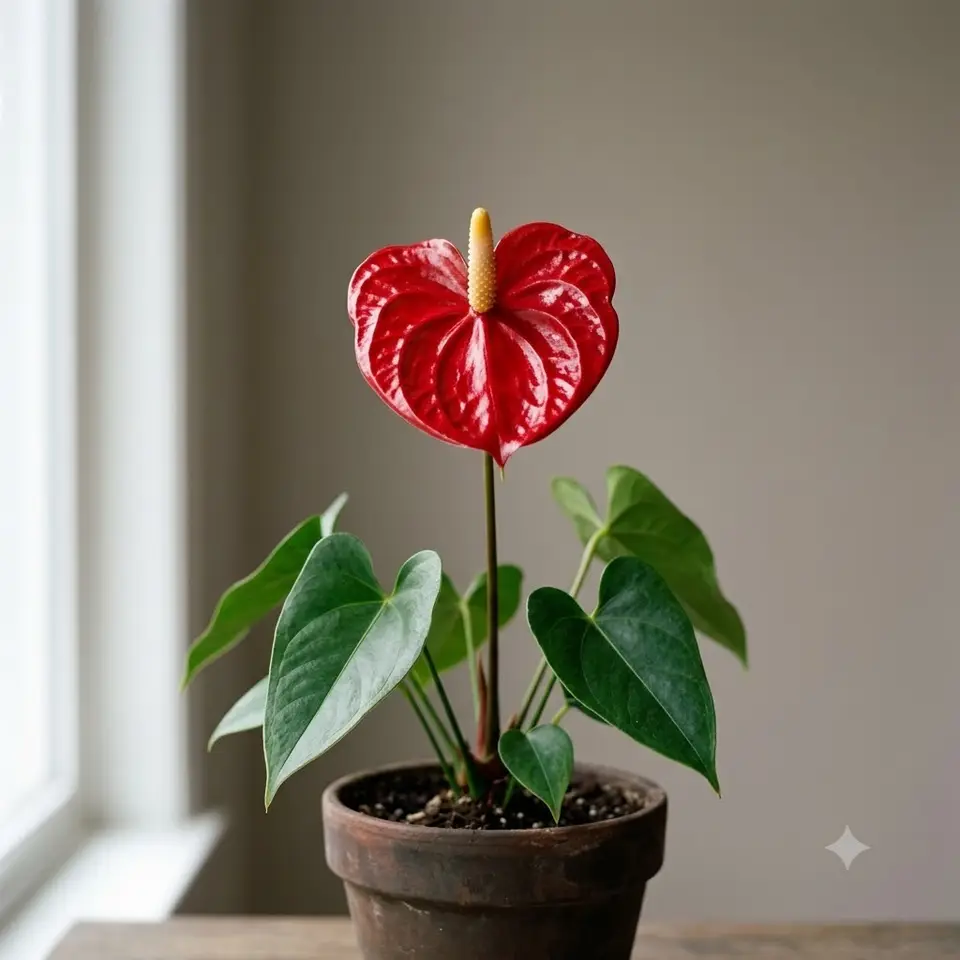
Anthurium andraeanum, often called the flamingo flower or painter's palette, is a tropical aroid prized for its lacquered, heart-shaped spathes that look almost artificial in their glossiness.
Last reviewed: September 2026
 AI illustration
 Overview
Anthurium andraeanum, often called the flamingo flower or painter's palette, is a tropical aroid prized for its lacquered, heart-shaped spathes that look almost artificial in their glossiness. Collectors love it for the long-lasting colour it brings indoors, the sculptural spadix at the centre of each bloom, and the wide range of spathe shades now available. Its botanical name is Anthurium andraeanum.
Origin & Natural Habitat
This species is native to the humid rainforests of Colombia and Ecuador in northwestern South America. In the wild it grows as an epiphyte or terrestrial plant in the warm, shady, consistently moist understory.
Appearance
The dark green leaves are large, leathery and heart-shaped (cordate), held on upright petioles to give a bushy, clumping habit. The famous "flower" is actually a waxy, glossy spathe - a modified bract in red, pink, coral, white or bicolour - with a straight or gently curved spadix rising from its base. Indoors it usually reaches 30 to 45 cm tall, though vigorous plants in good conditions can push to 60 cm or more.
Why People Grow It - Qualities & Benefits
- Blooms are extremely long-lasting, often holding colour for weeks or months
- Can flower on and off year-round in warm, bright conditions
- Compact, tidy habit that suits shelves, desks and tabletops
- Available in a rewarding spread of spathe colours to collect
Care
Light: Bright, indirect light. Direct midday sun scorches the spathes and leaves, while deep shade stops flowering and produces leggy growth.
Water: Keep the mix lightly moist but never soggy. Water when the top 2-3 cm or so feel dry, and always let excess drain away - this plant resents wet feet.
Soil: A chunky, fast-draining aroid mix: orchid bark, perlite and coco coir or peat. Good aeration around the roots is essential.
Temperature & Humidity: Warmth-loving, happiest between 18 and 27°C and unhappy below about 16°C. It genuinely wants high humidity, ideally 60% or more; in dry indoor air leaf edges brown and flowering suffers, so a humidifier or pebble tray often helps.
Feeding: Feed a diluted balanced or slightly higher-phosphorus fertiliser every 4 to 6 weeks during the active growing season, and ease off in winter.
Extra: This is an evergreen aroid that does not go fully dormant, but its growth and flowering slow markedly in cooler, darker months, so scale back water and feed then. Toxic to cats and dogs (insoluble calcium oxalate crystals in the sap) - keep out of reach of pets and children.
Propagation
The easiest method is division: separate offsets or pups with their own roots when repotting. Stem sections bearing aerial roots can also be rooted. Seed propagation is possible but slow and mainly of interest to hybridisers.
Common Problems & Pests
- Spider mites and thrips are frequent, especially in dry air; mealybugs and aphids also appear
- Root rot from overwatering or a heavy, waterlogged mix
- Brown leaf tips and edges from low humidity, and a refusal to bloom in too little light
Toxicity & Safety
Anthurium andraeanum is toxic to cats and dogs. All parts contain insoluble calcium oxalate crystals; when chewed, the sap releases these needle-like crystals, causing oral irritation, intense drooling, pawing at the mouth, and sometimes vomiting or difficulty swallowing. The sap can also irritate human skin, so wear gloves when pruning or dividing and wash your hands afterwards.
Pros & Cons
Pros
- Exceptionally long-lasting, vividly coloured blooms
- Compact and easy to fit into a bright indoor spot
Cons
- Genuinely fussy about humidity and warmth
- Prone to spider mites and to rot if overwatered
Best Suited For
- Growers who can provide steady warmth and higher humidity
- Collectors who want long-lasting colour rather than pure foliage
FAQ
Why won't my Anthurium bloom?
The most common cause is too little light. Move it to a brighter spot with strong indirect light, keep it warm, and feed lightly through the growing season to encourage new spathes.
Why are the leaf tips turning brown?
Usually low humidity, and sometimes inconsistent watering or a build-up of fertiliser salts. Raise humidity, water more evenly once the top 2-3 cm dry, and flush the pot occasionally.
Gear for growing anthurium andraeanum
Links go to Amazon or a partner store (such as Adagio Teas) and may earn us a commission at no extra cost to you. As an Amazon Associate we earn from qualifying purchases. We link gear types, not sponsors' picks: you choose the exact product.