Alocasia Jacklyn
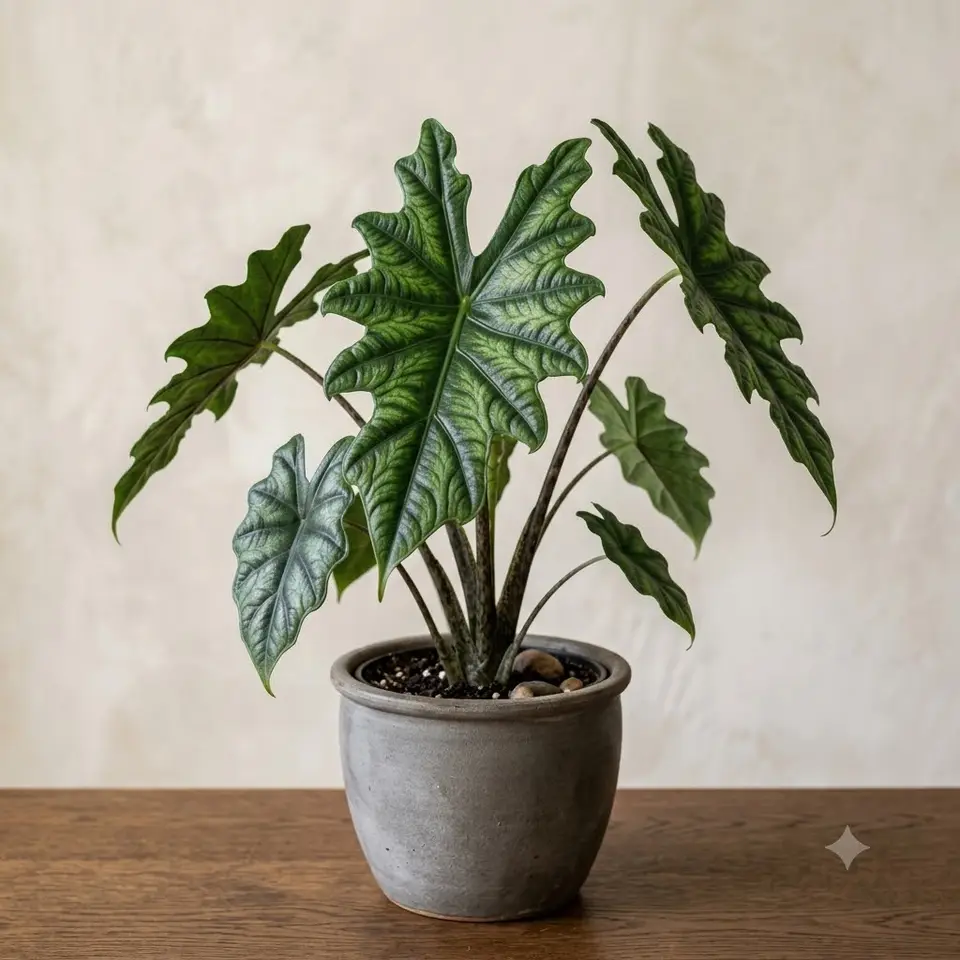
Alocasia Jacklyn is a striking collector aroid prized for its bold, deeply lobed, antler-like leaves and dramatic upright silhouette.
Last reviewed: September 2026
 AI illustration
 Overview
Alocasia Jacklyn is a striking collector aroid prized for its bold, deeply lobed, antler-like leaves and dramatic upright silhouette. Grown purely for its architectural foliage, it has become a modern statement plant for enthusiasts who want a large, sculptural look. It is a distinct species from the forests of Sulawesi, Indonesia that circulated for years in collector communities under the trade name "Jacklyn" before being formally described as Alocasia tandurusa.
Origin & Natural Habitat
The plant is native to the tropical forests of Sulawesi, Indonesia, where it grows in the warm, humid, shaded conditions of wet lower-montane forest. "Jacklyn" is a trade name rather than a botanical one, and it is still widely sold under it.
Appearance
Its glossy dark-green leaves are heavily serrated and pinnately lobed, giving each blade a jagged, almost hand-like outline with strongly sunken pale veins. The petioles are distinctively fuzzy and held stiffly upright, and mature leaves can reach 30 to 60 cm long. Indoors the whole plant commonly grows 60 to 90 cm tall and wide, forming a bold, vase-shaped clump.
Why People Grow It - Qualities & Benefits
- Dramatic sculptural leaves that read as living art in a room
- Strong vertical growth habit that fills a corner or floor space
- A sought-after collector plant that stands out in an aroid collection
- Fast, rewarding growth in the warm months when conditions are right
Care
Light: Bright, indirect light. An east window or a metre or so back from a south or west window is ideal. Avoid harsh direct sun, which scorches the leaves, and deep shade, which weakens growth.
Water: Keep the mix lightly and evenly moist, watering when the top 2-5 cm feel dry. It dislikes both drying out fully and sitting in soggy soil, so let excess drain freely every time.
Soil: A chunky, fast-draining aroid mix - for example potting soil blended with orchid bark, perlite, and a little coco coir. Airflow around the roots helps prevent rot.
Temperature & Humidity: Warmth-loving: 18 to 27°C is best, and it resents anything below about 16°C. It genuinely wants high humidity, ideally 60% or more; in dry indoor air the leaf edges brown and pests move in, so a humidifier is often needed.
Feeding: Feed with a balanced, diluted liquid fertilizer roughly every 2 to 4 weeks during spring and summer. Stop feeding in fall and winter when growth slows.
Extra: Be ready for dormancy - in cooler, darker months this Alocasia can drop leaves and rest from its tuber/rhizome. Do not toss it: keep the soil barely moist, ease off feeding, and it usually pushes new growth when warmth and light return. Toxic to cats and dogs (insoluble calcium oxalate crystals; the sap irritates the mouth and throat) - keep out of reach of pets and children.
Propagation
Propagate by division of the underground rhizome or by separating offsets (pups) that form at the base. Gently unpot, tease apart a clump or corm with roots, and pot it into its own container with warm, humid conditions to establish.
Common Problems & Pests
- Spider mites are the classic enemy, especially in dry air - watch for fine webbing and stippled, dull leaves
- Root rot and yellowing leaves from overwatering or dense, water-logged soil
- Crispy brown leaf edges and stalled growth from low humidity, cold drafts, or fluoride-sensitive tap water
Toxicity & Safety
Like all Alocasia, this plant is toxic to cats and dogs. Every part contains insoluble calcium oxalate crystals, which on chewing cause intense oral irritation, drooling, pawing at the mouth, and vomiting. The sap can also irritate human skin and eyes, so wash your hands after handling, repotting, or taking cuttings.
Pros & Cons
Pros
- Bold, unusual foliage with real collector appeal
- Grows fast and large when its warmth and humidity needs are met
Cons
- Fussy about humidity and prone to spider mites indoors
- Seasonal dormancy and leaf drop can alarm new owners
Best Suited For
- Experienced or committed hobbyists who can provide steady warmth and humidity
- Collectors wanting a large, statement aroid rather than an easy-care starter plant
FAQ
Why did my Alocasia Jacklyn suddenly drop its leaves?
This is usually dormancy triggered by cooler temperatures and lower light. Keep the tuber lightly moist, hold off on fertilizer, and be patient - fresh growth typically returns with warmth and longer days.
Is Alocasia Jacklyn hard to grow?
It is intermediate rather than beginner-friendly. The plant itself is not delicate, but it is demanding about high humidity, consistent warmth, and pest checks, which trips up newer growers.
Sources
Pet toxicity: checked against the ASPCA Animal Poison Control Center lists of toxic and non-toxic plants for cats and dogs, genus-wide entry "Alocasia" (Alocasia spp.): toxic to cats and dogs. Lists read on 10 October 2026.
Gear for growing alocasia jacklyn
Links go to Amazon or a partner store (such as Adagio Teas) and may earn us a commission at no extra cost to you. As an Amazon Associate we earn from qualifying purchases. We link gear types, not sponsors' picks: you choose the exact product.