Alocasia Polly
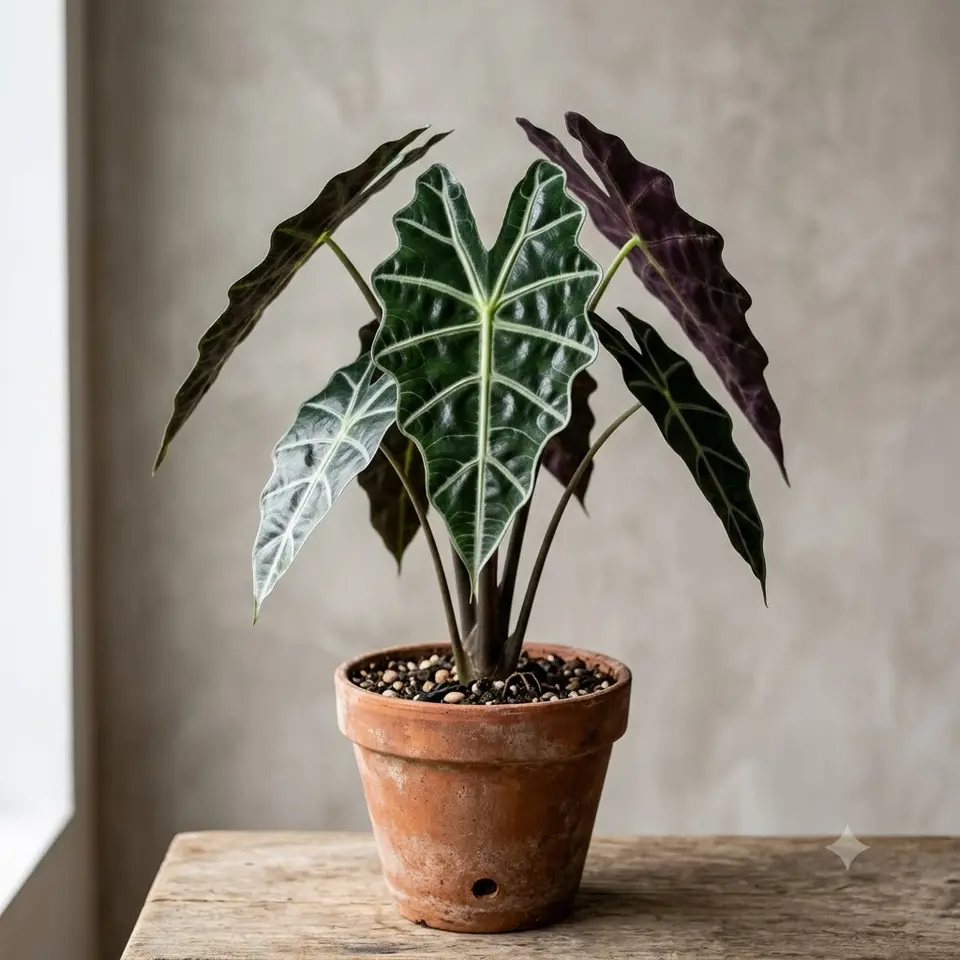
Alocasia Polly is a compact hybrid Alocasia prized for its dramatic, arrow-shaped leaves with sharply lobed edges and bold silvery-white veining.
Last reviewed: September 2026
 AI illustration
 Overview
Alocasia Polly is a compact hybrid Alocasia prized for its dramatic, arrow-shaped leaves with sharply lobed edges and bold silvery-white veining. It stays smaller than most jungle Alocasias, which makes it a popular shelf and tabletop showpiece for collectors who want that architectural, almost sculpted look without a giant footprint. It is a cultivated hybrid rather than a wild species (Alocasia x amazonica 'Polly').
Origin & Natural Habitat
'Polly' is a horticultural hybrid that does not occur in the wild - despite the "amazonica" label, it has no connection to the Amazon. Its parent species come from the humid, shaded understory of tropical Southeast Asian rainforests, and that warm, damp, filtered-light habitat is exactly what it still craves indoors.
Appearance
The leaves are glossy, deep blackish-green, narrowly heart-to-arrow shaped, with heavily scalloped, wavy margins and thick, contrasting pale-green to silver veins that give the surface a stiff, embossed appearance. Each leaf is held upright on a slender petiole, so the plant reads as vertical and structural rather than bushy. It is a modest grower, typically reaching about 30 to 60 cm tall indoors, with individual leaves roughly 15 to 30 cm long.
Why People Grow It - Qualities & Benefits
- Striking, high-contrast foliage that looks almost hand-painted
- Compact size that suits shelves, desks and small bright corners
- Bold, upright architectural shape adds instant drama to a plant group
- A satisfying "collector" challenge that rewards attentive care
Care
Light: Bright, indirect light. It wants plenty of brightness but no harsh direct sun, which scorches the thin leaves. An east window or a metre or so back from a brighter one works well.
Water: Keep the mix lightly and evenly moist during active growth, letting only the top 2-3 cm dry between waterings. Never leave it sitting in water - soggy roots rot quickly. Ease off noticeably in winter.
Soil: A chunky, fast-draining aroid mix - potting soil loosened with orchid bark, perlite and a little coco coir. It needs air around the roots as much as moisture.
Temperature & Humidity: Warmth-loving: 18 to 27°C is ideal, and it dislikes drafts or anything below about 16°C. Humidity is the honest sticking point - it really wants 60% or higher, and dry indoor air is the most common reason leaf edges brown and crisp. A pebble tray, grouping, or humidifier helps a lot.
Feeding: Feed with a balanced, diluted liquid fertilizer every 3 to 4 weeks during spring and summer. Stop feeding in autumn and winter while growth slows.
Extra: Be ready for dormancy - Alocasia Polly can drop leaves and appear to "die back" in cool, dark months. If the tuber is still firm, keep it barely moist and warm and it usually regrows. Toxic to cats and dogs (insoluble calcium oxalate crystals in the sap) - keep out of reach of pets and children.
Propagation
Propagate by dividing the tuberous rhizome or separating offset pups at repotting time. Gently tease apart a clump, ensuring each division has roots, then pot up in fresh airy mix and keep warm and humid until it establishes. It does not root reliably from leaf cuttings.
Common Problems & Pests
- Spider mites are the number one pest, especially in dry air - watch for fine webbing and stippled, dull leaves and check the undersides often
- Root rot from overwatering or dense, soggy soil, plus fungal leaf spots in stagnant conditions
- Crispy brown leaf edges and tips from low humidity, and yellowing or leaf drop that is often normal dormancy rather than death
Toxicity & Safety
Alocasia Polly is toxic to cats and dogs, and to humans if chewed. Like other Alocasia, it contains insoluble calcium oxalate crystals; when the tissue is bitten or crushed these needle-like crystals cause intense oral irritation, drooling, pawing at the mouth, and vomiting. The sap can also irritate skin and eyes, so wearing gloves when repotting or dividing is wise.
Pros & Cons
Pros
- Bold, unmistakable foliage in a space-friendly size
- Rewarding and collectible without needing a greenhouse-sized footprint
Cons
- Fussy about humidity and prone to spider mites
- Alarming seasonal dormancy that can worry newer growers
Best Suited For
- Intermediate growers who enjoy attentive, hands-on care
- Anyone who can provide steady warmth and higher humidity
FAQ
Why is my Alocasia Polly losing all its leaves?
Often this is seasonal dormancy triggered by cooler, darker months, not death. Check that the tuber is still firm, keep it warm and only lightly moist, and be patient - new leaves usually push out again when conditions improve.
How do I stop the leaf edges from turning brown?
Browning, crispy edges are almost always a humidity problem. Raise ambient humidity toward 60% or more with a humidifier or pebble tray, keep it away from heating vents and drafts, and maintain even (not soggy) soil moisture.
Sources
Pet toxicity: checked against the ASPCA Animal Poison Control Center lists of toxic and non-toxic plants for cats and dogs, genus-wide entry "Alocasia" (Alocasia spp.): toxic to cats and dogs. Lists read on 10 October 2026.
Gear for growing alocasia polly
Links go to Amazon or a partner store (such as Adagio Teas) and may earn us a commission at no extra cost to you. As an Amazon Associate we earn from qualifying purchases. We link gear types, not sponsors' picks: you choose the exact product.