Alocasia Wentii
Alocasia Wentii, often sold as the "Hardy Elephant Ear" or "New Guinea Shield," is a large-leaved tropical aroid prized for its bold, sculptural foliage and coppery-bronze coloring.
Last reviewed: October 2026
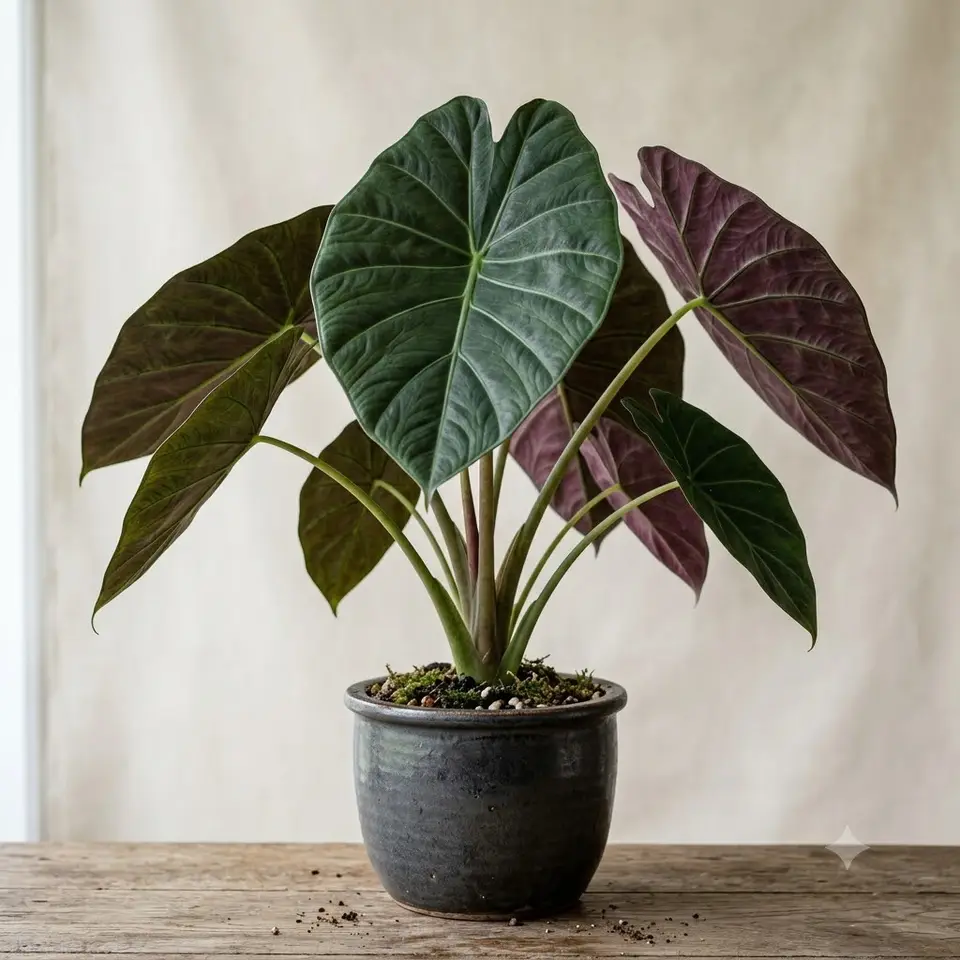 AI illustration
 Overview
Alocasia Wentii, often sold as the "Hardy Elephant Ear" or "New Guinea Shield," is a large-leaved tropical aroid prized for its bold, sculptural foliage and coppery-bronze coloring. Collectors love it because it delivers the dramatic elephant-ear look with a bit more forgiveness than many of its fussier Alocasia cousins, while still keeping that coveted metallic sheen. It is botanically known as Alocasia wentii.
Origin & Natural Habitat
Alocasia wentii originates from the tropical rainforests of New Guinea. In the wild it grows as an understory plant on warm, humid, shaded forest floors with rich, consistently moist soil.
Appearance
The leaves are broad, thick, and shield-shaped (peltate), with a slightly quilted texture and a dramatic two-tone effect: glossy bronze-green on top and a deep burgundy-purple underside. Held on sturdy upright petioles, the foliage radiates outward from a central rhizome, giving a fountain-like habit. Indoors it typically reaches 60 cm to 1.2 m tall and wide, with individual leaves growing to 30 cm or more across on mature plants.
Why People Grow It - Qualities & Benefits
- Large, statement-making foliage that anchors a plant collection or a room
- Striking bronze-topped, purple-backed leaves with a subtle metallic finish
- Considered one of the more resilient Alocasia types, tolerating slightly less-than-perfect conditions
- Fast, rewarding growth in the warm months, pushing out new leaves quickly when happy
Care
Light: Bright, indirect light. It wants plenty of illumination but no harsh direct midday sun, which scorches the leaves. An east-facing window or a metre or so back from a bright south or west window works well.
Water: Keep the soil evenly moist but never waterlogged. Water when the top 2-3 cm begin to dry, and empty any saucer promptly - soggy roots quickly lead to rot. Reduce watering noticeably in winter when growth slows.
Soil: A loose, airy, fast-draining aroid mix. A blend of potting soil with plenty of perlite, orchid bark, and a little coco coir gives the roots both moisture retention and aeration.
Temperature & Humidity: Warmth-loving: 18 to 27°C is ideal, and it dislikes drafts and anything below about 16°C. It genuinely wants high humidity, ideally 60% or more; in dry indoor air the leaf edges brown and it becomes far more prone to spider mites. A humidifier is the honest answer - misting alone rarely does enough.
Feeding: Feed with a balanced, diluted liquid fertilizer roughly every 3 to 4 weeks during spring and summer. Stop feeding entirely in fall and winter while growth is slow or paused.
Extra: Be prepared for dormancy. Like most Alocasia, wentii can drop leaves and rest during cooler, darker months - if it dies back, keep the rhizome barely moist and warm rather than throwing it out, and it usually reawakens in spring. Toxic to cats and dogs (insoluble calcium oxalate crystals in the sap and tissue) - keep out of reach of pets and children.
Propagation
The most reliable method is division. During spring repotting, gently separate the offsets, or "pups," and any small cormlets that form around the base of the rhizome, making sure each division has roots, then pot them into their own small containers of moist aroid mix. It does not propagate from leaf or stem cuttings.
Common Problems & Pests
- Spider mites are the number one pest, especially in dry air - inspect leaf undersides regularly for fine webbing and stippling
- Root rot from overwatering or dense, poorly draining soil, showing as yellowing, mushy stems
- Crispy brown leaf edges and tips from low humidity, underwatering, or fertilizer buildup
Toxicity & Safety
Alocasia wentii is toxic to cats and dogs, and to humans if chewed or swallowed. All parts contain insoluble calcium oxalate crystals; when the tissue is bitten or the sap contacts skin and mucous membranes, these needle-like crystals cause intense oral irritation, drooling, pawing at the mouth, difficulty swallowing, and vomiting. The sap can also irritate skin and eyes, so it is wise to wash your hands after handling, repotting, or dividing the plant. Keep it well out of reach of curious pets and children.
Pros & Cons
Pros
- Bold, high-impact foliage with unusual bronze-and-purple coloring
- More forgiving and vigorous than many temperamental Alocasia
Cons
- Demands high humidity and warmth to truly thrive indoors
- Prone to dormancy and to spider mites, and toxic to pets and people
Best Suited For
- Intermediate growers who can provide warmth, humidity, and steady moisture
- Collectors wanting a large statement aroid and who do not have pets that chew plants
FAQ
Why did my Alocasia Wentii suddenly lose its leaves?
This is usually dormancy, triggered by cooler temperatures or shorter, darker days rather than death. Keep the rhizome warm and barely moist, hold off on fertilizer, and be patient - new growth typically returns in spring.
Is Alocasia Wentii easier than other Alocasia?
Relatively, yes. It is often called a "hardy" elephant ear because it tolerates conditions that would sulk other species, but it still needs warmth, humidity, and careful watering, so it is best considered an intermediate plant rather than a beginner one.
Sources
Pet toxicity: checked against the ASPCA Animal Poison Control Center lists of toxic and non-toxic plants for cats and dogs, genus-wide entry "Alocasia" (Alocasia spp.): toxic to cats and dogs. Lists read on 10 October 2026.
Gear for growing alocasia wentii
Links go to Amazon or a partner store (such as Adagio Teas) and may earn us a commission at no extra cost to you. As an Amazon Associate we earn from qualifying purchases. We link gear types, not sponsors' picks: you choose the exact product.