Amazon Frogbit
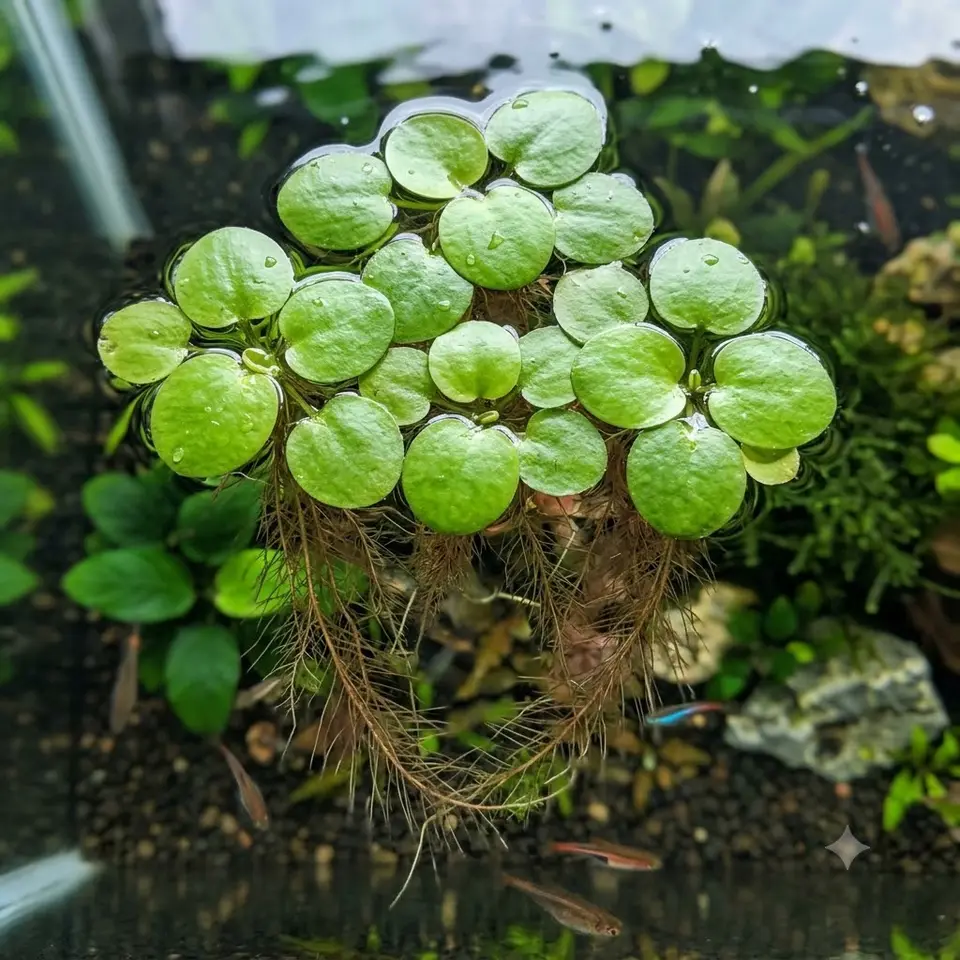
Amazon frogbit is a floating plant that looks like a scatter of tiny green lily pads on the surface, trailing long feathery roots into the water below.
Last reviewed: July 2026
 AI illustration
 Overview
Amazon frogbit is a floating plant that looks like a scatter of tiny green lily pads on the surface, trailing long feathery roots into the water below. It shades the tank, soaks up nutrients fast, and gives surface-dwellers and fry cover - all with no substrate and no CO2. (Limnobium laevigatum.)
Origin & Natural Habitat
Still and slow waters of Central and South America.
Appearance
Rosettes of round, glossy green pads a few centimetres across floating on the surface, with dense trailing roots beneath.
Why People Grow It - Qualities & Benefits
- Fast floating nutrient export
- Shades the tank and fights algae
- Cover and food refuge for fry
- No planting needed
Care
Light: Moderate to high from above; as a floater it gets the brightest light in the tank.
Water: 18-28°C, pH 6.0-7.5; adaptable.
Substrate: None - it floats. Trailing roots feed from the water column.
CO₂ & feeding: Not needed; floaters take CO2 from the air.
Placement: Surface - corral it with a floating ring or airline so it does not cover everything.
Extra: Keep water off the pads and keep the surface moving gently but not splashing - wet, splashed leaves rot and melt. A low water level under the lid, or a surface skimmer that is not too strong, keeps the tops dry.
Extra: Amazon frogbit (Limnobium laevigatum) is regulated in parts of the US - it is a Class A noxious weed on the Washington State quarantine list, where it is illegal to buy, sell or transport it, and it carries an A rating from the California Department of Food and Agriculture. Check your local rules before buying, keep it contained, and dispose of it dry in the bin. Never put it in a pond, ditch or waterway.
Propagation
Splits into daughter rosettes on its own; just remove excess to control it.
Common Problems & Pests
Melting from overhead condensation and splashing; grows fast enough to block light to plants below - thin it regularly.
Toxicity & Safety
Non-toxic to livestock; not known to be toxic to cats or dogs. Never release floaters outdoors - many are invasive. Confirm it is legal where you live.
Best Suited For
- Nutrient export and shade
- Fry and shrimp tanks
- Blackwater and low-light aquascapes
- Beginners in regions where it is legal
FAQ
Is Amazon frogbit legal to own?
It depends on where you live. In Washington State it is a Class A noxious weed on the quarantine list, so buying, selling or transporting it is illegal, and California rates it as an A-list pest. Check your local regulations before buying, and never release it.
Why are my frogbit leaves rotting?
Usually water sitting on the pads - from condensation dripping off the lid or filter splash. Keep the tops dry and the surface calm.
It's taking over the surface - is that a problem?
It can shade out plants below. Scoop out the excess regularly; bin it dry, never release it to the wild.
Gear for growing amazon frogbit
Links go to Amazon or a partner store (such as Adagio Teas) and may earn us a commission at no extra cost to you. As an Amazon Associate we earn from qualifying purchases. We link gear types, not sponsors' picks: you choose the exact product.