Angel Wing Begonia
The Angel Wing Begonia is a cane-type begonia prized for its dramatic, asymmetrical wing-shaped leaves that are often speckled with silver spots and flushed deep red underneath.
Last reviewed: September 2026
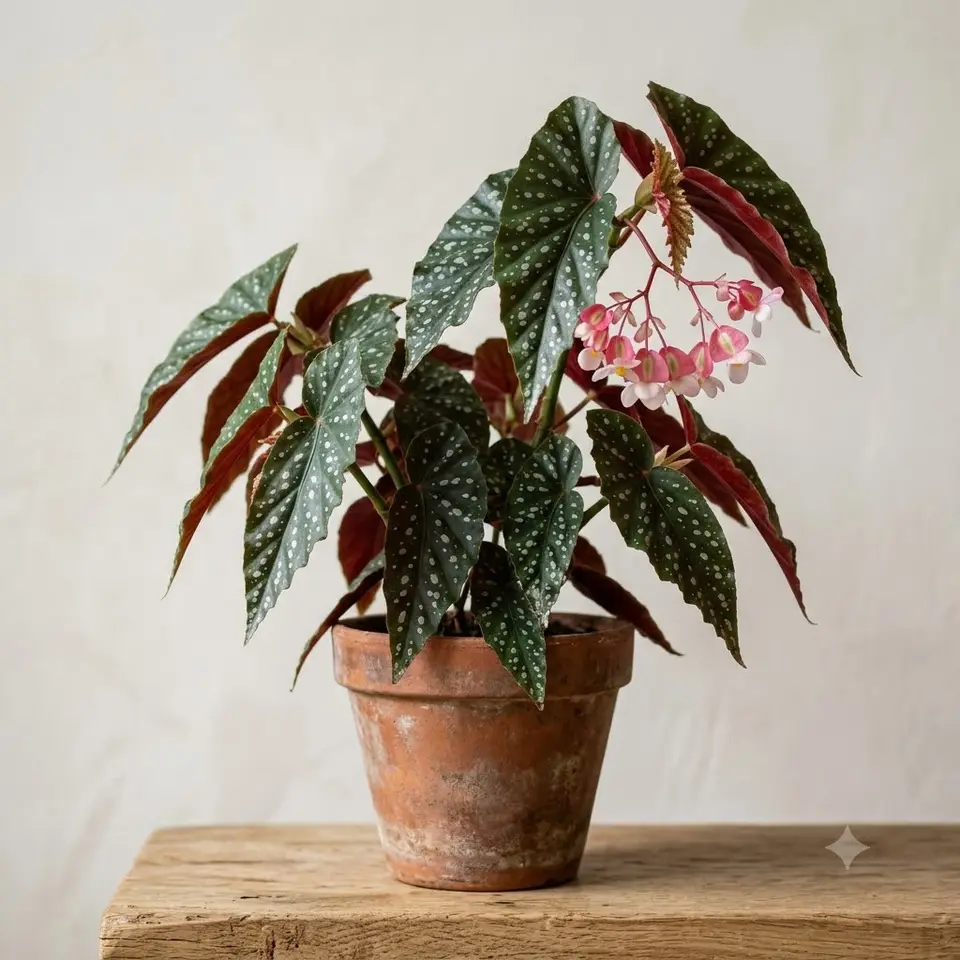 AI illustration
 Overview
The Angel Wing Begonia is a cane-type begonia prized for its dramatic, asymmetrical wing-shaped leaves that are often speckled with silver spots and flushed deep red underneath. Collectors love the combination of bold foliage, tall bamboo-like stems, and clusters of pendant flowers that can appear for much of the year indoors. It is a hybrid group, most commonly traced to a cross between Begonia coccinea and Begonia aconitifolia.
Origin & Natural Habitat
The parent species are native to the humid tropical forests of Brazil in South America, where they grow as understory plants in warm, shaded, moisture-rich conditions. This heritage explains the plant's preference for filtered light, steady warmth, and higher humidity in cultivation.
Appearance
The leaves are elongated and lopsided, shaped like a folded angel's wing, and range from olive to dark green, frequently dotted with silver or white spots and backed with maroon or red. Growth is upright and cane-like, with jointed, bamboo-style stems that can reach anywhere from about 30 cm to 1.2 m indoors, sometimes taller with age. Drooping clusters of small flowers in red, pink, orange, or white hang from the nodes during the growing season.
Why People Grow It - Qualities & Benefits
- Striking spotted, wing-shaped foliage that stands out even when the plant is not in bloom
- Long flowering period indoors, with pendulous clusters that add color for months
- Fast, upright growth that quickly fills a corner or shelf
- Very easy to propagate from cuttings, so one plant becomes many
Care
Light: Bright indirect light, with a little gentle morning sun tolerated. Too little light makes the canes stretch, weakens the color, and cuts down on flowering.
Water: Keep the soil evenly moist during spring and summer, letting the top 2-3 cm dry before watering again. These plants resent soggy roots, so ease off noticeably in winter to avoid stem and root rot.
Soil: A light, airy, well-draining mix works best - a peat or coir base with added perlite for aeration, kept slightly acidic.
Temperature & Humidity: Warmth-loving, happiest at roughly 18-24°C and unhappy below about 13-16°C. It tolerates average household air but prefers 50% humidity or more; dry indoor air often causes crispy leaf edges and dropped leaves.
Feeding: Feed with a balanced, diluted liquid fertilizer every 2 to 4 weeks through the active growing season, and stop in winter.
Extra: Cane begonias do not go fully dormant but they slow down in winter and get leggy over time, so regular pinching and hard pruning are needed to keep them bushy rather than bare and top-heavy. Toxic to cats and dogs (soluble calcium oxalates, most concentrated in the underground parts) - keep out of reach of pets and children.
Propagation
Propagates readily from stem cuttings. Take a cutting with one or two nodes, remove the lower leaves, and root it in water or directly in a moist, airy mix; new roots usually form within a few weeks.
Common Problems & Pests
- Powdery mildew, to which begonias are especially prone in stagnant, humid air with poor airflow
- Stem and root rot caused by overwatering or heavy, waterlogged soil
- Spider mites and mealybugs, plus leaf drop and browning edges triggered by cold drafts or dry air
Toxicity & Safety
Begonias are toxic to cats and dogs. They contain soluble calcium oxalates, with the highest concentration in the tubers and underground parts. Chewing or ingesting the plant can cause oral irritation, intense burning of the mouth and lips, drooling, vomiting, and difficulty swallowing. The sap may also irritate sensitive skin, so wear gloves when pruning if you are prone to reactions, and keep the plant away from curious pets and children.
Pros & Cons
Pros
- Eye-catching spotted foliage plus long-lasting blooms
- Fast growing and extremely easy to propagate
Cons
- Prone to legginess and needs regular pruning to stay full
- Susceptible to powdery mildew, rot, and spider mites, and toxic to pets
Best Suited For
- Collectors who want dramatic foliage and flowers without difficult, slow-growing care
- Growers who can offer warmth, decent humidity, and are willing to prune and stake as it grows
FAQ
Why is my Angel Wing Begonia getting tall and bare at the base?
This is normal cane-begonia behavior in low light or without pruning. Move it to brighter indirect light and pinch or cut back the canes to encourage branching and a fuller shape; the trimmings can be rooted as new plants.
Do Angel Wing Begonias need high humidity?
They prefer it. They will survive in average room humidity but often develop crispy leaf edges and drop leaves in very dry air, so grouping plants together or using a humidifier helps keep the foliage healthy.
Sources
Pet toxicity: checked against the ASPCA Animal Poison Control Center lists of toxic and non-toxic plants for cats and dogs, genus-wide entry "Begonia" (Begonia spp.): toxic to cats and dogs. Lists read on 10 October 2026.
Gear for growing angel wing begonia
Links go to Amazon or a partner store (such as Adagio Teas) and may earn us a commission at no extra cost to you. As an Amazon Associate we earn from qualifying purchases. We link gear types, not sponsors' picks: you choose the exact product.