Amazon Sword
The Amazon sword is the classic rooted centrepiece plant - a big rosette of broad green blades that fills the back of a tank and, once established, grows fast enough to be a genuine nutrient sponge.
Last reviewed: July 2026
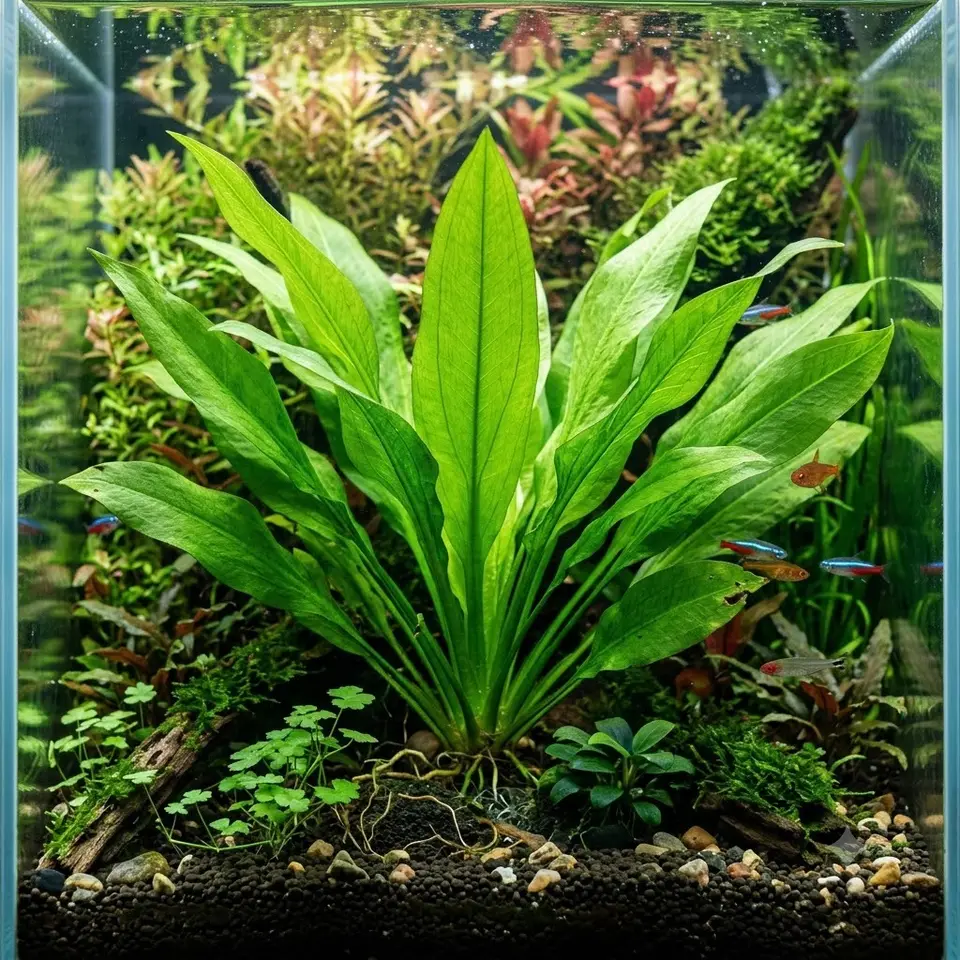 AI illustration
Overview
The Amazon sword is the classic rooted centrepiece plant - a big rosette of broad green blades that fills the back of a tank and, once established, grows fast enough to be a genuine nutrient sponge. It is a heavy root feeder, so it wants a rich substrate or root tabs. (Echinodorus grisebachii.)
Origin & Natural Habitat
South America, in and along the margins of rivers and floodplains across the Amazon basin.
Appearance
A dense rosette of lance-shaped bright-green leaves 20-50 cm long; a large, mature plant can dominate a 200-litre tank.
Why People Grow It - Qualities & Benefits
- Big, dramatic background centrepiece
- Fast growth soaks up nitrate
- Undemanding once rooted
- Long-lived and easy to propagate
Care
Light: Moderate to high; more light means faster, denser growth.
Water: 22-28°C, pH 6.5-7.5, soft to moderately hard.
Substrate: Nutrient-rich, or plain gravel/sand plus root tabs - it feeds mainly through its roots.
CO₂ & feeding: Optional; grows without it but faster and lusher with CO2 and root feeding.
Placement: Background or centrepiece - give it room; it gets large.
Extra: New sword plants often melt back after planting while they switch from farm-grown emersed leaves to submerged ones. Do not pull it up - keep the roots in and new underwater leaves will follow.
Propagation
It sends out runners (flower stalks) bearing baby plants; detach and plant them once rooted.
Common Problems & Pests
Pale leaves with green veins = iron/nutrient deficiency (add root tabs). Melting = transition or too little light.
Toxicity & Safety
Non-toxic to fish, shrimp and snails; not known to be toxic to cats or dogs. A safe, classic species.
Best Suited For
- Background and centrepiece planting
- Nutrient export in stocked tanks
- Beginners willing to feed the roots
- Larger aquariums
FAQ
My sword is falling apart after I planted it - what went wrong?
Usually normal transition melt. The farmed plant grew above water; underwater leaves now replace those. Leave the roots undisturbed and feed the substrate.
Why are the leaves pale with dark veins?
Iron and nutrient deficiency - swords are heavy root feeders. Push root tabs into the substrate near the crown.
Gear for growing amazon sword
Links go to Amazon or a partner store (such as Adagio Teas) and may earn us a commission at no extra cost to you. As an Amazon Associate we earn from qualifying purchases. We link gear types, not sponsors' picks: you choose the exact product.