Alocasia Zebrina
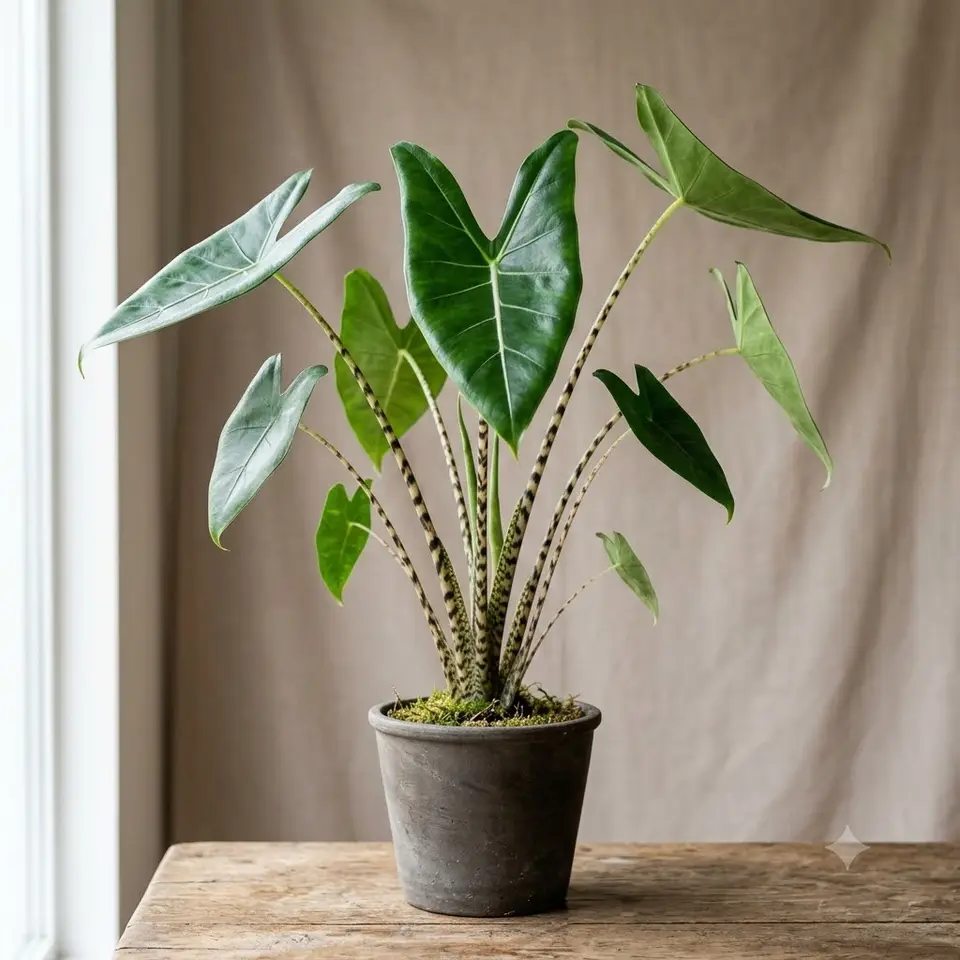
Alocasia Zebrina is a striking tropical aroid grown as much for its stems as its leaves - the petioles are marbled with bold zebra-like bands of yellow-green and dark brown.
Last reviewed: September 2026
 AI illustration
 Overview
Alocasia Zebrina is a striking tropical aroid grown as much for its stems as its leaves - the petioles are marbled with bold zebra-like bands of yellow-green and dark brown. Collectors chase it for that sculptural, almost animal-print look topped with glossy arrowhead foliage. It is a rewarding but genuinely fussy plant that punishes neglect and inconsistency (Alocasia zebrina).
Origin & Natural Habitat
Alocasia zebrina is endemic to the Philippines, where it grows in humid, shaded tropical rainforest understory on the island of Luzon and nearby areas. In the wild it enjoys warm temperatures, high humidity and dappled light filtered through the forest canopy.
Appearance
The plant produces glossy, mid-green arrowhead (sagittate) leaves that can span 30 to 45 cm, held aloft on tall, slender, upright petioles patterned with distinctive dark-and-light zebra striping. Growth is clumping and vertical, with new leaves emerging from a central rhizome. Indoors it commonly reaches 60 to 90 cm tall, occasionally more in ideal conditions.
Why People Grow It - Qualities & Benefits
- Unmistakable zebra-striped stems that no other common houseplant matches
- Bold, architectural silhouette that makes a strong statement in a bright corner
- A prized "collector" aroid that signals a serious plant hobby
- Compact footprint - it grows up rather than out, so it suits shelves and plant stands
Care
Light: Bright, indirect light. It needs plenty of light to stay compact and upright, but direct midday sun will scorch the leaves.
Water: Keep the mix evenly moist but never soggy. Water when the top 2-5 cm dry, and reduce watering noticeably in winter. It is extremely sensitive to both overwatering (rot) and drought (crisping).
Soil: A loose, chunky, fast-draining aroid mix - for example potting soil cut with orchid bark, perlite and a little coco coir. It hates dense, water-retentive soil.
Temperature & Humidity: Warmth-loving: 18 to 27°C is ideal, and it dislikes anything below about 16°C or cold drafts. Humidity should be high, ideally 60% or more; low household humidity is one of the most common reasons it declines, so a humidifier often helps.
Feeding: Feed with a balanced, diluted liquid fertilizer roughly every 3 to 4 weeks during spring and summer growth. Stop feeding in fall and winter.
Extra: Alocasia zebrina can go dormant, especially in winter or after stress - it may drop most or all of its leaves and look dead while the rhizome rests underground. Do not toss it; keep the mix barely moist and warm, and it usually pushes new growth when conditions improve. Toxic to cats and dogs (insoluble calcium oxalate crystals in the sap irritate the mouth and throat) - keep out of reach of pets and children.
Propagation
Propagate by division of the rhizome or by separating the small offset corms and pups it produces at the base. Pot up divisions in a warm, humid spot and be patient - Alocasia are slow and often sulk before rooting. Leaf cuttings do not work for this plant.
Common Problems & Pests
- Spider mites are the number one pest, thriving in the dry warm air it is often kept in; check leaf undersides for fine webbing and stippling
- Yellowing, drooping or crisping leaves from watering extremes, dry air, or cold drafts
- Root rot from soggy, poorly draining soil - a frequent killer of this species
Toxicity & Safety
Alocasia zebrina is toxic to cats, dogs and humans. Like other aroids it contains insoluble calcium oxalate crystals; when the sap is chewed or the plant is bitten, these crystals cause intense oral irritation, drooling, pawing at the mouth, and vomiting. The sap can also irritate skin and eyes, so wear gloves when repotting or dividing and wash your hands afterward.
Pros & Cons
Pros
- Show-stopping, one-of-a-kind striped stems and bold foliage
- Grows upward and stays relatively compact for its drama
Cons
- Genuinely fussy about humidity, watering and warmth - not forgiving
- Prone to spider mites and to sudden leaf drop or dormancy that alarms new owners
Best Suited For
- Experienced hobbyists who can provide steady warmth and high humidity
- Collectors who want a statement aroid and enjoy the challenge of a temperamental plant
FAQ
Why did my Alocasia Zebrina suddenly lose all its leaves?
It is likely going dormant, often triggered by shorter days, cold, or stress. Keep the rhizome warm and the soil barely moist, ease off watering, and wait - new growth usually returns once conditions improve.
Is Alocasia Zebrina safe around pets?
No. It is toxic to cats and dogs due to insoluble calcium oxalate crystals, which cause mouth irritation, drooling and vomiting if chewed. Keep it well out of reach.
Sources
Pet toxicity: checked against the ASPCA Animal Poison Control Center lists of toxic and non-toxic plants for cats and dogs, genus-wide entry "Alocasia" (Alocasia spp.): toxic to cats and dogs. Lists read on 10 October 2026.
Gear for growing alocasia zebrina
Links go to Amazon or a partner store (such as Adagio Teas) and may earn us a commission at no extra cost to you. As an Amazon Associate we earn from qualifying purchases. We link gear types, not sponsors' picks: you choose the exact product.