Alocasia Sarian
Alocasia Sarian is a striking hybrid aroid prized for pairing dramatic arrow-shaped foliage with tall, zebra-patterned stems.
Last reviewed: September 2026
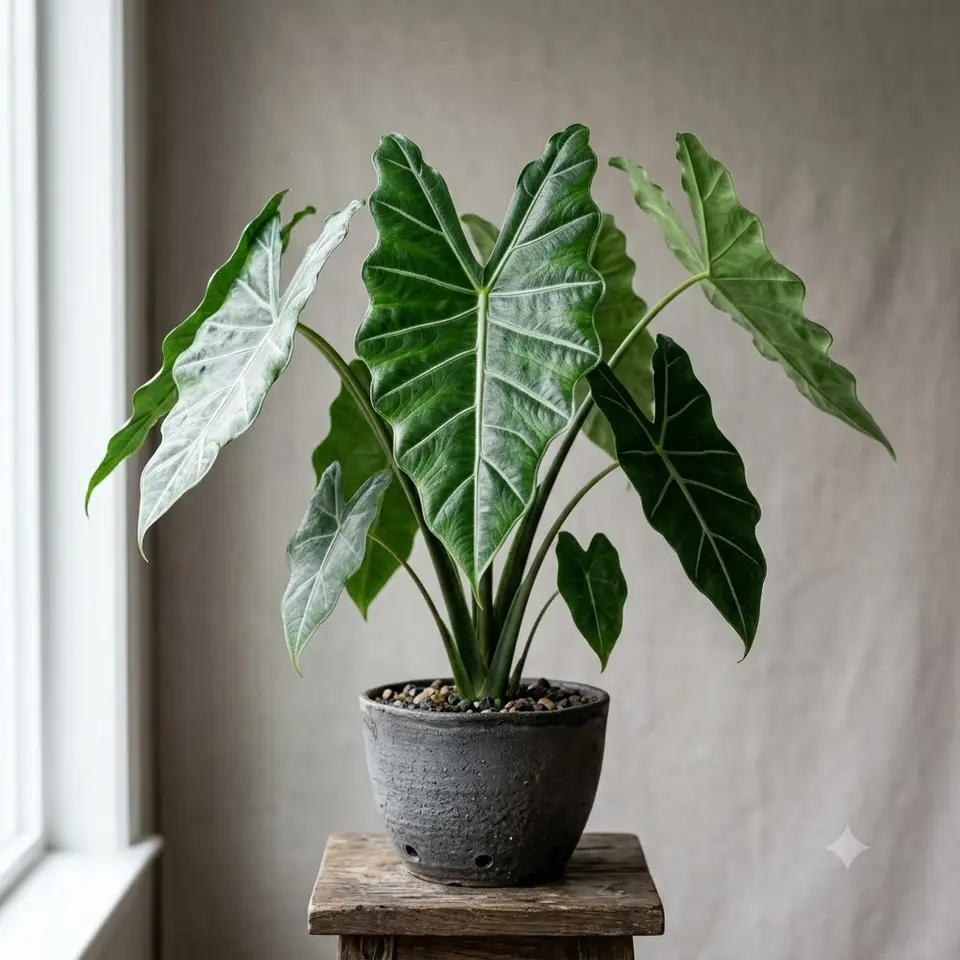 AI illustration
 Overview
Alocasia Sarian is a striking hybrid aroid prized for pairing dramatic arrow-shaped foliage with tall, zebra-patterned stems. It is a cross between Alocasia zebrina and Alocasia micholitziana 'Frydek', inheriting the bold veining of one parent and the striped petioles of the other, which is exactly why collectors chase it (Alocasia 'Sarian').
Origin & Natural Habitat
Sarian is a cultivated hybrid rather than a wild plant, so it has no natural range of its own. Its parent species originate in the humid tropical forests of the Philippines and Southeast Asia, where Alocasia grow as understory plants in warm, moist, filtered-light conditions.
Appearance
The leaves are large, glossy, and sagittate (arrowhead-shaped), deep green with prominent pale silvery-green veins that stand out sharply against the blade. Each leaf is held on a tall, upright petiole banded in green and cream, giving a zebra-stripe effect that becomes more pronounced as the plant matures. Grown well indoors it can reach roughly 1.2 to 1.5 m tall, with individual leaves often 30 to 45 cm long.
Why People Grow It - Qualities & Benefits
- Bold, sculptural arrowhead leaves with high-contrast veining
- Eye-catching zebra-striped petioles that add vertical structure
- A relatively compact footprint for the dramatic height it delivers
- A satisfying "collector" hybrid that reads as a statement plant
Care
Light: Bright, indirect light. Avoid harsh direct sun, which scorches the leaves; too little light causes weak, leggy growth and faded striping.
Water: Keep the soil evenly moist but never soggy. Water when the top 2-3 cm begin to dry, and empty the saucer promptly - Sarian rots easily if it sits in water, yet sulks and drops leaves if allowed to fully dry out.
Soil: A chunky, fast-draining aroid mix - for example potting soil blended with orchid bark, perlite, and a little coco coir - so roots get both moisture and air.
Temperature & Humidity: Warmth-loving; happiest around 18 to 27°C and unhappy below about 15°C. It genuinely wants high humidity, ideally 60% or more. In dry indoor air the leaf edges brown and spider mites move in, so a humidifier is often necessary rather than optional.
Feeding: Feed with a balanced, diluted liquid fertilizer roughly every 3 to 4 weeks during spring and summer. Stop feeding in fall and winter when growth slows.
Extra: Be prepared for dormancy - in cooler, darker months Sarian may drop most or all of its leaves and rest as a tuber. Do not toss it; cut back on water and keep it warm, and it usually reshoots when light and warmth return. Toxic to cats and dogs (insoluble calcium oxalate crystals in the sap irritate the mouth and throat) - keep out of reach of pets and children.
Propagation
Propagate by division of the offsets (corms/pups) that form around the base of the mother plant. Separate a pup with some roots attached during repotting and pot it into its own small container of moist, airy mix. Seed is impractical for a hybrid, and stem cuttings do not work for Alocasia.
Common Problems & Pests
- Spider mites are the number one pest, thriving in dry air; watch for fine webbing and stippled, dull leaves
- Root rot and yellowing from overwatering or dense, water-logged soil
- Crispy brown leaf edges and tips from low humidity, or sudden leaf drop when stressed by cold, drafts, or moving into dormancy
Toxicity & Safety
Like all Alocasia, Sarian is toxic to cats and dogs. Every part of the plant contains insoluble calcium oxalate crystals, and chewing or biting releases them into the mouth and throat. Typical signs include intense oral irritation, drooling, pawing at the mouth, vomiting, and difficulty swallowing. The sap can also irritate human skin and eyes, so wearing gloves when repotting or dividing is wise, and the plant should be kept away from curious pets and children.
Pros & Cons
Pros
- Dramatic, high-contrast foliage and striped stems with strong vertical presence
- Compact base makes a big visual impact in limited floor space
Cons
- Fussy about humidity and warmth, and prone to spider mites
- Dormancy and sudden leaf drop can alarm and frustrate less patient growers
Best Suited For
- Intermediate collectors who can provide consistent warmth and high humidity
- Growers who want a bold statement aroid and won't panic when it goes dormant
FAQ
Why did my Sarian suddenly drop its leaves?
Most often this is dormancy triggered by shorter days, cooler temperatures, or a drop in humidity. Keep the tuber warm, water sparingly, and wait - new growth usually returns once conditions improve.
Does Sarian really need a humidifier?
In most homes, yes. It can survive in average humidity but tends to develop brown edges and attract spider mites in dry air, so 60% or higher humidity keeps it looking its best.
Sources
Pet toxicity: checked against the ASPCA Animal Poison Control Center lists of toxic and non-toxic plants for cats and dogs, genus-wide entry "Alocasia" (Alocasia spp.): toxic to cats and dogs. Lists read on 10 October 2026.
Gear for growing alocasia sarian
Links go to Amazon or a partner store (such as Adagio Teas) and may earn us a commission at no extra cost to you. As an Amazon Associate we earn from qualifying purchases. We link gear types, not sponsors' picks: you choose the exact product.