Alocasia Sinuata
Alocasia Sinuata is a compact "jewel" Alocasia prized for its thick, sculpted leaves that look almost quilted, earning it the nickname "Quilted Dreams."
Last reviewed: September 2026
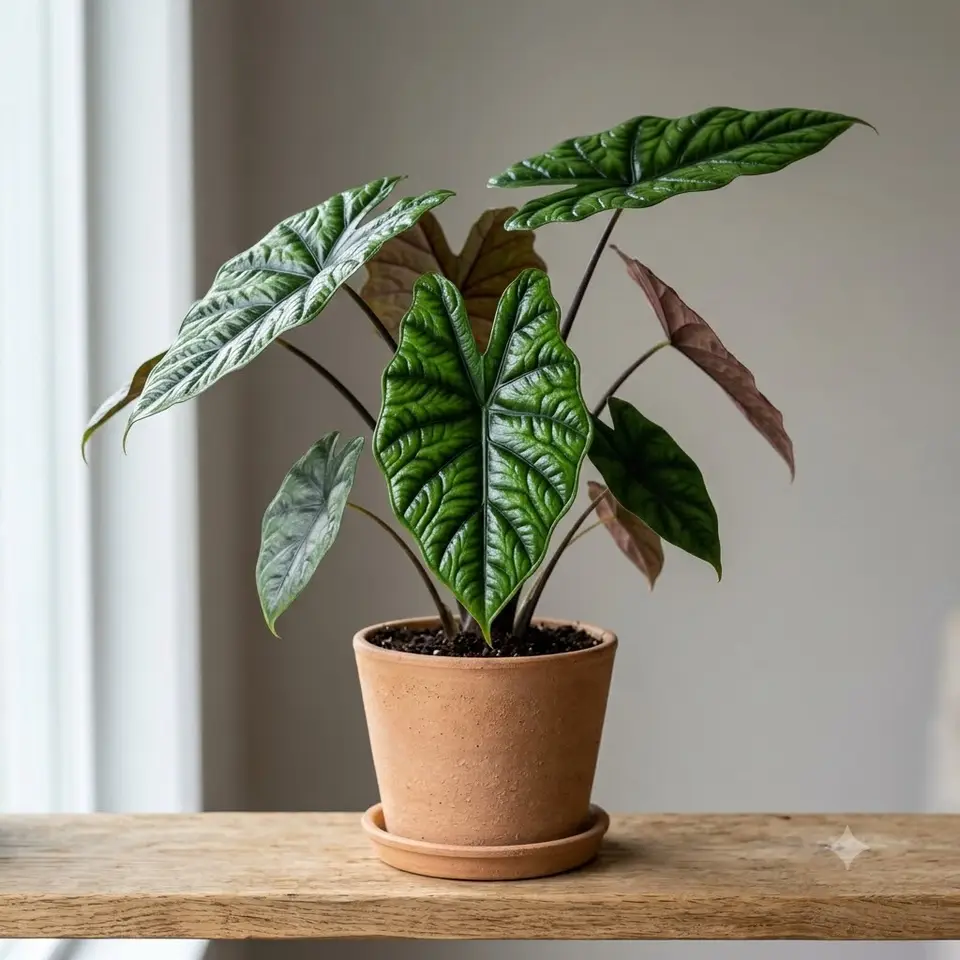 AI illustration
 Overview
Alocasia Sinuata is a compact "jewel" Alocasia prized for its thick, sculpted leaves that look almost quilted, earning it the nickname "Quilted Dreams." Collectors chase it for that heavily textured, leathery foliage on a small footprint that fits a shelf or terrarium. It is a true species rather than a hybrid (Alocasia sinuata).
Origin & Natural Habitat
Alocasia sinuata is native to the Philippines, where it grows as an understory plant on shaded, humid tropical forest floors. In the wild it sits in warm, moist, filtered light with excellent air movement and consistently high humidity.
Appearance
The leaves are short, rounded to oval, and deeply puckered (bullate) between prominent sunken veins, giving a rigid, waffled, almost metallic-green surface with a stiff, waxy feel. Foliage is dark glossy green above and often flushed purple underneath, held on short petioles in a low clump. It stays small for the genus, usually under about 40 cm tall with individual leaves roughly 10 to 20 cm long.
Why People Grow It - Qualities & Benefits
- Striking, heavily quilted texture that few other houseplants match
- Compact size that suits shelves, cabinets, and closed terrariums
- Thick, leathery leaves that are sturdier than most thin-leaved jewel Alocasias
- A genuine collector species that adds a sculptural, statement look to a display
Care
Light: Bright, indirect light. Protect it from direct midday sun, which scorches the leaves, but avoid deep shade or it grows weak and leggy.
Water: Keep the mix lightly and evenly moist, watering when the top 2-3 cm begin to dry. It is very sensitive to soggy roots, so let excess drain fully and never leave it standing in water.
Soil: A loose, fast-draining aroid mix - for example bark, perlite, and coco coir or peat with a little charcoal - so the roots get moisture plus plenty of air.
Temperature & Humidity: Warm year-round, ideally 18 to 27°C, and never below about 16°C. It wants high humidity, 60% or more; a terrarium, cabinet, or humidifier is honestly close to essential, as dry indoor air quickly leads to crisping and pests.
Feeding: Feed with a balanced, diluted liquid fertilizer roughly every 3 to 4 weeks during active spring and summer growth, and stop feeding in fall and winter.
Extra: This plant grows from a corm and can go dormant, especially in cooler, darker months, sometimes dropping most or all of its leaves. Do not throw out a bare pot; keep the mix barely moist and warm, and it usually resprouts. Toxic to cats and dogs (insoluble calcium oxalate crystals in the sap irritate the mouth and throat) - keep out of reach of pets and children.
Propagation
Propagate by division. At repotting, gently separate the small offset corms or clumps that form at the base, making sure each piece has roots, then pot them into the same airy mix and keep warm and humid while they establish.
Common Problems & Pests
- Spider mites are the main threat, thriving in dry air and stippling or webbing the leaves; raise humidity and inspect undersides often
- Root rot and yellowing lower leaves from overwatering or dense, water-logged soil
- Crispy brown leaf edges and stalled growth from low humidity, or sudden leaf loss when the plant enters dormancy
Toxicity & Safety
Like all Alocasia, Alocasia sinuata is toxic to cats and dogs. Every part of the plant contains insoluble calcium oxalate crystals; when chewed they cause intense oral irritation, drooling, pawing at the mouth, vomiting, and difficulty swallowing. The sap can also irritate skin, so wear gloves when dividing or repotting and wash your hands afterward.
Pros & Cons
Pros
- Rare, sculptural quilted foliage that stands out in any collection
- Stays small and works well in terrariums and cabinets
Cons
- Demands high humidity and warmth and sulks in dry rooms
- Prone to spider mites and to dormancy that can look alarming
Best Suited For
- Experienced collectors who can provide a terrarium or humid, warm setup
- People who want a compact statement aroid and understand its dormancy habit
FAQ
Why did my Alocasia Sinuata drop all its leaves?
This is usually dormancy, often triggered by cooler temperatures or lower light. Keep the corm warm and the soil barely moist, ease off feeding, and it typically pushes out new leaves when conditions improve.
Is Alocasia Sinuata a good beginner plant?
Not really. Its high humidity needs, mite-prone leaves, and dormancy make it best for growers who already have some Alocasia experience or a controlled, humid environment.
Sources
Pet toxicity: checked against the ASPCA Animal Poison Control Center lists of toxic and non-toxic plants for cats and dogs, genus-wide entry "Alocasia" (Alocasia spp.): toxic to cats and dogs. Lists read on 10 October 2026.
Gear for growing alocasia sinuata
Links go to Amazon or a partner store (such as Adagio Teas) and may earn us a commission at no extra cost to you. As an Amazon Associate we earn from qualifying purchases. We link gear types, not sponsors' picks: you choose the exact product.