Alocasia Macrorrhiza
Alocasia Macrorrhiza, often called Giant Taro or Upright Elephant Ear, is a dramatic tropical aroid grown for its huge, glossy, arrow-shaped leaves held upright on tall stems.
Last reviewed: September 2026
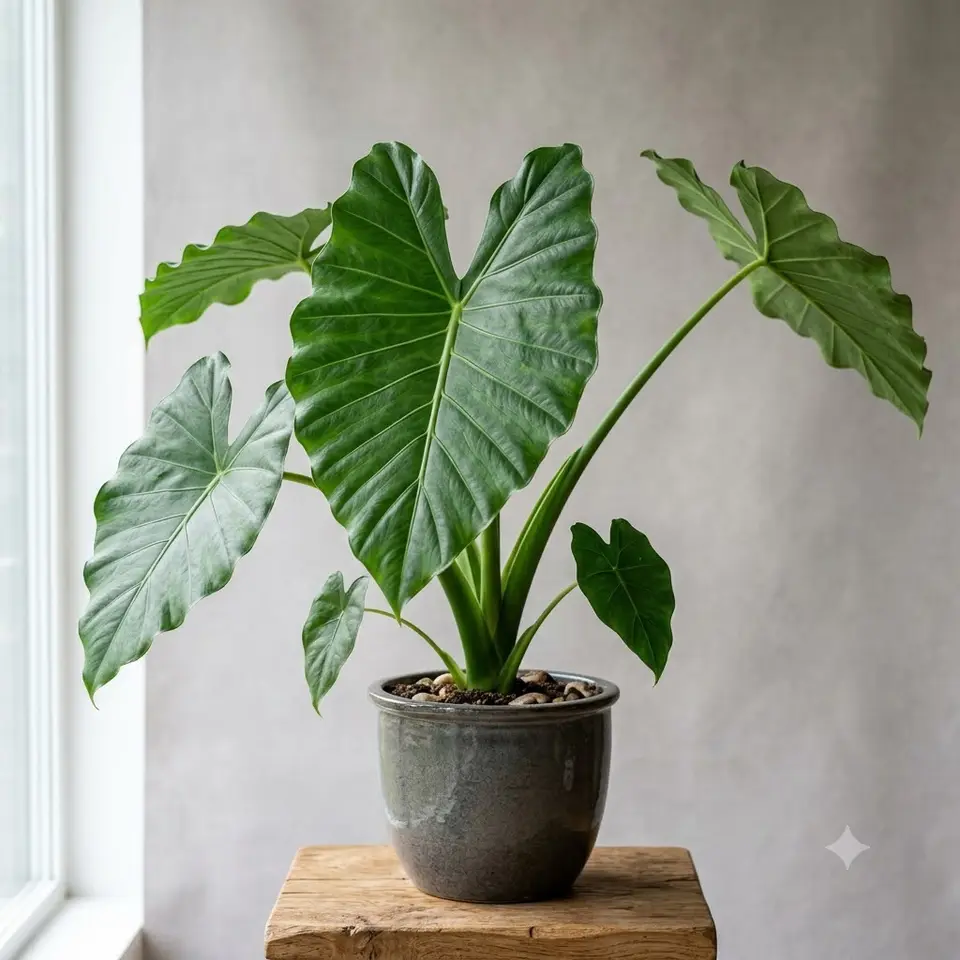 AI illustration
 Overview
Alocasia Macrorrhiza, often called Giant Taro or Upright Elephant Ear, is a dramatic tropical aroid grown for its huge, glossy, arrow-shaped leaves held upright on tall stems. Collectors love it as an architectural statement plant - a single mature specimen can dominate a corner and read almost prehistoric. It is one of the larger and more forgiving members of its genus (Alocasia macrorrhizos).
Origin & Natural Habitat
It is thought to originate in the tropical rainforests of maritime Southeast Asia, such as Borneo and the Philippines, and has long been cultivated and naturalised far more widely, from India and Sri Lanka to the Pacific. In the wild it grows in warm, humid, partly shaded understory and forest-edge conditions with consistently moist soil.
Appearance
The leaves are large, heart to arrow-shaped, deep glossy green with prominent pale ribs and gently wavy margins, and they point noticeably upward rather than drooping. Indoors a plant typically reaches 0.9 to 1.8 m tall, with individual leaves 30 to 90 cm long, though in tropical ground plantings it can tower much higher. It grows from a thick, trunk-like stem and rhizome, forming an upright clumping habit over time.
Why People Grow It - Qualities & Benefits
- Bold, oversized foliage that gives instant jungle drama and a strong architectural focal point.
- One of the easier, more vigorous Alocasia types once its warmth and moisture needs are met.
- Fast grower in the warm season, pushing new leaves quickly and rewarding good care.
- Clumps up and produces offsets, so a healthy plant can be divided and shared.
Care
Light: Bright, indirect light. It tolerates some gentle morning sun but harsh midday sun scorches the leaves, and deep shade leads to weak, leggy growth.
Water: Keep the mix evenly moist during active growth, watering when the top 2-3 cm begin to dry. Never let it sit in standing water, and ease off in winter to avoid rot.
Soil: A chunky, well-draining aroid mix - for example potting soil with plenty of orchid bark, perlite and a little coco coir - so the roots stay moist but never waterlogged.
Temperature & Humidity: Warmth-loving: aim for 18 to 27°C and protect it from anything below about 13°C and from cold drafts. It genuinely wants higher humidity, ideally 60% or more; dry indoor air stresses it and invites spider mites, so a humidifier or pebble tray often helps.
Feeding: Feed with a balanced liquid fertilizer at half strength every 2 to 4 weeks during spring and summer, then stop feeding in fall and winter.
Extra: Be ready for seasonal dormancy - in lower light and cooler temperatures it can slow right down or drop leaves, which is normal, so cut back on water and wait rather than overwatering a resting plant. Toxic to cats and dogs (insoluble calcium oxalate crystals in the sap) - keep out of reach of pets and children.
Propagation
The reliable method is division. In spring, unpot the plant and separate the offsets or corms that form around the base, each with some roots attached, then pot them into their own containers of moist aroid mix and keep them warm and humid while they establish.
Common Problems & Pests
- Spider mites are the classic enemy, thriving in dry air and stippling or webbing the leaves; boost humidity and inspect the leaf undersides regularly.
- Root rot and yellowing lower leaves from overwatering or heavy, poorly draining soil.
- Crispy brown leaf edges and drooping from low humidity, underwatering or cold drafts.
Toxicity & Safety
All Alocasia, including this one, are toxic to cats and dogs. The sap contains insoluble calcium oxalate crystals that, when chewed, cause intense oral irritation, drooling, pawing at the mouth, and vomiting. The same sap can irritate human skin and eyes, so wear gloves when repotting or dividing and wash your hands afterward.
Pros & Cons
Pros
- Striking, oversized foliage with real architectural presence.
- Vigorous and comparatively beginner-friendly for an Alocasia.
Cons
- Needs consistent warmth and high humidity to look its best.
- Prone to spider mites and to a disconcerting winter dormancy.
Best Suited For
- Collectors who want big tropical drama and can provide warmth and humidity.
- Growers with space for a large, upright statement plant near bright, filtered light.
FAQ
Why did my Alocasia suddenly drop leaves?
This is usually dormancy triggered by shorter days, cooler temperatures or lower light. Reduce watering, keep it warm, and it will typically push fresh growth again when conditions improve in spring.
How do I keep spider mites away?
Raise the humidity, keep the air from getting too dry, and check the undersides of the leaves often. Wiping the foliage and treating early at the first sign of stippling or webbing keeps an infestation from taking hold.
Sources
Pet toxicity: checked against the ASPCA Animal Poison Control Center lists of toxic and non-toxic plants for cats and dogs, genus-wide entry "Alocasia" (Alocasia spp.): toxic to cats and dogs. Lists read on 10 October 2026.
Gear for growing alocasia macrorrhiza
Links go to Amazon or a partner store (such as Adagio Teas) and may earn us a commission at no extra cost to you. As an Amazon Associate we earn from qualifying purchases. We link gear types, not sponsors' picks: you choose the exact product.