Alocasia Odora
Alocasia Odora is a large, upright elephant ear grown for its dramatic, glossy arrow-shaped leaves and bold architectural presence.
Last reviewed: September 2026
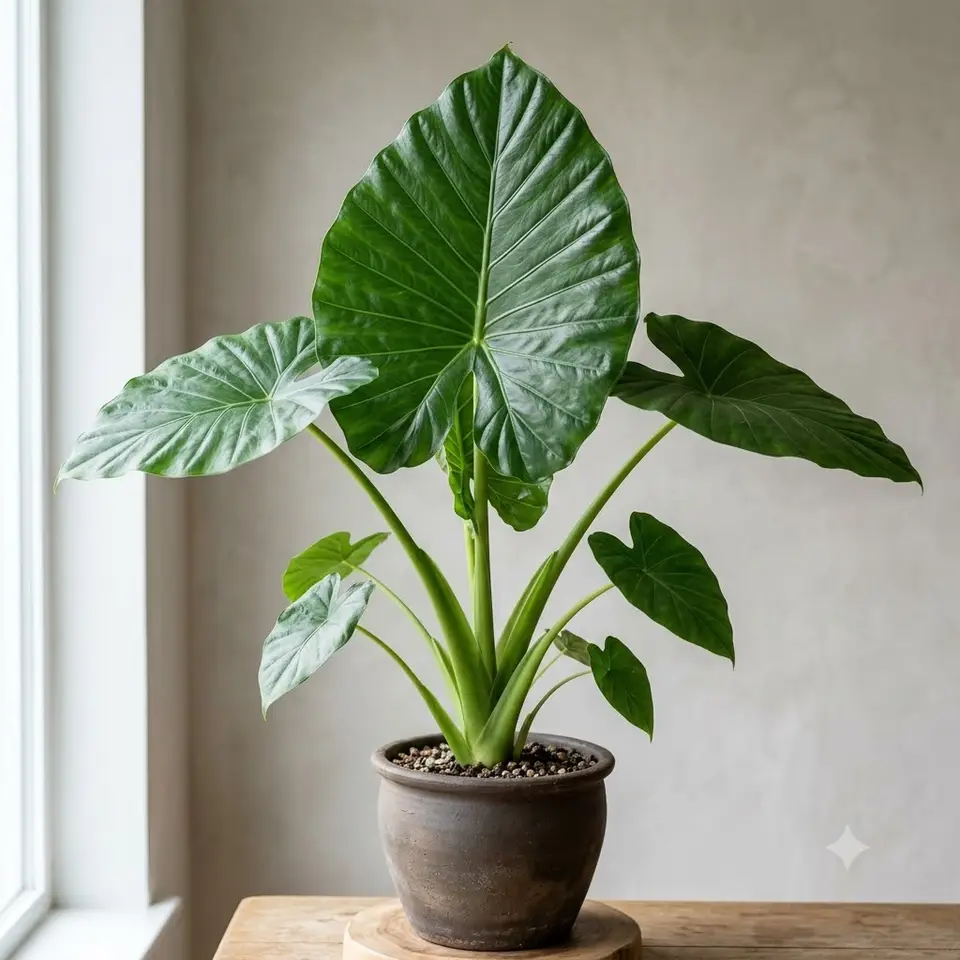 AI illustration
 Overview
Alocasia Odora is a large, upright elephant ear grown for its dramatic, glossy arrow-shaped leaves and bold architectural presence. Collectors love it as an affordable but statement-making entry into the Alocasia world, since it grows faster and forgives more than many of the fussier jewel types. It is often called the night-scented lily for the faint fragrance its rare blooms can give off (Alocasia odora).
Origin & Natural Habitat
It is native to the warm, humid forests of East and Southeast Asia, including southern China, Taiwan, Japan's Ryukyu Islands, and across Indochina and the Philippines. In the wild it grows in moist, shaded understory and along stream margins where warmth and humidity stay high year round.
Appearance
The leaves are broad, upright, and pointed - shaped like a giant heart or arrowhead with wavy edges and deeply etched veins in a rich matte-to-glossy green. Each leaf can reach 60 to 90 cm long on a mature plant, held high on thick, ribbed stalks that give the plant its bold vertical habit. Indoors it commonly reaches 1.2 to 1.8 m tall, growing from a stout underground rhizome that stores energy between growth flushes.
Why People Grow It - Qualities & Benefits
- Big, sculptural foliage that acts as a living centerpiece
- Faster and more vigorous than most delicate Alocasia hybrids
- Widely available and budget-friendly for its size
- Rewards good care with impressive, rapid new-leaf production
Care
Light: Bright, indirect light. It tolerates some gentle morning sun but harsh midday rays will scorch the leaves, while deep shade leads to weak, leggy growth.
Water: Keep the soil evenly moist but never waterlogged. Let the top 2-3 cm dry before watering again, and cut back noticeably in winter when growth slows.
Soil: A chunky, airy aroid mix - potting soil loosened with orchid bark, perlite, and a little coco coir - so roots get moisture without sitting wet.
Temperature & Humidity: Warmth-loving, happiest at 18 to 29°C and unhappy below about 16°C. It genuinely wants humidity of 60% or higher; in dry indoor air the leaf edges brown and it becomes far more prone to pests, so a humidifier helps.
Feeding: Feed with a balanced liquid fertilizer at half strength every 2 to 4 weeks during spring and summer. Stop feeding entirely in fall and winter.
Extra: Be ready for dormancy - in cooler months or when stressed, Alocasia Odora can drop leaves and rest as a bare rhizome. Do not toss it; keep the soil barely moist and warm and it will push new growth when conditions improve. Toxic to cats and dogs (insoluble calcium oxalate crystals in the sap) - keep out of reach of pets and children.
Propagation
Propagate by division. Unpot a mature plant in spring, separate the offsets (small pups or corms) that form around the base of the rhizome, and pot each one up in its own container with warmth and steady moisture.
Common Problems & Pests
- Spider mites are the number one threat, especially in dry air - watch for fine webbing and stippled, dull leaves
- Root rot and yellowing lower leaves from overwatering or heavy, waterlogged soil
- Crispy brown leaf edges and tips from low humidity or inconsistent watering
Toxicity & Safety
Alocasia Odora is toxic to cats and dogs. Like all Alocasia, every part contains insoluble calcium oxalate crystals; when chewed, the sap irritates the mouth and throat and typically causes oral pain, intense drooling, and vomiting. The sap can also irritate human skin and eyes, so wear gloves when dividing or repotting and wash your hands afterward.
Pros & Cons
Pros
- Huge, striking foliage with real wow factor
- Vigorous and comparatively forgiving for an Alocasia
Cons
- Demands high humidity and warmth to truly thrive
- Prone to spider mites and can go dormant unexpectedly
Best Suited For
- Growers ready to step up from easy plants to a rewarding Alocasia
- Warm, humid rooms with bright indirect light and space for a large plant
FAQ
Why did my Alocasia Odora suddenly drop all its leaves?
This is usually dormancy triggered by cold, low light, or stress, not death. Keep the rhizome warm and the soil barely moist, ease off feeding, and new leaves should emerge when conditions warm up again.
How do I keep spider mites away?
Raise the humidity, keep air gently moving, and inspect the undersides of leaves regularly. Wiping the foliage and rinsing the plant every couple of weeks makes it a far less welcoming host for mites.
Sources
Pet toxicity: checked against the ASPCA Animal Poison Control Center lists of toxic and non-toxic plants for cats and dogs, genus-wide entry "Alocasia" (Alocasia spp.): toxic to cats and dogs. Lists read on 10 October 2026.
Gear for growing alocasia odora
Links go to Amazon or a partner store (such as Adagio Teas) and may earn us a commission at no extra cost to you. As an Amazon Associate we earn from qualifying purchases. We link gear types, not sponsors' picks: you choose the exact product.