Alocasia Maharani
Alocasia 'Maharani' is a compact "jewel" Alocasia prized for its thick, almost stone-like leaves that look sculpted rather than grown.
Last reviewed: September 2026
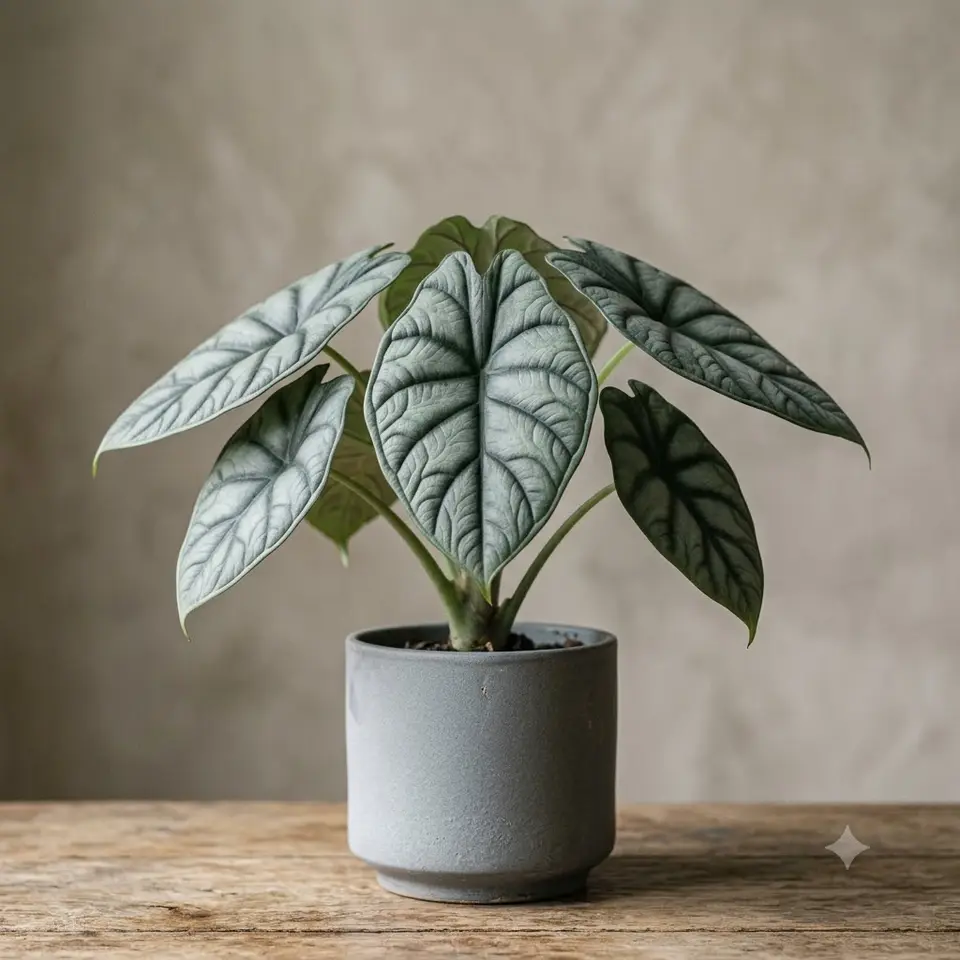 AI illustration
 Overview
Alocasia 'Maharani' is a compact "jewel" Alocasia prized for its thick, almost stone-like leaves that look sculpted rather than grown. Nicknamed the "Grey Dragon," it stays small and slow, which makes it a coveted shelf-sized collector piece rather than a fast statement plant. It is a hybrid cultivar (Alocasia 'Maharani').
Origin & Natural Habitat
As a nursery-raised hybrid it has no wild population of its own, but its parentage traces to jewel Alocasias such as Alocasia reginula and Alocasia melo, species from the humid limestone forests and shaded understory of Borneo and nearby Southeast Asia. That heritage explains its love of warmth, steady moisture, and high humidity.
Appearance
The leaves are small, rounded to shield-shaped, and heavily textured with a rugose, quilted surface and deeply sunken veins that give a hammered-metal look. Colour ranges from silvery grey-green to muted jade, with a stiff, leathery, almost cardboard-thick feel unusual for a houseplant. It is a genuinely compact grower, usually topping out around 25 to 40 cm tall with a tight clumping habit.
Why People Grow It - Qualities & Benefits
- Rare, sculptural foliage with a matte, stone-textured surface unlike almost any other houseplant
- Stays small and slow, so it suits shelves, cabinets, and terrariums
- A true collector's badge among jewel Alocasia enthusiasts
- Clumps over time, offering pups to share or grow on
Care
Light: Bright, indirect light. It wants plenty of brightness but no harsh direct sun, which scorches the thick leaves.
Water: Keep the mix lightly and evenly moist during active growth, letting the top 2-3 cm dry before watering again. Never leave it soggy, and ease off sharply in winter to avoid rot.
Soil: A chunky, fast-draining aroid mix - bark, perlite, and some coco coir or a little peat - so roots get both moisture and air.
Temperature & Humidity: Warmth-loving; keep it between about 18 and 27°C and away from cold drafts and windows below roughly 16°C. It genuinely needs high humidity, ideally 60% or more, and often sulks in dry room air - a cabinet, terrarium, or humidifier helps a lot.
Feeding: Feed monthly with a dilute, balanced houseplant fertilizer during spring and summer; skip feeding while it is resting.
Extra: Be ready for dormancy - in low light or cool months an Alocasia may drop leaves and rest as a corm. If that happens, keep it barely moist and warm and wait; new growth usually returns. Do not toss the pot. Toxic to cats and dogs (insoluble calcium oxalate crystals in leaves and sap) - keep out of reach of pets and children.
Propagation
Propagate by dividing offsets (pups) or corms at repotting. Gently separate a rooted pup or corm, pot it into damp aroid mix, and keep it warm and humid while it establishes. It does not root from leaf or stem cuttings.
Common Problems & Pests
- Spider mites are the number one pest and thrive in the dry air this plant hates; check leaf undersides for fine webbing and stippling
- Root rot from overwatering or dense, soggy soil, which shows as yellowing and mushy stems
- Crispy edges, sudden leaf drop, or dormancy triggered by low humidity, cold, or inconsistent watering
Toxicity & Safety
All Alocasia, including 'Maharani', are toxic to cats and dogs. The leaves and sap contain insoluble calcium oxalate crystals that cause intense oral irritation, drooling, pawing at the mouth, and vomiting if chewed. The sap can also irritate skin, so wash your hands after handling, dividing, or pruning, and keep the plant away from curious pets and children.
Pros & Cons
Pros
- Striking, one-of-a-kind textured foliage
- Compact and slow, ideal for small spaces and enclosures
Cons
- Fussy about humidity and warmth, and prone to dormancy
- Spider mites and rot are frequent battles
Best Suited For
- Experienced collectors who can provide steady warmth and humidity
- Terrarium and grow-cabinet growers who enjoy a challenge
FAQ
Why did my Maharani suddenly drop all its leaves?
This is usually dormancy, not death, often triggered by cool temperatures, low light, or overwatering. Keep the corm warm and barely moist and it will often push new growth when conditions improve.
Does it really need a humidifier?
Often yes. In typical dry indoor air it tends to develop crispy edges and attract spider mites, so a humidifier, pebble tray, or enclosed cabinet makes a big difference to how it looks and grows.
Sources
Pet toxicity: checked against the ASPCA Animal Poison Control Center lists of toxic and non-toxic plants for cats and dogs, genus-wide entry "Alocasia" (Alocasia spp.): toxic to cats and dogs. Lists read on 10 October 2026.
Gear for growing alocasia maharani
Links go to Amazon or a partner store (such as Adagio Teas) and may earn us a commission at no extra cost to you. As an Amazon Associate we earn from qualifying purchases. We link gear types, not sponsors' picks: you choose the exact product.