Alocasia Frydek
Alocasia Frydek is a striking foliage plant prized for its deep, velvety green leaves crossed by bold, bright white veins.
Last reviewed: September 2026
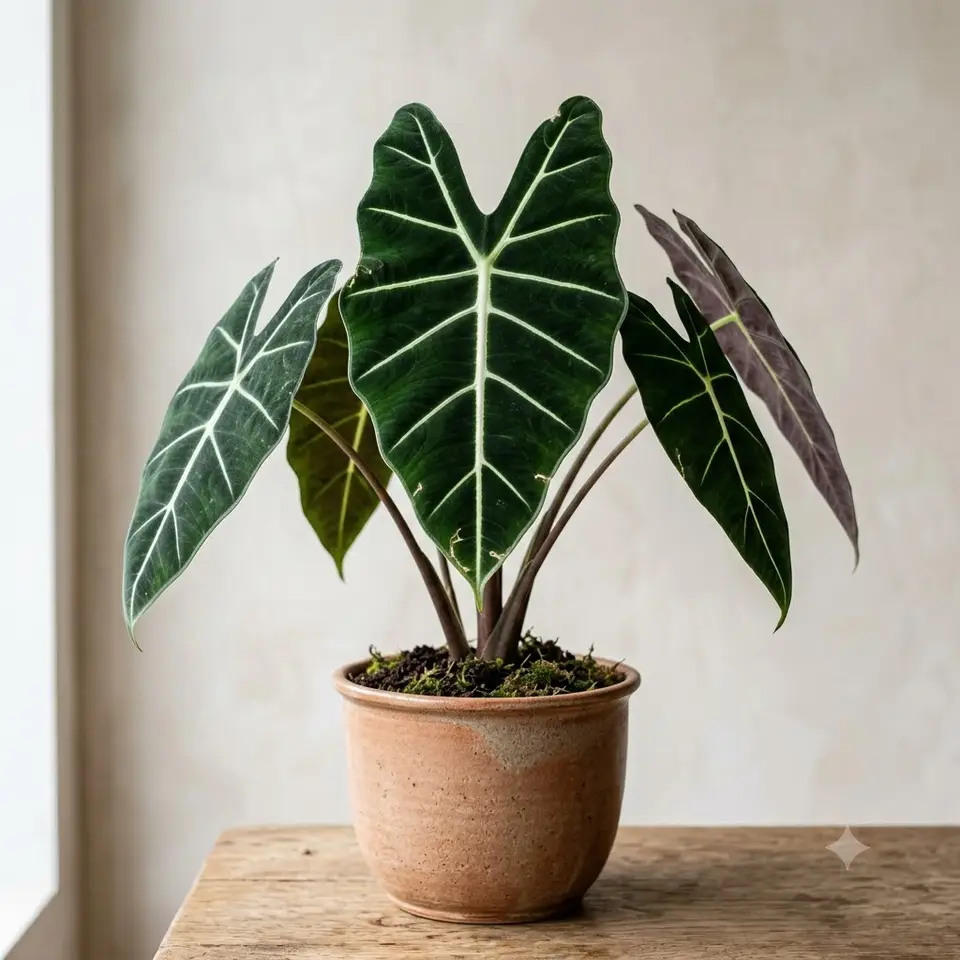 AI illustration
 Overview
Alocasia Frydek is a striking foliage plant prized for its deep, velvety green leaves crossed by bold, bright white veins. Collectors chase it for that dramatic contrast and the sculptural, upward-reaching arrow-shaped leaves that give any shelf a jungle centerpiece. It is a cultivar of the species sometimes sold as Green Velvet Alocasia (Alocasia micholitziana 'Frydek').
Origin & Natural Habitat
The parent species Alocasia micholitziana is native to the Philippines, where it grows on the shaded, humid forest floor of tropical lowland rainforests. In the wild it thrives in warm, moist, dappled conditions beneath the canopy, which explains its strong preference for warmth and humidity indoors.
Appearance
Frydek produces large, arrow-shaped (sagittate) leaves with a soft, matte, velvet-like texture in dark emerald green, dramatically etched with crisp white primary and secondary veins. The leaves sit on tall, slender upright petioles and can reach roughly 30 to 45 cm long, with the whole plant growing to about 60 to 90 cm tall in good conditions. It has an upright, clumping growth habit and grows from an underground rhizome or corm.
Why People Grow It - Qualities & Benefits
- Bold velvet foliage with high-contrast white veining that reads as a living sculpture.
- Compact upright form that fits on shelves and tabletops without sprawling.
- A rewarding "collector" plant that pushes out fresh dramatic leaves when happy.
- Adds a lush tropical, jungle-terrarium mood to bright indoor spaces.
Care
Light: Bright, indirect light. It wants plenty of light to keep its veining crisp, but direct sun will scorch and bleach the velvet leaves. An east window or a metre or so back from a south or west window works well.
Water: Keep the soil lightly and evenly moist during active growth, letting only the top 2-3 cm dry between waterings. It is sensitive both ways - soggy soil causes root rot, while drying out fully leads to drooping and crispy edges. Reduce watering noticeably in winter.
Soil: A chunky, fast-draining aroid mix. A blend of potting soil with plenty of perlite, orchid bark, and a little coco coir holds moisture while keeping air around the roots.
Temperature & Humidity: Warmth-loving: aim for 18 to 27°C and protect it from cold drafts and temperatures below about 16°C. It genuinely needs high humidity, ideally 60% or higher; in dry rooms a humidifier helps far more than misting, and low humidity is the fastest route to crispy edges and spider mites.
Feeding: Feed with a balanced, diluted liquid fertilizer roughly every 3 to 4 weeks during spring and summer. Stop feeding in fall and winter while growth slows.
Extra: Be prepared for dormancy - Alocasia can drop leaves and pause growth in winter or after stress, and may look nearly bare while the corm rests underground. Do not throw it out; keep the soil barely moist and warm, and it usually reawakens in spring. Toxic to cats and dogs (insoluble calcium oxalate crystals in the sap irritate the mouth and throat) - keep out of reach of pets and children.
Propagation
Propagate by division of the rhizome or by separating the small offset corms that form around the base. Gently unpot the plant, tease apart a clump or detach an offset that has its own roots, and pot it into a warm, humid, lightly moist mix. Patience is required, as offsets can be slow to establish.
Common Problems & Pests
- Spider mites are the number one pest, especially in dry air; watch for fine webbing and stippled, dull leaves and treat early.
- Root rot and yellowing leaves from overwatering or heavy, soggy soil.
- Crispy brown leaf edges and tips from low humidity, underwatering, or drafts.
Toxicity & Safety
Alocasia Frydek is toxic to cats and dogs, and to humans if chewed or eaten. Like all Alocasia, it contains insoluble calcium oxalate crystals; when the tissue is bitten, these needle-like crystals release and cause intense oral irritation, drooling, pawing at the mouth, and vomiting. The sap can also irritate skin, so it is wise to wear gloves or wash your hands after repotting, pruning, or dividing the plant.
Pros & Cons
Pros
- Show-stopping velvet leaves with unmatched white veining.
- Stays compact and upright, ideal for displays.
Cons
- Fussy about humidity and warmth, and prone to spider mites.
- Can drop leaves and go dormant, which unnerves new growers.
Best Suited For
- Intermediate growers who can provide steady warmth and high humidity.
- Collectors who want a dramatic statement plant and do not mind a little fuss.
FAQ
Why are my Frydek's leaves getting crispy edges?
Almost always low humidity or inconsistent watering. Raise humidity with a humidifier, keep the soil evenly moist during growth, and move it away from heaters and cold drafts.
My Frydek lost all its leaves - is it dead?
Probably not. Alocasia often go dormant in winter or after stress and can look bare. Keep the corm warm and the soil barely moist, hold off on heavy watering and feeding, and watch for fresh growth in spring.
Sources
Pet toxicity: checked against the ASPCA Animal Poison Control Center lists of toxic and non-toxic plants for cats and dogs, genus-wide entry "Alocasia" (Alocasia spp.): toxic to cats and dogs. Lists read on 10 October 2026.
Gear for growing alocasia frydek
Links go to Amazon or a partner store (such as Adagio Teas) and may earn us a commission at no extra cost to you. As an Amazon Associate we earn from qualifying purchases. We link gear types, not sponsors' picks: you choose the exact product.