Alocasia Dragon Scale
Alocasia Dragon Scale is a compact jewel Alocasia prized for its stiff, deeply textured leaves that look like the scaled hide of a dragon.
Last reviewed: September 2026
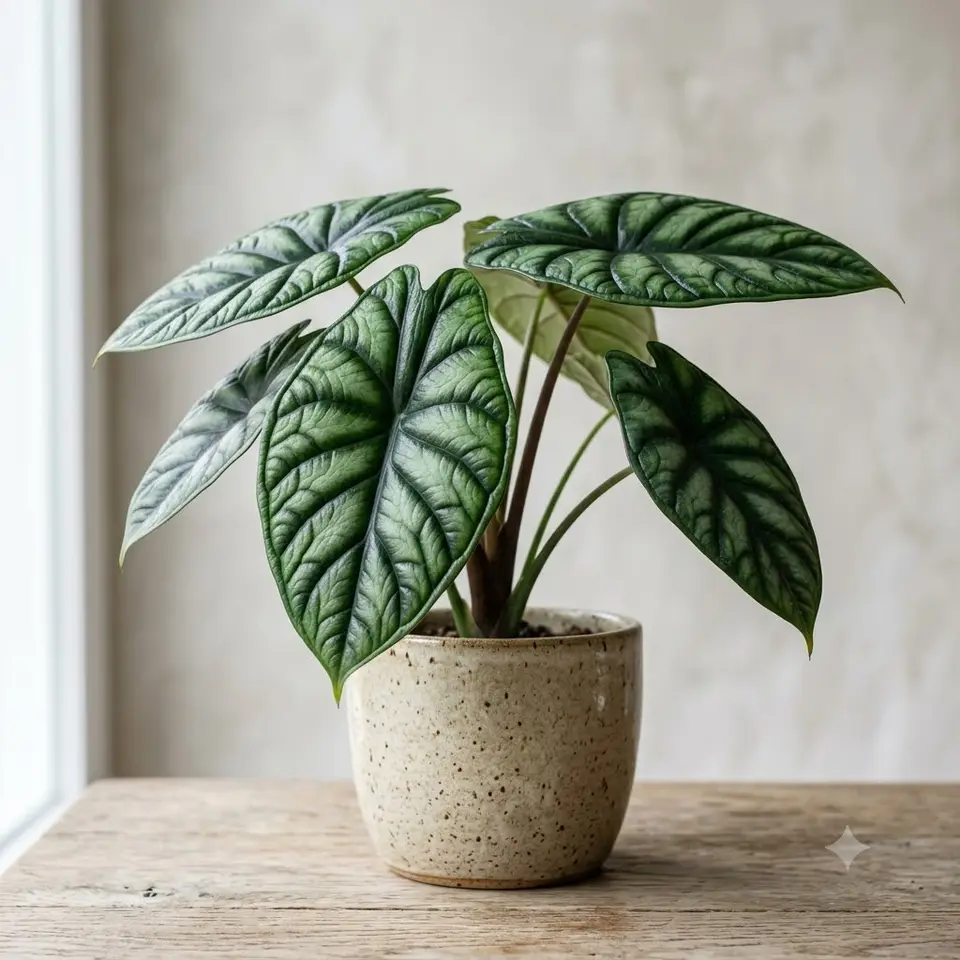 AI illustration
 Overview
Alocasia Dragon Scale is a compact jewel Alocasia prized for its stiff, deeply textured leaves that look like the scaled hide of a dragon. Collectors chase it for the dramatic silver-green surface, the near-black sunken veins and the almost metallic sheen that no photo quite captures. It is a selection of the species (Alocasia baginda).
Origin & Natural Habitat
Alocasia baginda is native to the island of Borneo in Southeast Asia, where it grows on the forest floor and on limestone outcrops in warm, humid, shaded tropical conditions. It is an understorey plant, adapted to dappled light and consistently moist, fast-draining ground.
Appearance
The leaves are thick, rigid and roughly heart-shaped to oval, with a quilted, bubbled surface that gives the "scale" effect, framed by dark sunken veins and a fine pale margin. Colour ranges from silvery apple-green to deeper emerald depending on light, with a paler grey-green underside. It stays small for an Alocasia, usually reaching about 30 to 60 cm tall indoors, with individual leaves around 10 to 20 cm long, growing in a slow, upright clumping habit.
Why People Grow It - Qualities & Benefits
- Striking, almost sculptural foliage with unmatched texture and vein contrast
- Stays compact, so it fits shelves, cabinets and small collector setups
- A genuine "trophy" plant that signals a serious houseplant collection
- Thrives in enclosed cases and greenhouse cabinets where humidity is easy to control
Care
Light: Bright, indirect light. It wants plenty of brightness but no direct midday sun, which scorches the thin-looking but rigid leaves. An east window or a metre or so back from a bright window is ideal.
Water: Keep the mix lightly and evenly moist but never soggy. Water when the top 2-3 cm begin to dry, and empty any saucer promptly. It is very prone to root rot if it sits wet, yet it sulks and browns if allowed to dry out fully.
Soil: A chunky, airy aroid mix that drains fast while holding some moisture - for example bark, perlite, coco coir and a little worm castings. Sharp drainage is non-negotiable for this species.
Temperature & Humidity: Warmth-loving: 18 to 27°C is the comfortable range, and it dislikes anything below about 16°C. High humidity is a real requirement, ideally 60 to 80%. In average room humidity it commonly crisps at the edges, which is why many growers keep it in a cabinet or with a humidifier. Be honest with yourself here - this is a fussy plant.
Feeding: Feed with a balanced, diluted liquid fertiliser roughly every 3 to 4 weeks during the active growing season, and stop feeding in winter when growth slows.
Extra: Alocasia go through a natural dormancy: in shorter, cooler days growth stalls and the plant may drop most or all of its leaves. Do not throw it out - ease back on water, keep the tuber warm and it usually reshoots. Toxic to cats and dogs (insoluble calcium oxalate crystals in the sap) - keep out of reach of pets and children.
Propagation
Propagate by division of the clump or by separating the small offset tubers (cormlets) that form around the base, potting them up in a warm, humid, lightly moist mix. Patience is essential, since tubers can take weeks to wake up and push a first leaf.
Common Problems & Pests
- Spider mites are the number one pest and love the dry air this plant is often exposed to, causing fine stippling and webbing on the undersides - inspect regularly
- Root rot and yellowing lower leaves from overwatering or a mix that holds too much water
- Crispy brown leaf edges and stalled growth from low humidity, underwatering or cold drafts
Toxicity & Safety
Alocasia Dragon Scale is toxic to cats and dogs, and to people if chewed or eaten. All parts contain insoluble calcium oxalate crystals, which on contact release into the mouth and throat and cause intense oral irritation, drooling, pawing at the mouth, vomiting and difficulty swallowing. The sap can also irritate skin, so it is wise to wear gloves when repotting or dividing and to wash your hands afterward.
Pros & Cons
Pros
- One of the most texturally beautiful foliage plants you can grow
- Compact size suits small spaces and enclosed growing setups
Cons
- Genuinely fussy about humidity and watering, not a forgiving beginner plant
- Goes dormant and drops leaves, which alarms owners who think it has died
Best Suited For
- Experienced collectors who can provide steady warmth and high humidity, ideally in a cabinet or greenhouse
- Hobbyists who enjoy a challenge and will not panic during winter dormancy
FAQ
Why are the leaves on my Dragon Scale turning crispy and brown?
Almost always low humidity or inconsistent watering. Raise the humidity toward 60 to 80% with a humidifier or enclosed case, and keep the mix evenly moist rather than swinging between bone-dry and soaked.
My plant lost all its leaves - is it dead?
Probably not. Alocasia often go dormant in cooler, darker months and drop their foliage while the underground tuber rests. Keep it warm, water sparingly, and it usually reshoots when conditions improve.
Sources
Pet toxicity: checked against the ASPCA Animal Poison Control Center lists of toxic and non-toxic plants for cats and dogs, genus-wide entry "Alocasia" (Alocasia spp.): toxic to cats and dogs. Lists read on 10 October 2026.
Gear for growing alocasia dragon scale
Links go to Amazon or a partner store (such as Adagio Teas) and may earn us a commission at no extra cost to you. As an Amazon Associate we earn from qualifying purchases. We link gear types, not sponsors' picks: you choose the exact product.