Alocasia Black Velvet
Alocasia Black Velvet is a compact "jewel" Alocasia prized for its thick, dark, near-black leaves crossed by bright silvery-white veins.
Last reviewed: September 2026
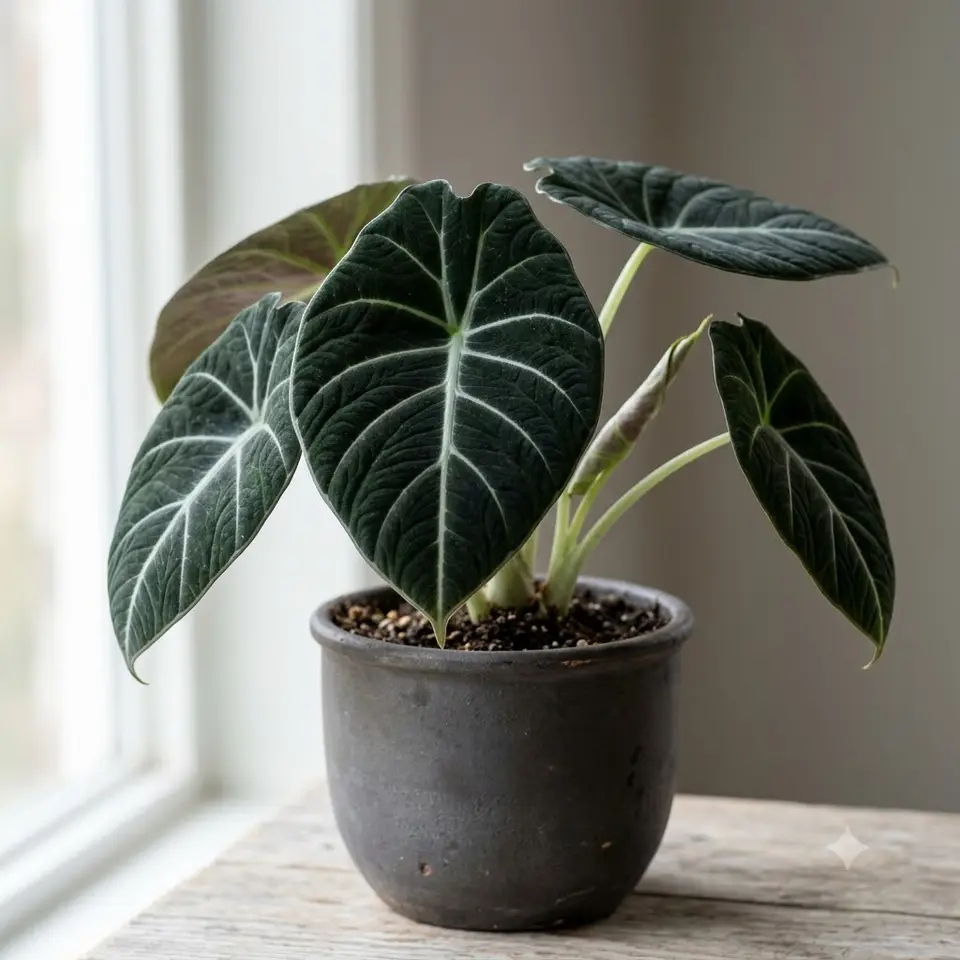 AI illustration
 Overview
Alocasia Black Velvet is a compact "jewel" Alocasia prized for its thick, dark, near-black leaves crossed by bright silvery-white veins. Collectors chase it for that dramatic velvet-to-metallic contrast on a plant small enough for a shelf or terrarium, though it repays the attention with real fussiness. It is properly known as (Alocasia reginula).
Origin & Natural Habitat
It is native to Borneo in Southeast Asia, where it grows as a small understory plant on the rainforest floor. There it sits in warm, humid, shaded conditions with steady moisture and excellent drainage among leaf litter.
Appearance
The leaves are heart-shaped to broadly arrow-shaped, thick and stiff with a distinctly velvety, matte-dark surface and crisp silver-white primary veins. Individual leaves reach roughly 6 to 15 cm long, and the whole plant stays compact at about 30 to 45 cm tall. It grows slowly from an underground rhizome or corm, pushing one new leaf at a time in a tidy clump.
Why People Grow It - Qualities & Benefits
- Striking near-black, velvety foliage with contrasting silver veins that few other houseplants match
- Compact size suits shelves, cabinets, and terrariums where space is tight
- A genuine collector's "jewel Alocasia" that adds prestige to a plant collection
- Rewarding for hobbyists who enjoy fine-tuning humidity and care
Care
Light: Bright, indirect light. Avoid direct midday sun, which scorches the velvety leaves, but too little light stalls it completely.
Water: Keep the mix lightly and evenly moist, letting the top couple of centimetres dry between waterings. It hates both soggy roots and full dry-out, so err toward careful, frequent small drinks rather than flooding.
Soil: A chunky, fast-draining aroid mix - for example potting soil cut with orchid bark, perlite, and a little coco coir - so water moves through quickly and roots get air.
Temperature & Humidity: Wants warmth, ideally 18 to 27°C, and no cold drafts or temperatures below about 15°C. Humidity is the honest sticking point: it prefers 60% or higher, and dry indoor air causes crisping and stress. A pebble tray, grouping, humidifier, or an enclosure helps a lot.
Feeding: Feed lightly with a balanced, diluted liquid fertilizer every 3 to 4 weeks during active spring and summer growth, and stop feeding in autumn and winter.
Extra: This plant can go dormant, especially with cooler, darker winters - it may drop leaves and pause, and the corm is still alive, so keep it barely moist and warm and wait rather than dumping it. Toxic to cats and dogs (insoluble calcium oxalate crystals in the sap) - keep out of reach of pets and children.
Propagation
Propagate by division: unpot a mature plant, gently separate offsets or small cormlets that form around the base, each with some roots, and pot them into the same airy mix. It does not root from a single leaf cutting.
Common Problems & Pests
- Spider mites are the number one pest, thriving on the dry indoor air Alocasia dislikes and stippling or webbing the leaves
- Root rot and yellowing from overwatering or a dense, water-retentive mix
- Crispy brown leaf edges and tips from low humidity, and stalled or dropped leaves signalling dormancy or a cold, dim spot
Toxicity & Safety
Alocasia Black Velvet is toxic to cats and dogs. Like all Alocasia, its tissues contain insoluble calcium oxalate crystals; when chewed, these cause intense oral irritation, drooling, pawing at the mouth, vomiting, and difficulty swallowing. The sap can also irritate skin and eyes, so wear gloves or wash your hands after repotting or dividing, and keep it away from curious pets and children.
Pros & Cons
Pros
- Show-stopping dark velvet leaves with silver veins, unlike common houseplants
- Compact and terrarium-friendly, ideal for small collector displays
Cons
- Fussy about humidity and prone to spider mites and crisping
- Can go dormant or sulk, which alarms newer growers
Best Suited For
- Intermediate to advanced hobbyists who can provide steady warmth and high humidity
- Collectors with a terrarium, cabinet, or humidifier and no pets that chew plants
FAQ
Why is my Black Velvet dropping leaves?
Most often it is entering dormancy from cooler, darker conditions, or reacting to overwatering or very low humidity. If the corm is firm, keep it warm and barely moist and it usually pushes new growth when conditions improve.
Do I really need high humidity?
Yes, this is one of its genuine demands. It tolerates around 50% but does best at 60% or more, and consistently dry air leads to crispy edges and spider mite problems.
Sources
Pet toxicity: checked against the ASPCA Animal Poison Control Center lists of toxic and non-toxic plants for cats and dogs, genus-wide entry "Alocasia" (Alocasia spp.): toxic to cats and dogs. Lists read on 10 October 2026.
Gear for growing alocasia black velvet
Links go to Amazon or a partner store (such as Adagio Teas) and may earn us a commission at no extra cost to you. As an Amazon Associate we earn from qualifying purchases. We link gear types, not sponsors' picks: you choose the exact product.