Going Bananas Daylily
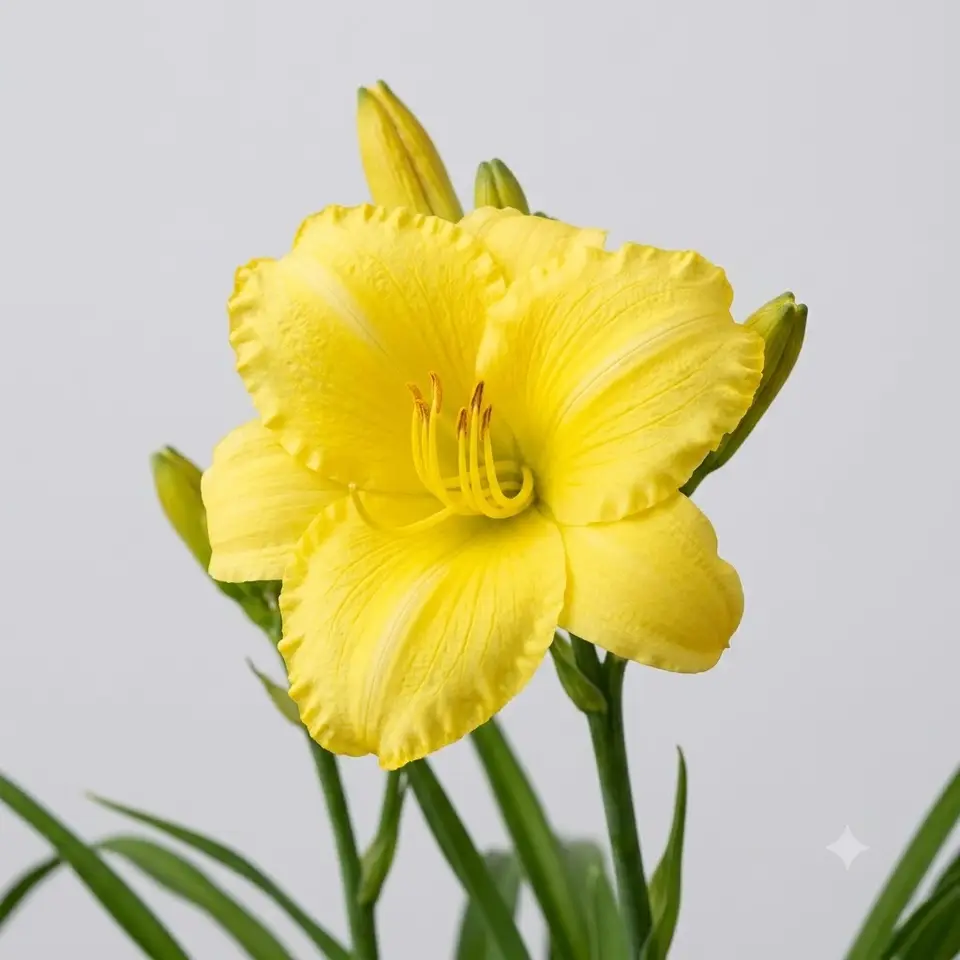
Going Bananas is a compact, reblooming daylily prized for clear, bright lemon-yellow flowers and an unusually long season of bloom (Hemerocallis 'Going Bananas').
Last reviewed: October 2026
 AI illustration
 Overview
Going Bananas is a compact, reblooming daylily prized for clear, bright lemon-yellow flowers and an unusually long season of bloom (Hemerocallis 'Going Bananas'). It stands out from older yellow daylilies by flowering early, then repeating through summer, and by its mild, pleasant fragrance. As a tough, low-fuss perennial it is a favourite for gardeners who want dependable colour without much effort.
Origin & Background
The daylily genus, Hemerocallis, is native to eastern Asia, ranging across China, Korea, Japan and eastern Siberia, where the wild species grow in meadows, woodland edges and along streams. Despite the common name, daylilies are not true lilies (Lilium); modern garden types are complex hybrids bred from several species. 'Going Bananas' is a named hybrid cultivar registered by breeder Chris Meyer in 2004 and selected for reliable repeat bloom, and it is a diploid daylily grown almost entirely for its ornamental flowers.
Appearance
The plant forms a neat, arching clump of strappy, bright green foliage and reaches roughly 48 to 60 cm tall in bloom, with a similar spread. Flowers are canary to lemon yellow, lightly ruffled, and around 10 to 11 cm across, held on branched stems just above the leaves. Each bloom lasts a single day, but the plant produces a long succession of buds. Foliage is dormant to semi-evergreen depending on climate, dying back over winter in colder zones and returning in spring. Bloom begins in early summer, with reblooming flushes continuing into late summer.
Why People Grow It - Qualities & Benefits
- Long bloom season with early flowering plus repeat flushes into late summer
- Compact, tidy habit that suits borders, edging and containers
- Very hardy and drought tolerant once established, with little maintenance
- Clean, cheerful yellow colour and a light, pleasant fragrance
Care
Light: Full sun is best (at least 6 hours); tolerates light afternoon shade, though bloom is heaviest in sun. Water: Moderate and even moisture, especially in the first season and during bud set; established clumps tolerate short dry spells. Soil: Adaptable, but prefers fertile, well-drained soil rich in organic matter; slightly acidic to neutral pH (about 6.0 to 6.8) is ideal. Hardiness: USDA zones 3 to 9. Bloom or Season: Early summer onset, then reblooming in flushes through mid and late summer; individual flowers last one day but the display runs for many weeks. Extra: Removing spent flowers and old scapes keeps the clump tidy and encourages more rebloom. Pet-safety note: daylilies are extremely dangerous to cats and can cause fatal kidney failure even in small amounts - if a cat eats any part, contact a vet immediately.
Planting & Propagation
Plant in spring or early autumn, setting the crown about 2.5 cm below the soil surface and spacing clumps roughly 45 to 60 cm apart. Water well while roots establish, and mulch lightly to conserve moisture and suppress weeds. Propagate by division: lift a mature clump every 3 to 4 years in early spring or after flowering, split it into fans each with roots and foliage, and replant promptly. Division both multiplies your plants and keeps older clumps vigorous and free-flowering.
Common Problems & Pests
- Daylily rust and leaf streak can spot or discolour foliage in humid conditions; improve airflow and remove affected leaves
- Aphids and thrips may distort buds and new growth, sometimes reducing bloom quality
- Crown or root rot can occur in soggy, poorly drained soil, so avoid waterlogging
Toxicity & Safety
Daylilies are a serious poisoning hazard to cats. Ingesting even a small amount of any part - leaves, flowers, pollen, or even the water from a vase - can cause acute kidney failure that may be fatal if not treated quickly. If you know or suspect a cat has eaten any part of this plant, treat it as an emergency and contact a veterinarian immediately, as prompt care greatly improves the outcome. For dogs the risk is much lower, usually limited to mild stomach upset, but it is still best to discourage chewing. Cat owners should avoid growing daylilies where cats roam or bringing cut stems indoors. The ASPCA lists daylilies (Hemerocallis) as toxic to cats. For dogs, the ASPCA lists them as non-toxic.
Pros & Cons
Pros
- Reliable, long-lasting colour with genuine repeat bloom
- Hardy, adaptable and easy for beginners
Cons
- Each flower lasts only one day, so deadheading helps it look its best
- Highly toxic to cats, making it unsuitable for many cat households
Best Suited For
- Beginner gardeners wanting dependable, low-maintenance summer colour
- Sunny borders, mass plantings and container displays in cat-free spaces
FAQ
Does Going Bananas really rebloom?
Yes. It is bred for repeat flowering, opening early in summer and then producing additional flushes of buds through the season, especially with good soil moisture, full sun and regular deadheading.
Is Going Bananas safe around pets?
It is dangerous to cats and can cause fatal kidney failure even in small amounts, so avoid it if you have cats and seek veterinary care at once if one ingests any part. It poses only mild risk to dogs, typically stomach upset.
Gear for growing going bananas daylily
Links go to Amazon or a partner store (such as Adagio Teas) and may earn us a commission at no extra cost to you. As an Amazon Associate we earn from qualifying purchases. We link gear types, not sponsors' picks: you choose the exact product.