Golden Tiara Hosta
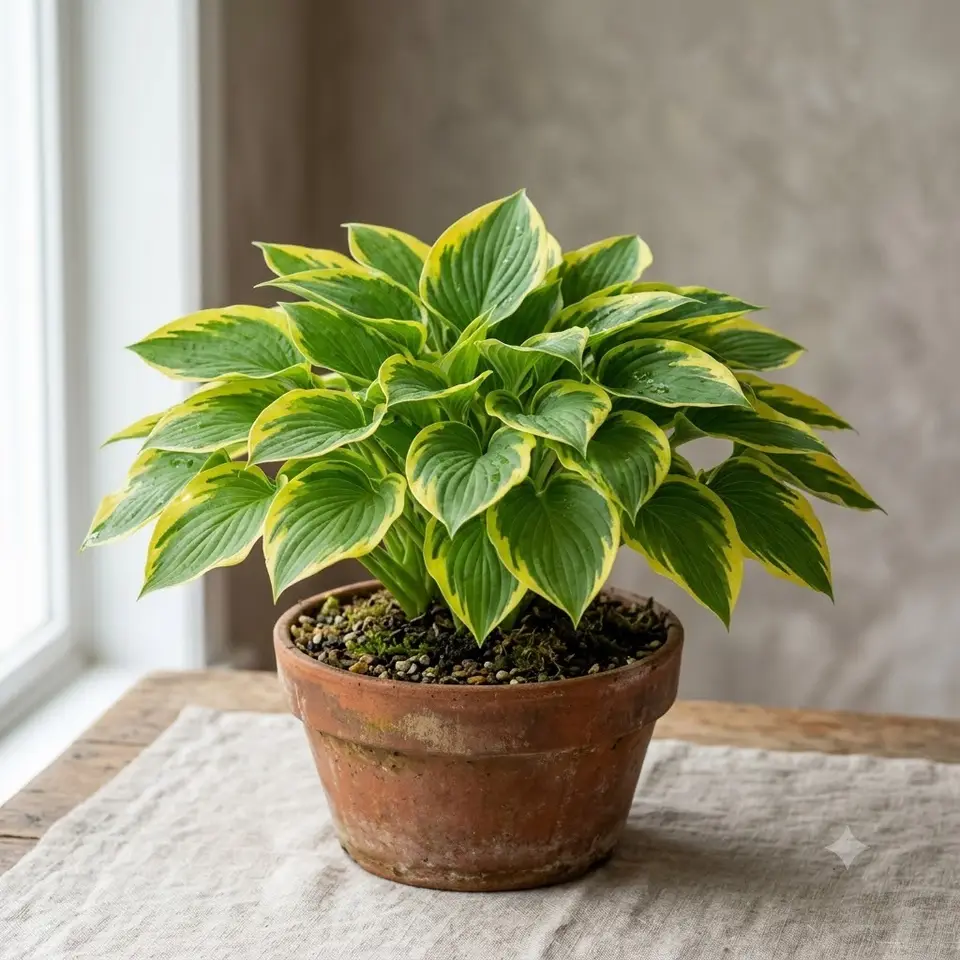
Golden Tiara is a compact, fast-growing hosta prized for its tidy mounds of small heart-shaped leaves edged in a bright chartreuse-to-gold margin (Hosta 'Golden Tiara').
Last reviewed: September 2026
 AI illustration
 Overview
Golden Tiara is a compact, fast-growing hosta prized for its tidy mounds of small heart-shaped leaves edged in a bright chartreuse-to-gold margin (Hosta 'Golden Tiara'). It is the best known member of the "Tiara" series and stands out for how quickly it fills in, its neat dome shape, and its unusually generous show of lavender flowers for a plant this size. Its modest footprint makes it one of the easiest hostas to fit into small gardens and edging schemes.
Origin & Background
The genus Hosta is native to north-east Asia, chiefly Japan, China, Korea and the Russian Far East, where the species grow in woodland, on stream banks and shaded slopes. 'Golden Tiara' was introduced by Robert Savory of Minnesota in the late 1970s and became the anchor of a family of similar small hostas (the Tiara group), several of which arose later as sports of this plant. It has remained a garden staple thanks to its vigour and reliability.
Appearance
The leaves are small and heart-shaped, roughly 8 to 10 cm long, with a medium-green centre and an irregular gold to chartreuse margin that grows brighter with a little more light. Plants build a dense, symmetrical mound about 25 to 35 cm tall and 60 to 90 cm wide, often reaching full width faster than most hostas. In mid to late summer, typically July into August, it sends up slender scapes of lavender-purple, faintly striped bell-shaped flowers that rise well above the foliage. Autumn brings a soft golden-yellow fade before the plant dies back for winter.
Why People Grow It - Qualities & Benefits
- Compact, quickly filling mound that suits small beds, borders and edging
- Two-tone gold-margined foliage that brightens shady spots
- Abundant lavender flowers that are generous for such a small hosta
- Tough, low-maintenance and dependable, forgiving of beginner mistakes
Care
Light: Part shade to full shade; a little morning sun deepens the gold margin, but harsh afternoon sun scorches the leaves. Water: Consistent, even moisture; water in dry spells and never let the crown dry out fully. Soil: Rich, humus-heavy, well-drained soil that holds moisture; slightly acidic to neutral pH (about 6.0 to 7.0). Hardiness: USDA zones 3 to 9. Bloom or Season: Foliage plant from spring emergence through autumn, with lavender flowers in mid to late summer and a golden fade before dormancy. Extra: This cultivar bulks up faster than most hostas, so plan on dividing it sooner. Toxic to cats and dogs; hostas contain saponins that cause vomiting, diarrhoea and depression if eaten, so site it away from where pets graze.
Planting & Propagation
Plant in spring or early autumn at the same depth the crown sat previously, spacing plants about 60 to 75 cm apart to allow for the mound's spread. Work compost into the planting hole and mulch to conserve moisture and moderate soil temperature. Propagate by division in early spring as the shoots (pips) push through the soil: lift the clump, split it into sections each with several shoots and healthy roots using a sharp spade or knife, and replant immediately, keeping the divisions watered until established.
Common Problems & Pests
- Slugs and snails chew holes in the foliage, worst in damp shade
- Leaf scorch and browning of the margins from too much sun or dry soil
- Deer and rabbits browse the leaves and can strip a plant quickly
Toxicity & Safety
Golden Tiara, like all hostas, is toxic to cats and dogs. The active compounds are saponins, and ingestion typically causes vomiting, diarrhoea and depression (lethargy). Signs are usually mild to moderate, but any pet that has eaten part of the plant and shows persistent symptoms should be seen by a veterinarian. It is best to plant it out of reach of pets that tend to nibble garden foliage.
Pros & Cons
Pros
- Fast to establish and fill in, giving quick results
- Bright gold-edged leaves that light up shade
Cons
- Toxic to cats and dogs
- A magnet for slugs, snails and browsing deer
Best Suited For
- Small shade gardens, woodland edges and shaded borders needing compact ground cover
- Beginners and low-maintenance planting schemes, and pet-free areas or raised positions
FAQ
How big does Golden Tiara Hosta get?
It forms a compact mound around 25 to 35 cm tall and 60 to 90 cm wide, making it one of the smaller, tidier hostas.
Will it grow in full shade?
Yes. It tolerates full shade and thrives in part shade; a little morning sun intensifies the gold margin, but strong afternoon sun will scorch the leaves.
Gear for growing golden tiara hosta
Links go to Amazon or a partner store (such as Adagio Teas) and may earn us a commission at no extra cost to you. As an Amazon Associate we earn from qualifying purchases. We link gear types, not sponsors' picks: you choose the exact product.