Grandiflora Roses
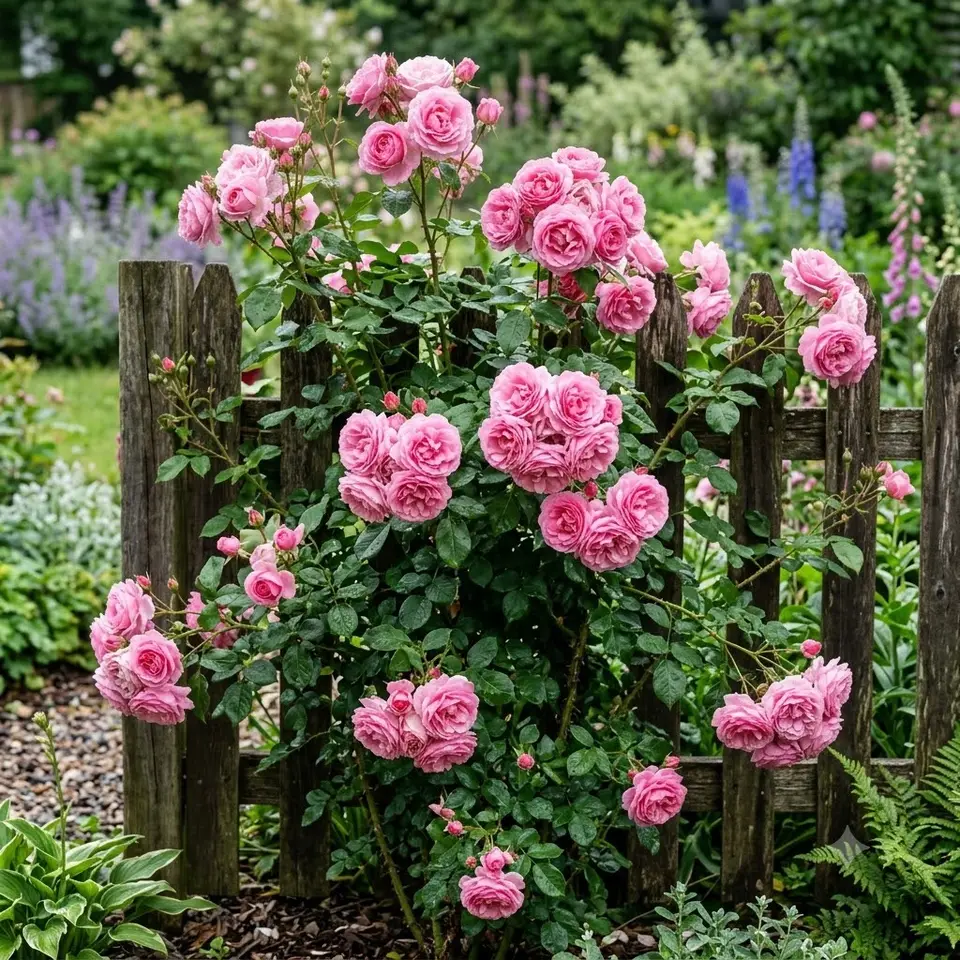
Grandiflora roses are tall bushes that carry hybrid-tea-shaped flowers in small clusters on long stems, a class created in the United States in 1954 for the rose 'Queen Elizabeth'.
Last reviewed: October 2026
 AI illustration
 Overview
Grandiflora roses are tall bushes that carry hybrid-tea-shaped flowers in small clusters on long stems, a class created in the United States in 1954 for the rose 'Queen Elizabeth'. The name is Latin for "large-flowered". The class never caught on in Europe: the World Federation of Rose Societies calls 'Queen Elizabeth' a large-flowered rose that was placed in the grandiflora class in the United States, and the RHS lists it with the floribundas. (Rosa: grandiflora class.)
Origin & Natural Habitat
Grandifloras have no wild habitat. The American Rose Society tells how the class began: in 1954 a cross of the hybrid tea 'Charlotte Armstrong' with the floribunda 'Floradora' gave a rose with hybrid tea characteristics, the ability to bear clusters or trusses, and a height of 6 to 8 feet or more, and the grandiflora class was created to hold it. That rose was 'Queen Elizabeth', bred by Dr. Walter Lammerts. Grandifloras were somewhat popular from about 1954 into the 1980s; today they are much less popular than hybrid teas and floribundas.
Appearance
Purdue Extension describes tall plants up to 6 feet with small clusters of large flowers on long stems, and the University of Georgia gives a height of 5 to 6 feet. The flowers resemble hybrid tea blooms and come in small clusters of three to five, on shrubs that are typically larger than both hybrid teas and floribundas.
Why People Grow It - Qualities & Benefits
- Hybrid tea flower form on a taller plant
- Purdue notes they flower more freely than hybrid teas, though less freely than floribundas
- Long stems for cutting, one of the uses Purdue lists
- Height for the back of a border, where Purdue suggests them as background plants
Care
Light: Six to eight hours of direct sun a day, with morning sun, as the University of Georgia advises. The same guide notes that good air movement dries dew and rain quickly, which discourages disease.
Water: Water thoroughly at least once a week in dry weather, wetting the soil 5 to 6 inches deep. The University of Georgia prefers drip irrigation where possible.
Soil & Feeding: UGA asks for good drainage and moderately fertile soil, improved with at least 4 inches of organic matter, and recommends a soil test before liming or fertilizing. For a feeding plan, see the general rose care page.
Temperature & Hardiness: Hardiness is set by the variety. Weeks Roses rates Queen Elizabeth for USDA zones 5b-9b, and the RHS gives it H6, hardy in all of the UK and northern Europe. Where winters are hard, Purdue Extension ties the canes of bush roses together and mounds soil 12 inches deep around the base.
Pruning & Maintenance: The University of Georgia prunes grandifloras with hybrid teas and floribundas in late winter, before growth begins, cutting weak-growing varieties lightly and vigorous ones more heavily. Purdue aims for 4 to 8 strong canes of even length that spread away from the center like a vase.
Planting & Propagation
Purdue Extension says all grandifloras are grafted and spaces them 24 to 30 inches apart, the same as hybrid teas. Planting depth depends on climate: Purdue sets the bud union 1 to 2 inches below ground in Indiana, while the University of Georgia keeps the graft union 1 inch above the soil.
Common Problems & Pests
- Black spot, powdery mildew, petal blight, crown gall and stem cankers, the rose diseases UGA lists as common in Georgia
- Wind rock in winter: Purdue ties the canes spirally with twine to stop excessive rocking
- Suckers: Purdue prunes shoots from the rootstock whenever they appear, and UGA removes shoots from below the graft union
Toxicity & Safety
Roses are non-toxic to dogs and cats - the thorns are the only hazard.
Pros & Cons
Pros
- Large flowers in small clusters
- Height for screens and backgrounds
- Long cutting stems
Cons
- Much less popular today than hybrid teas and floribundas
- Too tall for the front of a bed
- The class name is mostly American, so British catalogues may list the same rose as a floribunda
Best Suited For
- The back of a rose bed or border
- Cutting gardens
- Tall flowering screens
- Georgia gardens, where UGA recommends 'Arizona', 'Love', 'Queen Elizabeth' and 'Scarlet Knight'
FAQ
Who decides whether a rose is a grandiflora?
The breeder. When a hybridizer registers a new rose, the American Rose Society expects them to place it in a class using the society's own definitions, and since 1955 the ARS has been the international registration authority for rose names. Other bodies may group the same rose differently: the RHS lists 'Queen Elizabeth' as 'The Queen Elizabeth' (F), a floribunda.
How tall do grandifloras get?
Purdue Extension gives up to 6 feet and the University of Georgia 5 to 6 feet. The first grandiflora is taller: Weeks Roses lists 'Queen Elizabeth' at 5-10 feet and the RHS gives it up to 2.2 m in British gardens.
Gear for growing grandiflora roses
Links go to Amazon or a partner store (such as Adagio Teas) and may earn us a commission at no extra cost to you. As an Amazon Associate we earn from qualifying purchases. We link gear types, not sponsors' picks: you choose the exact product.