Hagley Hybrid Clematis
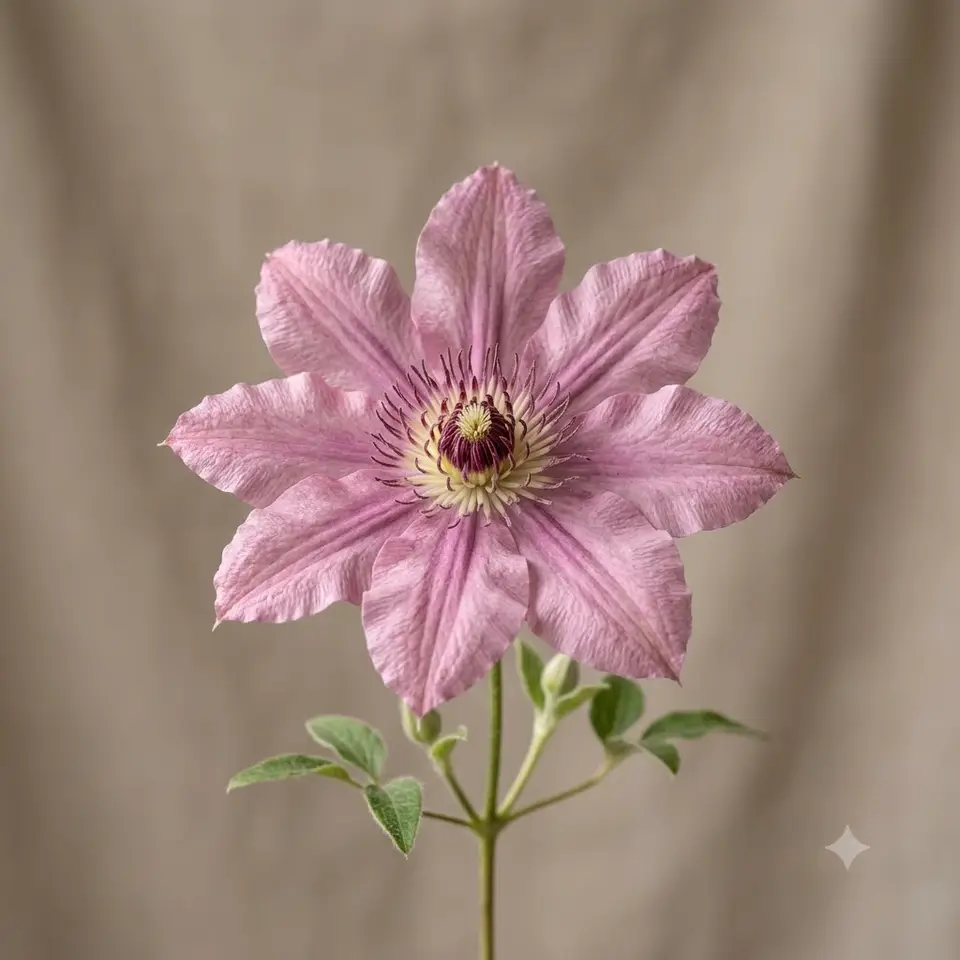
Hagley Hybrid is a compact large-flowered clematis prized for its satiny shell-pink blooms set off by dark reddish-brown anthers, produced generously from early summer into autumn (Clematis 'Hagley Hybrid').
Last reviewed: September 2026
 AI illustration
 Overview
Hagley Hybrid is a compact large-flowered clematis prized for its satiny shell-pink blooms set off by dark reddish-brown anthers, produced generously from early summer into autumn (Clematis 'Hagley Hybrid'). It is more restrained in size than many hybrids, which makes it one of the easier large-flowered clematis to place on a small trellis, obelisk or fence panel. The soft mauve-pink colour is its signature, though it can fade in strong midday sun.
Origin & Background
Clematis is a large genus of roughly 300 species found across temperate regions of both the Northern and Southern Hemispheres, with many of the parents of modern large-flowered hybrids originating in China and Japan. 'Hagley Hybrid' itself is a garden cultivar raised in England, associated with Percy Picton and Hagley Hall in Worcestershire, and introduced in the mid-1950s. It is sometimes sold in North America under the name 'Pink Chiffon'.
Appearance
The flowers are broad and open, usually 12 to 15 cm across, made up of six overlapping pointed sepals in a soft satin pink to pinkish-mauve. At the centre sits a boss of contrasting dark reddish-brown to maroon anthers, which gives the bloom real definition. Flowering begins in early summer and repeats through late summer and into autumn on new growth. It is a moderate, tidy climber, typically reaching 1.8 to 2.4 m tall with a spread of around 90 cm, dying back to near ground level over winter and regrowing each spring.
Why People Grow It - Qualities & Benefits
- Long flowering season from early summer through autumn on fresh growth
- Compact, well-behaved size that suits small gardens, patios and containers
- Distinctive colour combination of soft pink sepals against dark anthers
- Simple, forgiving pruning routine that makes it beginner-friendly
Care
Light: Full sun to part shade; the classic clematis rule of flowers in the sun and roots in the shade applies, and light afternoon shade helps the pink colour hold rather than bleaching pale. Water: Keep consistently moist, especially in the first couple of seasons and during dry spells; never let it bake dry at the roots. Soil: Fertile, humus-rich, well-drained soil; tolerates a range of pH but does best in neutral to slightly alkaline conditions. Hardiness: USDA zones 4 to 9. Bloom or Season: Early summer to autumn, roughly June to September, with a long and repeating display. Extra: This is a Pruning Group 3 clematis, so cut it back hard to a pair of strong buds about 20 to 30 cm above the ground in late winter or early spring; it flowers entirely on the current season's growth. Note for pet owners: clematis is toxic to cats and dogs.
Planting & Propagation
Plant in spring or autumn, setting the crown about 5 to 8 cm deeper than it sat in the pot to encourage strong basal shoots and to guard against clematis wilt. Shade the root zone with low planting, a flat stone or mulch, and give it a support to climb from the outset. Named cultivars like this do not come true from seed, so propagate by semi-hardwood cuttings taken in early to midsummer, or by simple layering of a low stem in summer, pinning it down until it roots.
Common Problems & Pests
- Clematis wilt, a fungal dieback that can collapse stems suddenly; deep planting and cutting out affected growth help recovery
- Powdery mildew in humid, crowded or dry-rooted conditions
- Aphids, earwigs and slugs or snails on soft new growth
Toxicity & Safety
Clematis is toxic to cats and dogs. The sap contains protoanemonin, an irritant compound; if a pet chews the leaves or stems it can cause drooling, mouth and skin irritation, vomiting and diarrhoea. In practice poisoning is usually mild, because the plant tastes bitter and animals rarely eat much. Wash any sap off skin after handling and site the plant where curious pets are less likely to nibble.
Pros & Cons
Pros
- Compact size and long bloom make it ideal for small spaces
- Easy Group 3 pruning suits gardeners new to clematis
Cons
- Pink colour can fade in strong, direct sun
- Vulnerable to clematis wilt, which can cause sudden stem collapse
Best Suited For
- Small gardens, patio containers, obelisks and low trellises
- Beginner gardeners wanting a reliable, repeat-flowering climber
FAQ
Which pruning group is Hagley Hybrid?
It is Pruning Group 3. Because it flowers on new growth, you cut all the stems back hard to about 20 to 30 cm above the ground in late winter or early spring, and it regrows and blooms the same year.
Why are my flowers paler than expected?
The soft pink can bleach in strong, direct sunlight. Planting where it gets some shade in the hottest part of the day usually keeps the colour richer and more even.
Gear for growing hagley hybrid clematis
Links go to Amazon or a partner store (such as Adagio Teas) and may earn us a commission at no extra cost to you. As an Amazon Associate we earn from qualifying purchases. We link gear types, not sponsors' picks: you choose the exact product.