Halcyon Hosta
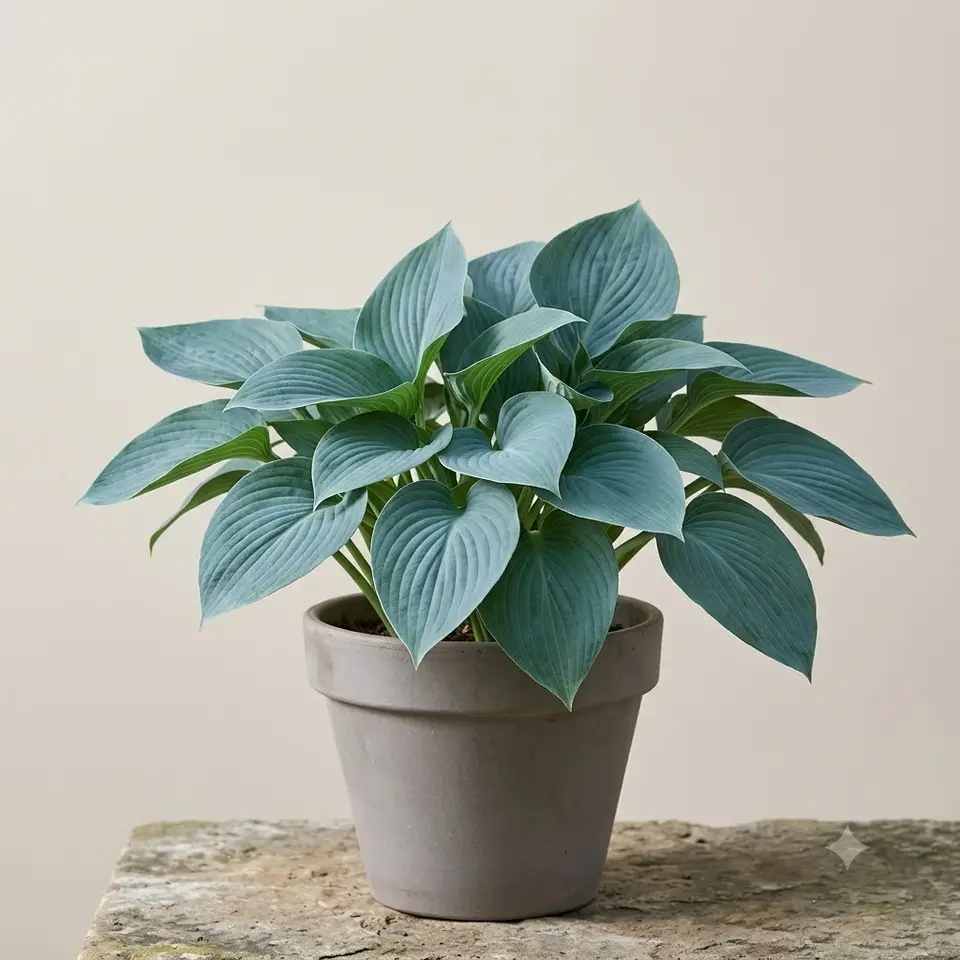
Halcyon is one of the bluest of all hostas, prized for its thick, spear-shaped leaves coated in a waxy grey-blue bloom that glows in shade (Hosta 'Halcyon').
Last reviewed: September 2026
 AI illustration
 Overview
Halcyon is one of the bluest of all hostas, prized for its thick, spear-shaped leaves coated in a waxy grey-blue bloom that glows in shade (Hosta 'Halcyon'). It is a medium-sized, tidy mound that holds its blue colour longer into the season than most, making it a benchmark against which other blue hostas are often judged.
Origin & Background
The genus Hosta is native to north-east Asia - Japan, Korea, China and the Russian Far East - where the plants grow on shaded slopes, streambanks and woodland edges. Halcyon is a British-bred cultivar from the celebrated Tardiana group developed by Eric Smith, raised from crosses involving Hosta tardiflora and the blue Hosta sieboldiana 'Elegans'. It was introduced in the late 20th century and has since become one of the most widely grown blue hostas.
Appearance
The leaves are the main event: smooth, thick and heart-to-spear-shaped, drawn to a neat point, in an intense steel-blue to grey-blue. The colour comes from a fine waxy coating rather than pigment, so it reads bluest in spring and cool shade, gradually shifting toward blue-green by late summer as the wax weathers. Plants form a dense, symmetrical mound roughly 40 to 45 cm tall and 70 to 90 cm wide at maturity. In mid to late summer, slender scapes carry lavender to greyish-mauve trumpet flowers just above the foliage. There is no autumn colour of note; the foliage yellows and dies back with the first frosts.
Why People Grow It - Qualities & Benefits
- One of the truest, most reliable blues available in a hosta
- Compact, well-behaved mound that suits smaller shade beds and containers
- Thick-substance leaves show better slug resistance than thin-leaved types
- Tolerant, low-maintenance and long-lived once established
Care
Light: Partial to full shade. Morning sun with afternoon shade is ideal; too much direct sun melts the waxy bloom and fades the blue toward green. Water: Consistent, even moisture. Water deeply in dry spells and never let it bake out; it dislikes drought. Soil: Rich, humus-heavy, well-drained soil kept moist; slightly acidic to neutral pH (about 6.0 to 7.0). Hardiness: USDA zones 3 to 8. A winter chill period is needed for healthy dormancy. Bloom or Season: Foliage plant from spring emergence to autumn dieback, with lavender-grey flowers in mid to late summer; no significant autumn colour. Extra: Keep it out of hot afternoon sun to preserve the signature blue - the colour is a wax coating, not pigment. Halcyon Hosta is toxic to cats and dogs; ingestion causes vomiting, diarrhoea and depression.
Planting & Propagation
Plant in spring or early autumn, setting the crown at soil level in ground enriched with compost or leaf mould, spaced to allow the mound to reach its full width. Water in well and mulch to hold moisture and suppress weeds. Propagate by division in early spring as the shoots emerge (or in early autumn): lift the clump, split it into sections each with roots and several eyes, and replant promptly at the same depth. Division every few years also keeps large clumps vigorous.
Common Problems & Pests
- Slugs and snails chew holes in the foliage, though the thick leaves resist better than thin-leaved hostas
- Deer and rabbits browse the leaves readily
- Crown or root rot in soggy, poorly drained soil, plus leaf scorch and colour loss in too much sun
Toxicity & Safety
Hostas are toxic to cats and dogs. All parts contain saponins, natural compounds that irritate the digestive tract when eaten. Signs of ingestion include vomiting, diarrhoea and depression (lethargy). Keep pets from chewing the plant, and contact a vet if a significant amount is eaten.
Pros & Cons
Pros
- Exceptional, long-lasting blue foliage
- Compact, tidy habit that thrives in shade with little fuss
Cons
- Blue fades to green in too much sun or heat
- Toxic to cats and dogs, and attractive to slugs and deer
Best Suited For
- Shade and woodland gardens, and the front of shaded borders
- Container planting and edging where a neat blue mound is wanted
FAQ
Why is my Halcyon turning green instead of blue?
The blue comes from a waxy coating on the leaf, not a pigment. Heat, watering from overhead and especially direct sun wear that wax away, so plants in hot or sunny spots gradually shift to blue-green. Give it cooler, shadier conditions to keep the blue longer.
How big does Halcyon Hosta get?
It is a medium-sized hosta, forming a mound about 40 to 45 cm tall and 70 to 90 cm wide at maturity, with flower scapes rising a little above the leaves in summer.
Gear for growing halcyon hosta
Links go to Amazon or a partner store (such as Adagio Teas) and may earn us a commission at no extra cost to you. As an Amazon Associate we earn from qualifying purchases. We link gear types, not sponsors' picks: you choose the exact product.