Hardy Cyclamen
Hardy cyclamen solve the impossible spot (DRY SHADE under trees) with shuttlecock blooms and silver-marbled ivy leaves, hederifolium firing in autumn and coum in late winter.
Last reviewed: October 2026
 AI illustration
 Overview
Hardy cyclamen solve the impossible spot (DRY SHADE under trees) with shuttlecock blooms and silver-marbled ivy leaves, hederifolium firing in autumn and coum in late winter. Corms fatten to dinner-plate size over decades, each one eventually a colony. (Cyclamen hederifolium / coum.)
Origin & Natural Habitat
Mediterranean woodland edges - root-riddled, summer-dry leaf litter; exactly your worst spot's twin.
Appearance
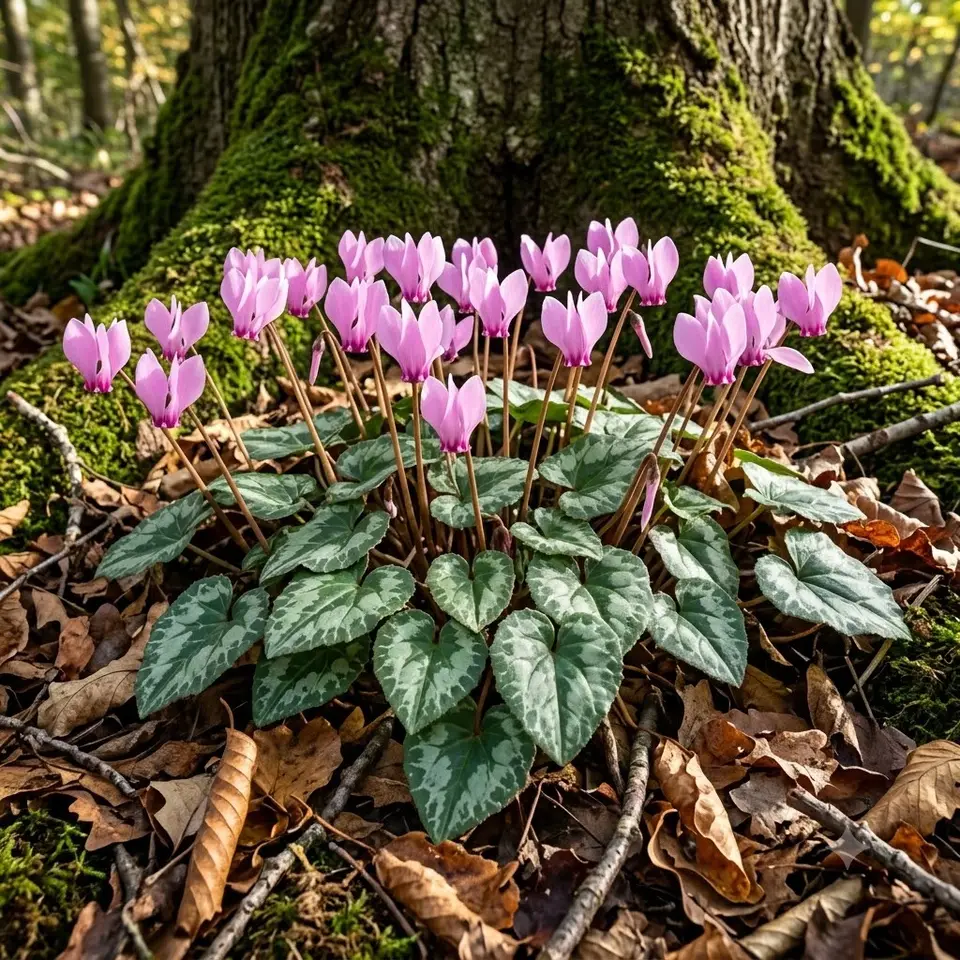
8-12 cm swept-back blooms (pink, magenta, white) over exquisite silver-patterned foliage; hederifolium Aug-Nov (leaves after), coum Jan-Mar (leaves through winter).
Why People Grow It - Qualities & Benefits
- The dry-shade answer: under conifers even
- Two species = autumn AND late-winter bloom
- Foliage rivals any houseplant's marbling
- Ant-sown colonies, decades-long corms
Care
Light: Shade to dappled - tree bases, north beds.
Water: Winter-spring natural moisture; summer DRY dormancy (irrigated beds are wrong for them).
Soil: Leafmoldy, drained; root competition welcome.
Planting: Late summer as growing pot plants (dry corms establish poorly, and wild-collected dried corms were a conservation scandal - buy nursery-grown pots), 3-5 cm shallow, 'hollow side' up.
Hardiness: hederifolium zones 5-9; coum 4-8 - properly hardy despite the florist-cyclamen association.
After flowering: Nothing: seed pods coil down and ants plant the next generation; colonies assemble themselves.
Propagation
Self-sown seedlings transplant easily young; corms never divide (they're single and immortal - don't cut).
Common Problems & Pests
- Dried-corm establishment failures (buy growing plants)
- Vine weevil in pots
- Mice rarely dig fresh plantings
- Otherwise: the most carefree genus in shade
Toxicity & Safety
Toxic if corms are eaten (saponins - florist cyclamen warnings apply); buried + bitter = rarely an actual incident; standard pet prudence.
Pros & Cons
Pros
- Blooms where NOTHING else will
- Marbled foliage half the year
- Self-expanding, zero-care
Cons
- Summer disappearance (dormant)
- Slow to spectacular (years)
- Pot-grown starts cost more than dry corms (buy them anyway)
Best Suited For
- Under trees incl. conifers
- Dry north foundations
- Autumn/winter interest layers
- Leafmold-y wild corners
FAQ
Really under a conifer?
hederifolium's party trick - it exploits the dry needle-litter ring where even ivy thins. Start with pot-grown plants in fall rains; give two years of patience.
Which species first?
hederifolium (autumn) is the tougher spreader; add coum for January flowers - together they cover Aug-Mar with bloom and pattern.
Sources
Pet toxicity: checked against the ASPCA Animal Poison Control Center lists of toxic and non-toxic plants for cats and dogs, genus-wide entry "Cyclamen" (Cyclamen spp): toxic to cats and dogs. Lists read on 10 October 2026.
Gear for growing hardy cyclamen
Links go to Amazon or a partner store (such as Adagio Teas) and may earn us a commission at no extra cost to you. As an Amazon Associate we earn from qualifying purchases. We link gear types, not sponsors' picks: you choose the exact product.