Guacamole Hosta
Guacamole Hosta is a large, vigorous shade perennial prized for big, glossy apple-green to chartreuse leaves framed by darker green margins, plus unusually fragrant late-summer flowers (Hosta 'Guacamole').
Last reviewed: September 2026
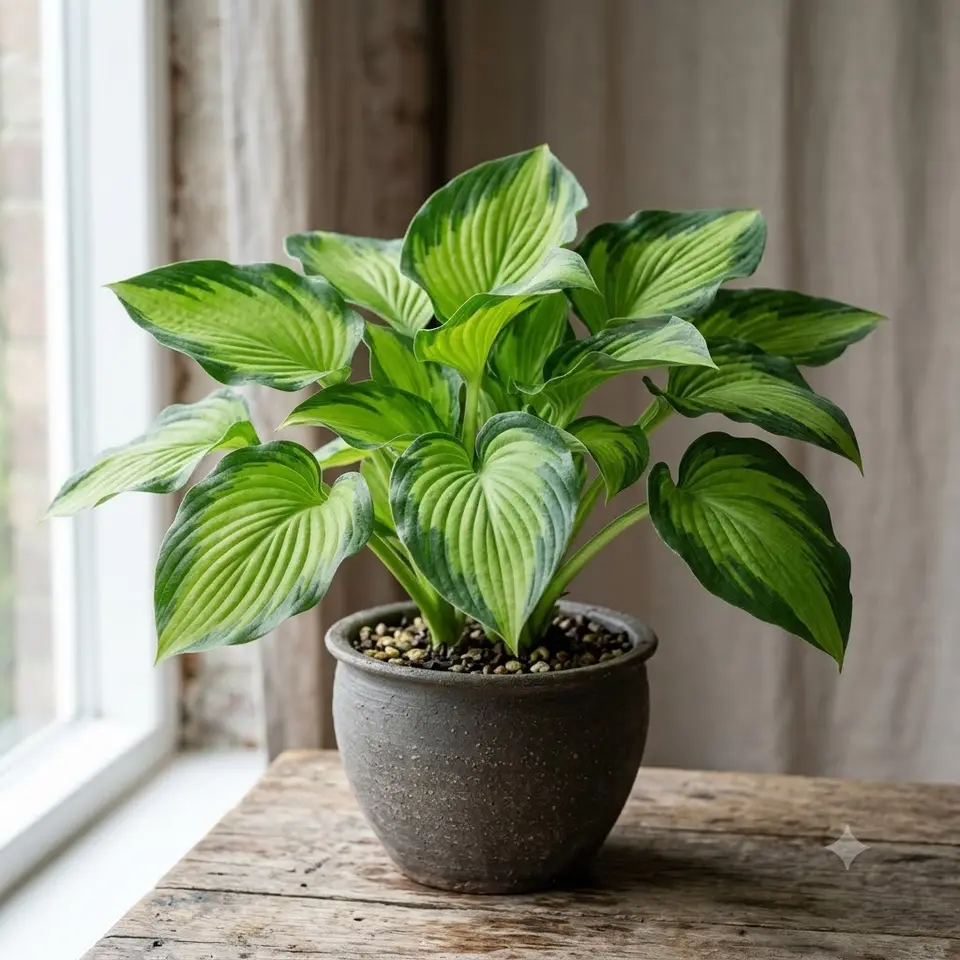 AI illustration
 Overview
Guacamole Hosta is a large, vigorous shade perennial prized for big, glossy apple-green to chartreuse leaves framed by darker green margins, plus unusually fragrant late-summer flowers (Hosta 'Guacamole'). It stands out from most hostas because it tolerates more light than average and rewards it with brighter golden foliage. Named the American Hosta Growers Association Hosta of the Year in 2002, it remains a dependable, easy-to-grow classic.
Origin & Background
The genus Hosta is native to northeast Asia, chiefly Japan, China and Korea, where the species grow in woodland and streamside settings. 'Guacamole' is a garden cultivar introduced in the mid-1990s as a sport of the fragrant 'Fragrant Bouquet', itself descended from the scented species Hosta plantaginea - the source of its perfumed blooms.
Appearance
This is a large hosta forming a broad, rounded mound roughly 45 to 60 cm tall and spreading about 90 to 120 cm wide at maturity. The heart-shaped, slightly cupped leaves are shiny and heavily textured, emerging apple-green and brightening to gold-chartreuse in more light, edged with a wide band of dark blue-green. In late summer, typically August, it sends up tall scapes of large, fragrant, near-white to pale-lavender flowers held above the foliage. Like all hostas it is deciduous, yellowing and dying back to the ground after the first hard frost, then re-emerging in spring.
Why People Grow It - Qualities & Benefits
- Fast-growing and quick to fill a large gap, making a bold focal mound in a couple of seasons
- Genuinely fragrant flowers, which is uncommon among hostas
- Bright chartreuse-gold color that lights up shady corners
- Tolerates more sun than most hostas, giving flexible placement
Care
Light: Part shade to full shade; it takes morning sun or dappled light well, which deepens the gold tone, but harsh afternoon sun can scorch the leaves. Water: Consistent, even moisture; it dislikes drying out, especially in warmer or sunnier spots. Soil: Rich, humusy, well-drained soil kept moist; slightly acidic to neutral pH (about 6.0 to 7.0) is ideal. Hardiness: USDA zones 3 to 9. Bloom or Season: Foliage plant from spring emergence to first frost, with fragrant flowers in late summer; no autumn leaf color - foliage simply yellows before dormancy. Extra: Give it room, since it grows larger than many gardeners expect and resents being crowded. Toxic to cats and dogs - hostas contain saponins, and ingestion can cause vomiting, diarrhoea and depression.
Planting & Propagation
Plant in spring or early autumn, setting the crown at soil level in enriched, moisture-retentive ground, and space plants about 90 cm to 1.2 m apart to allow for the wide mature spread. Mulch to conserve moisture and keep roots cool. Propagate by division in early spring as the shoots emerge (or in early autumn): lift the clump, cut it into sections each with several eyes and healthy roots, and replant promptly. Division every few years also keeps large clumps vigorous.
Common Problems & Pests
- Slugs and snails chew holes in the leaves, worst in damp, shady conditions
- Deer and rabbits browse hostas readily and can strip a plant overnight
- Leaf scorch or bleached patches if exposed to too much hot, direct sun or allowed to dry out
Toxicity & Safety
Toxic to cats and dogs. Hostas contain saponins, and ingestion of any part of the plant can cause vomiting, diarrhoea and depression (lethargy). Keep pets from grazing on the foliage, and contact a veterinarian if a significant amount is eaten or symptoms appear.
Pros & Cons
Pros
- Vigorous, easy and fast to establish
- Fragrant flowers and bright, cheerful foliage color
Cons
- A magnet for slugs, snails, deer and rabbits
- Needs steady moisture and dies fully back in winter, leaving a bare gap
Best Suited For
- Shade and woodland gardens needing a large, bright foil for darker foliage
- Gardeners who want fragrant blooms and low-fuss structure under trees or along shaded borders
FAQ
How much sun can Guacamole Hosta take?
More than most hostas. It grows well in part shade and even morning sun, which turns the leaves a brighter gold, but protect it from strong afternoon sun to avoid scorch.
How big does it get?
It forms a large mound about 45 to 60 cm tall and 90 cm to 1.2 m wide at maturity, so give it plenty of room when planting.
Sources
Pet toxicity: checked against the ASPCA Animal Poison Control Center lists of toxic and non-toxic plants for cats and dogs, entry "Plantain Lily" (Hosta plantaginea): toxic to cats and dogs. Lists read on 10 October 2026.
Gear for growing guacamole hosta
Links go to Amazon or a partner store (such as Adagio Teas) and may earn us a commission at no extra cost to you. As an Amazon Associate we earn from qualifying purchases. We link gear types, not sponsors' picks: you choose the exact product.