Winter Chanterelle
The winter chanterelle (Craterellus tubaeformis) is the small, hollow-stemmed, funnel-shaped mushroom that carpets mossy conifer woodland in late autumn, often long after every other worthwhile species has finished.
🗓️ Last reviewed: October 2026
Overview
The winter chanterelle (Craterellus tubaeformis) is the small, hollow-stemmed, funnel-shaped mushroom that carpets mossy conifer woodland in late autumn, often long after every other worthwhile species has finished. It is also called the yellowfoot or trumpet chanterelle, and its great virtues are timing and abundance: it fruits when the woods are otherwise empty, it grows in huge numbers in the same patches every year, and it dries better than almost any other wild mushroom. Individually the fruit bodies are small and easily overlooked among the moss and needle litter, which is exactly why finding the first one usually means kneeling down and discovering several hundred more.
Identification & Appearance
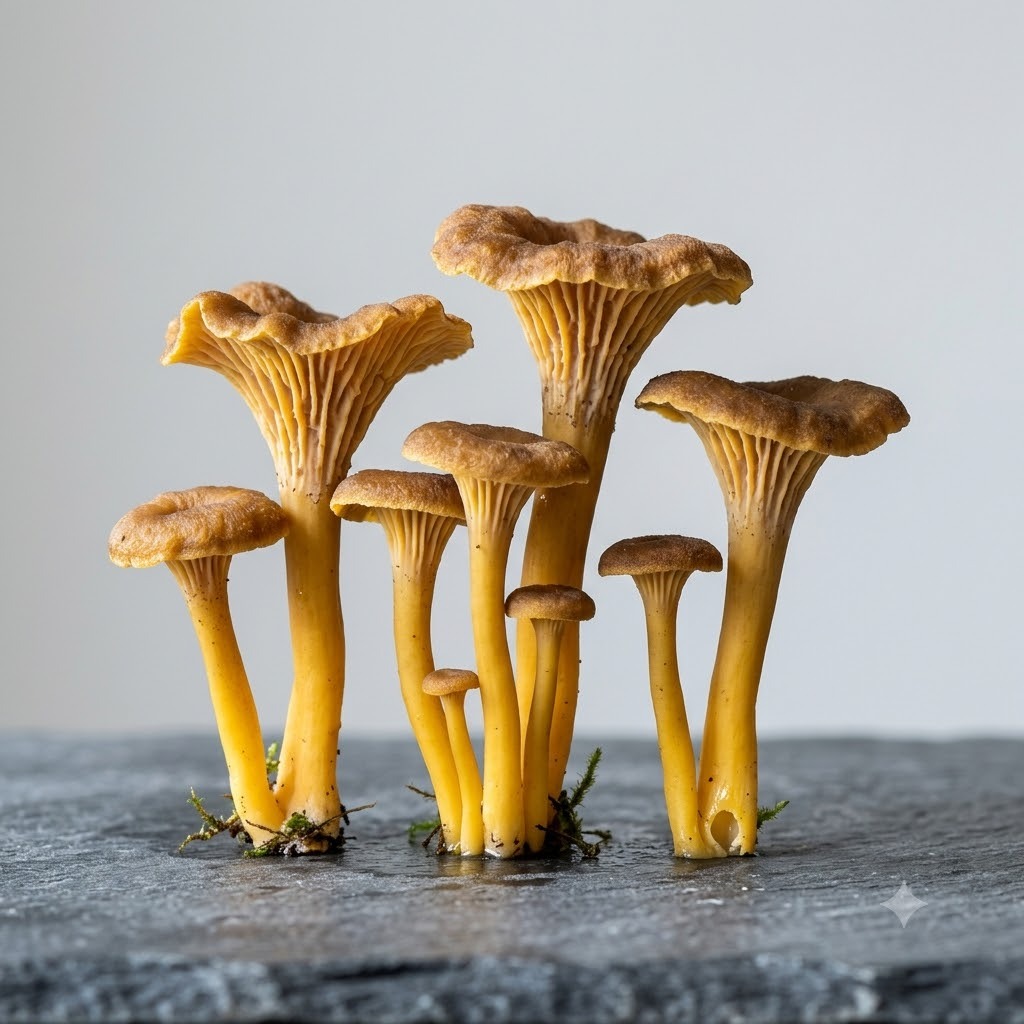
The cap is 2-6 cm across, brown to grey-brown or yellowish-brown, funnel-shaped with a wavy irregular margin, often with a small hole in the centre that runs into the hollow stem. Underneath there are no true gills but shallow, blunt, forking, decurrent ridges or veins, greyish to yellowish, running down the stem, which is the family signature and separates the chanterelle relatives from the sharp-edged blade-like gills of most other mushrooms. The stem is hollow, slender, and yellow to yellow-brown, giving the yellowfoot name. Flesh is thin and pale. Spore print is white to pale cream. The set to confirm is: funnel cap, blunt forking decurrent ridges rather than gills, hollow yellow stem, and growth in moss under conifers. The most dangerous confusion in a similar habitat is with small brown mushrooms in general, so blunt ridges and a hollow stem must both be present.
Where It Grows
Winter chanterelles are mycorrhizal, forming partnerships with conifer roots, especially spruce, pine, and Douglas fir, and sometimes with beech. They fruit in damp mossy woodland, in needle litter, on rotting stumps and mossy banks, and on the sides of ditches, from early autumn until the first hard frosts, and in mild seasons into December. They are abundant across northern and central Europe, Scandinavia, the Baltics, and the Pacific Northwest of North America. They grow gregariously, often in dense drifts across a few square metres, so productive patches are worth remembering: they recur annually as long as the woodland and its moss layer remain undisturbed.
How to Grow at Home
Not possible. Like the golden chanterelle, this species is mycorrhizal and needs living conifer roots to survive. Decades of attempts to cultivate chanterelles commercially have produced laboratory partnerships with seedlings but no viable crop, and no spawn is sold for home use. The honest version of growing them is protecting habitat: keep mature conifers, leave the moss layer and needle litter intact, avoid raking and compaction, and do not fertilise. Foragers can also help their own future harvests by cutting rather than pulling, treading carefully in productive drifts, and leaving some fruit bodies to release spores. Everything else about this species is a matter of learning to see them, since their colours blend almost perfectly into moss and litter.
Growing Conditions
Light
Irrelevant to the fungus. It fruits in the deep shade of conifer woodland where the moss layer stays damp, and the useful variable for a forager is finding that habitat rather than any light condition.
Watering
Fruiting depends on autumn rain and sustained dampness. Winter chanterelles are more tolerant of cold than most species and continue fruiting through cool wet weather, stopping only at hard frost, though they can survive a light frost and continue afterwards.
Temperature & Substrate
Fruiting runs roughly 2-15°C from early autumn into early winter. The substrate is moss, needle litter, and damp acidic soil threaded with living conifer roots, plus rotting wood in some sites. There is no home equivalent.
Culinary Use
Winter chanterelles have a mild, fruity, faintly peppery flavour that is less pronounced than the golden chanterelle but very pleasant, and their thin flesh cooks quickly. Their outstanding quality is how well they dry: unlike most mushrooms they retain flavour and rehydrate to a good texture, and drying is the standard way to handle the large quantities a good patch produces. Fresh, they suit cream sauces, soups, omelettes, and being fried hard and piled onto toast. Clean them dry with a brush, since the funnel shape collects needles and grit and washing waterlogs the thin flesh. They are also good pickled. Cook them thoroughly; raw chanterelles cause stomach upset in many people. Because each mushroom is small, expect to spend as long cleaning as cooking.
Health & Nutrition
Nutritionally they are typical: very low in calories, with fibre, some protein, B vitamins, potassium, and useful amounts of vitamin D relative to most vegetables, plus beta-glucans. In the northern countries where they are gathered in quantity, they are one of the wild foods most often mentioned in official advice on moderation with wild mushrooms, largely because of regional radiocaesium levels in some forest soils after historical fallout; the guidance varies by country and by site, so it is worth checking regional advice if you gather large amounts. Beyond that, gather away from roads and industry, and never eat any wild mushroom raw. If eating them for the first time, start with a small cooked portion.
Common Problems
- Grit and needles trapped in the funnel - unavoidable. Brush dry, trim the base, and accept a slow clean.
- Waterlogged mushrooms after washing - the thin flesh soaks up water instantly. Never soak them.
- Confusion with small brown mushrooms - check for blunt forking decurrent ridges and a hollow yellow stem, both of which must be present.
- Collapse in the basket - they are fragile; carry them in a shallow container rather than under heavier species.
- Missing them entirely - their colours blend into moss. Kneel down and look sideways rather than scanning from standing height.
Pros & Cons
Pros
- Fruits late in the season when the woods are otherwise bare.
- Grows in huge numbers, so a single patch fills a basket.
- Dries better than almost any other wild mushroom.
- Distinctive combination of features, though the deadly webcap (Cortinarius rubellus) grows in the same mossy conifer woods and has been picked by mistake.
Cons
- Small and fiddly, slow to clean.
- Thin flesh with modest flavour compared with the golden chanterelle.
- Cannot be cultivated at all.
- Easily overlooked in moss and litter.
Best Suited For
- Late-season foragers in conifer woodland.
- Cooks who dry mushrooms for winter storage.
- Anyone who wants a productive, low-risk species to build confidence.
Not ideal for foragers who dislike fiddly cleaning, or anyone hoping to grow their own.
FAQ
When exactly do they fruit? From early autumn until the first hard frost, and in mild wet seasons well into December. They are among the last worthwhile species of the year.
Are the ridges underneath gills? No, and the distinction matters. They are blunt, forking, vein-like ridges that run down the stem, not the thin sharp-edged blades of true gills.
Why do mine turn to mush when cooked? Almost always because they were washed. The thin flesh absorbs water instantly. Brush them dry instead.
Never eat a winter chanterelle without 100% expert identification. Confirm the funnel-shaped brown cap, blunt forking decurrent ridges, hollow yellow stem, and white spore print with an experienced identifier before eating.
🪴 Foraging kit worth a look
Nothing here identifies a mushroom for you - identification stays with your field guides and local experts. These are simply the basics foragers carry.
Links go to Amazon or a partner store (such as Adagio Teas) and may earn us a commission at no extra cost to you. As an Amazon Associate we earn from qualifying purchases. We link gear types, not sponsors' picks: you choose the exact product.