Weeping Milk Cap
The weeping milk cap (Lactifluus volemus, long known as Lactarius volemus) is the milk cap that bleeds.
🗓️ Last reviewed: August 2026
Overview
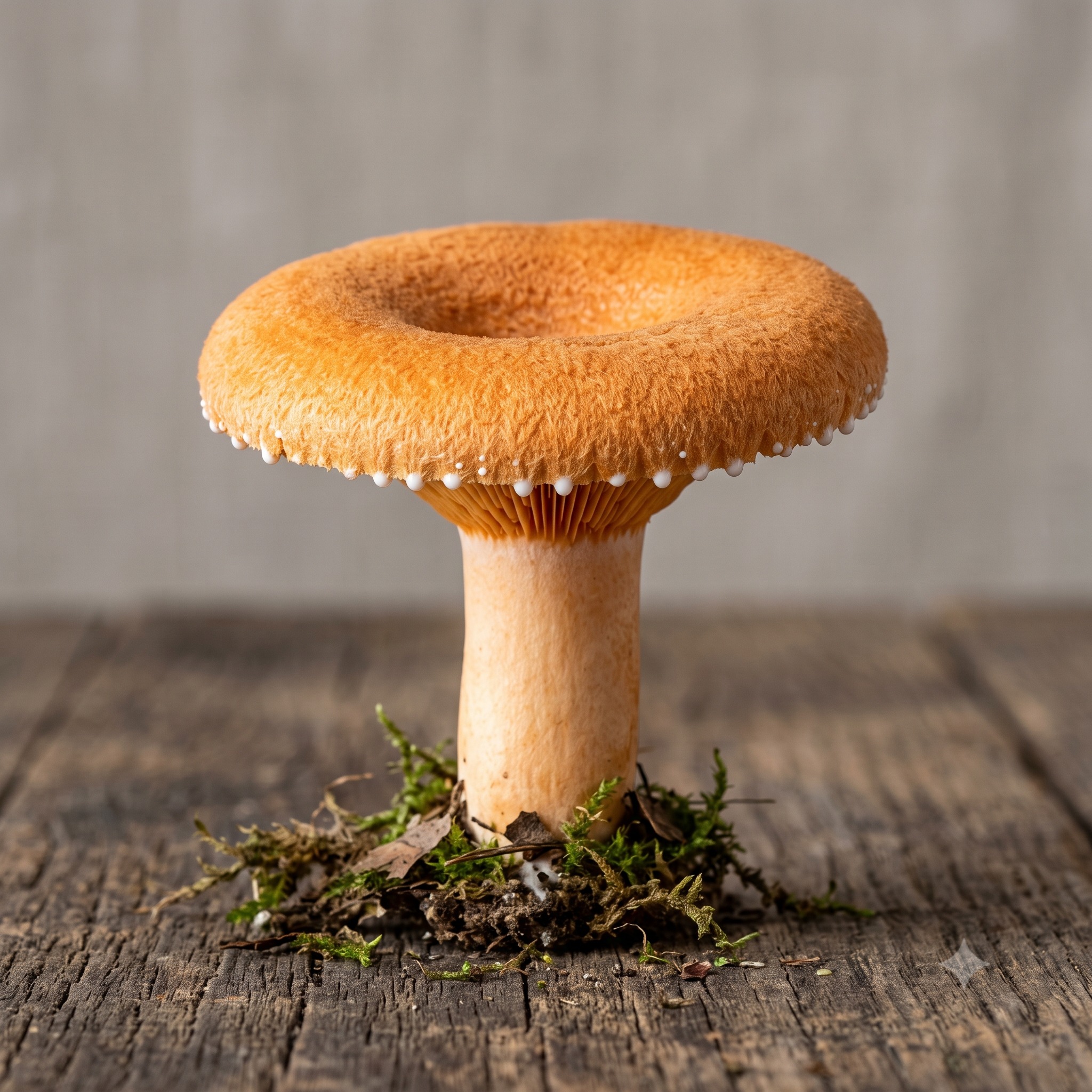
The weeping milk cap (Lactifluus volemus, long known as Lactarius volemus) is the milk cap that bleeds. Scratch a gill and it releases copious thick white latex that runs freely, stains everything brown, and gives the species its name. It is one of the best edible milk caps, firm-fleshed, mild, and nutty, and it is gathered enthusiastically across eastern Europe, Turkey, and East Asia. Its second characteristic is a smell that divides opinion sharply: mature specimens smell distinctly of fish or shellfish, which some people find appetising and others find off-putting. That smell disappears with cooking, but it startles anyone who has not been warned.
Identification & Appearance
The cap is 5-13 cm across, apricot to orange-brown, tawny, or rusty, dry and slightly velvety rather than sticky, convex then flattening and often becoming slightly funnel-shaped. Gills are pale cream to pale yellowish, crowded, slightly decurrent, and they stain brown wherever they are damaged, which happens quickly. The stem is the same colour as the cap or paler, firm, and solid. The defining feature is the latex: cut or scratch the flesh or gills and abundant thick white milk flows out, far more freely than in most milk caps, and it dries to brown stains on skin, clothes, and knife blades. The flesh is white, firm, and brittle. Spore print is white. Mature specimens smell of fish or crab. The combination of an orange-brown velvety cap, copious white latex, brown staining, and fishy smell is distinctive within the genus.
Where It Grows
This is a mycorrhizal species of broadleaved and mixed woodland, forming partnerships with oak, beech, hornbeam, birch, and conifers. It fruits from midsummer through autumn, singly or in small scattered groups, in woodland on a range of soils. It is widespread across Europe, though it has declined in parts of its western range and is red-listed in some countries, and it is common and heavily gathered in eastern Europe, Turkey, the Caucasus, and East Asia. In some regions it appears in markets in quantity. Because it depends on living tree roots it cannot be cultivated, and productive woodland produces year after year unless the trees are removed or the ground disturbed.
How to Grow at Home
Not possible. The genus is ectomycorrhizal, dependent on living tree roots, and no milk cap has been brought into commercial cultivation. There is no spawn or substrate that will fruit it. Habitat management is the only lever: retain mature oak, beech, and hornbeam, keep the litter layer intact, avoid fertiliser and compaction near roots. Given that the species is declining in parts of Europe, foragers should also collect responsibly, cutting rather than uprooting, taking a portion rather than every specimen, and checking whether it is protected locally. In several countries certain fungi carry legal protection or collecting limits, and it is worth knowing the rules where you gather.
Growing Conditions
Light
Not relevant. It fruits from woodland soil in shade, and the presence of a healthy mycorrhizal host tree determines whether it appears.
Watering
Fruiting follows summer and autumn rain, usually within one to two weeks of a good soaking followed by humid weather. Dry summers produce very few.
Temperature & Substrate
Fruiting spans roughly 12-24°C from midsummer into autumn. The substrate is woodland soil and litter around living broadleaf or conifer roots, and it cannot be reproduced at home.
Culinary Use
This is a good edible with firm, brittle flesh that holds its shape better than most milk caps. Young, firm specimens are best. The fishy smell of older specimens cooks away almost entirely, so it is not a reason to reject a find, though it is a reason to avoid eating them raw, which you should not do with any wild mushroom in any case. Slice and fry hard in butter or oil, or grill whole caps; the flesh browns nicely and the flavour is mild and nutty with a slight sweetness. In eastern Europe they are also salted and pickled in quantity. They are less good dried than the classic drying species. The latex stains hands, boards, and cloths brown, so prepare them on a surface you do not mind marking. Cook thoroughly, and try a small portion the first time.
Health & Nutrition
Nutritionally typical for a woodland mushroom: low calorie, moderate protein for a fungus, dietary fibre, B vitamins, potassium, and trace minerals, plus beta-glucans. There is no particular toxicity concern with correctly identified specimens, and the species has a long record of safe use in the regions where it is gathered. The genuine caution is identification. The milk cap genus is large, and several species produce acrid, peppery latex and cause vomiting and diarrhoea when eaten. In milk cap identification the latex is the primary character: its colour, how it changes on exposure to air, and whether the taste is mild or burning. That last test requires expert-supervised technique and is not something a beginner should improvise. Gather from clean woodland away from roads and industry.
Common Problems
- Strong fishy smell - normal in mature specimens and it cooks away. Not a sign of spoilage, though genuinely old, soft specimens should still be discarded.
- Brown stains everywhere - the latex oxidises brown on contact with almost anything. Use a board you do not mind marking.
- Confusion with acrid milk caps - the genus contains species that cause serious stomach upset. Latex behaviour and taste are the separating features and need expert confirmation.
- Maggot damage - common in warm weather; check the stem.
- Declining populations - red-listed in parts of Europe, so check local status before gathering in quantity.
Pros & Cons
Pros
- Firm flesh that fries and grills well, better than most milk caps.
- Mild, nutty flavour with a hint of sweetness.
- Abundant copious latex makes it distinctive within a difficult genus.
- Long tradition of use in eastern Europe and East Asia.
Cons
- Fishy smell in older specimens puts many people off.
- Latex stains hands, clothes, and boards.
- Cannot be cultivated at all.
- Declining and locally protected in parts of Europe.
Best Suited For
- Foragers in eastern and central European woodland with a milk cap tradition.
- Cooks who fry or grill mushrooms rather than drying them.
- Anyone learning to identify Lactarius by latex behaviour.
Not ideal for beginners tackling a genus with many acrid species, or anyone sensitive to fishy smells in the kitchen.
FAQ
Why does it smell of fish? It is a natural property of mature fruit bodies of this species, and it intensifies with age. It largely disappears during cooking.
Is the white milk safe? In this species the latex is mild and harmless. In other milk caps it can be acrid and cause vomiting, which is why latex behaviour is central to identifying the genus.
Why do my hands go brown? The latex oxidises to brown on exposure to air and stains skin, cloth, and cutting boards. It washes off skin over a day or so.
Never eat a weeping milk cap without 100% expert identification. Confirm the copious white latex, brown staining, apricot velvety cap, white spore print, and mild taste with an experienced identifier before eating.
🪴 Foraging kit worth a look
Nothing here identifies a mushroom for you - identification stays with your field guides and local experts. These are simply the basics foragers carry.
Links go to Amazon or a partner store (such as Adagio Teas) and may earn us a commission at no extra cost to you. As an Amazon Associate we earn from qualifying purchases. We link gear types, not sponsors' picks: you choose the exact product.