Elm Oyster Mushroom
The elm oyster (Hypsizygus ulmarius) looks like an oyster mushroom, is sold as an oyster mushroom, and is not an oyster mushroom at all.
🗓️ Last reviewed: August 2026
Overview
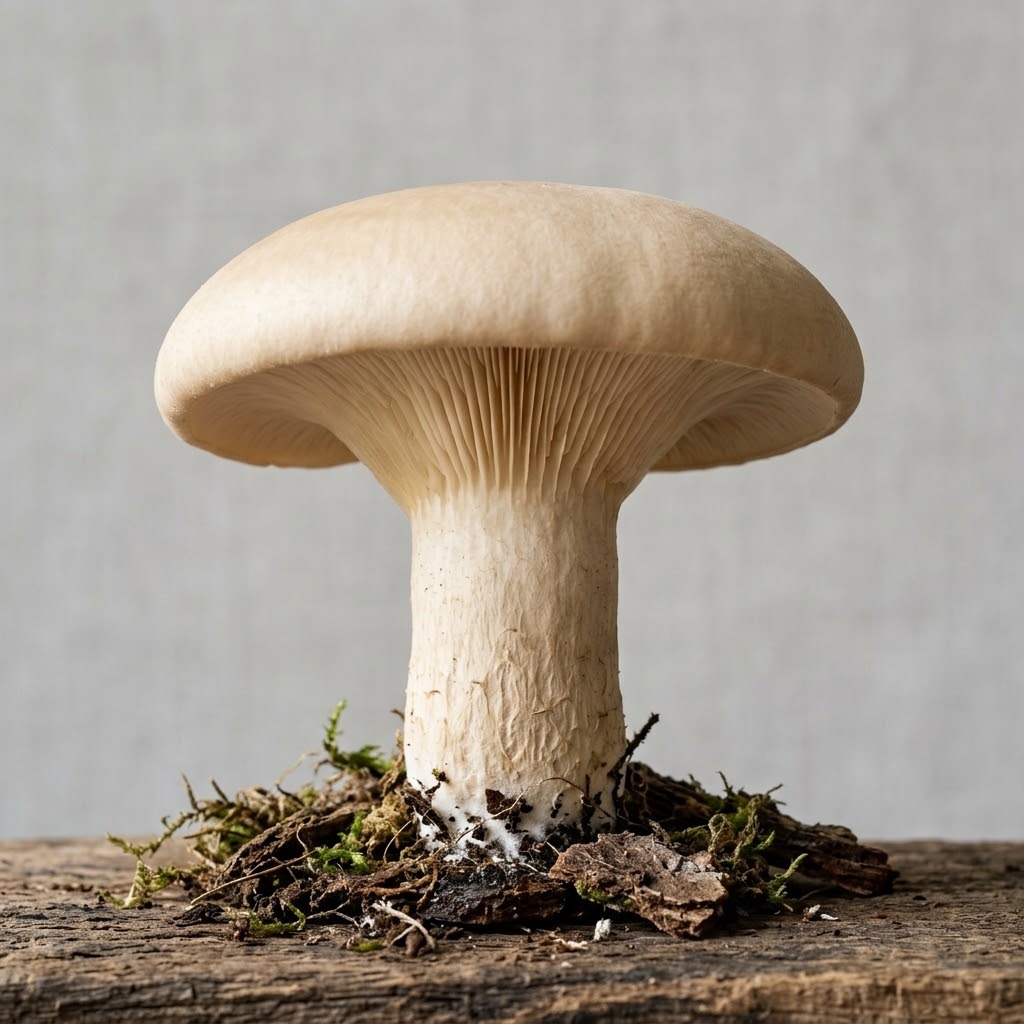
The elm oyster (Hypsizygus ulmarius) looks like an oyster mushroom, is sold as an oyster mushroom, and is not an oyster mushroom at all. It sits in the genus Hypsizygus alongside the beech mushroom, and the difference matters in the kitchen as much as in taxonomy: elm oysters are thick, firm, and dense where true oysters are thin and silky, and they hold their texture through long cooking instead of collapsing. In the wild it grows high on living and dead elm, poplar, box elder, and maple, often out of reach on a trunk, which is why most people meet it as a cultivated block. For a home grower it offers something the Pleurotus species do not: a meaty, almost scallop-like mushroom that tolerates a wide temperature range and stores far better after harvest.
Identification & Appearance
Caps are 5-15 cm across, convex then flattening, whitish to cream or pale buff, sometimes developing faint watery spots or a cracked surface in dry weather. The flesh is notably thick and firm, which is the quickest field distinction from a true oyster. Gills are white, crowded, and, crucially, adnate to slightly notched rather than strongly decurrent - they meet the stem without running far down it, unlike the deeply decurrent gills of Pleurotus. The stem is central to slightly off-centre, stout, and usually well developed. Spore print is white. Wild clusters grow from wounds and branch scars on standing hardwood, often several metres up. Anyone identifying it in the wild should note that the combination of a white spore print, non-decurrent crowded gills, thick white flesh, and growth on living hardwood separates it from oyster mushrooms; the important safety check is ruling out any pale gilled mushroom on wood that could belong to a toxic genus, which requires expert confirmation rather than a cap-and-gill glance.
Where It Grows
Hypsizygus ulmarius is a weak parasite and saprotroph on hardwoods across Europe, Asia, and North America, with a documented preference for elm, hence both the common and scientific name. It also fruits on poplar, box elder, maple, ash, and beech, usually at wound sites on living trees or on standing dead wood, from late summer into autumn. In cultivation it has proved willing to grow on a broad set of substrates: hardwood sawdust supplemented with bran, straw, paper waste, and even coffee grounds. Commercial cultivation is smaller than for oysters or shiitake, but home kits, plug spawn for logs, and grain spawn are all readily available, which is unusual for a species this uncommon on shop shelves.
How to Grow at Home
Elm oysters are an easy second species for someone who has already fruited an oyster block, and they behave much like an oyster with more patience required. The standard indoor route is hardwood sawdust with ten to twenty per cent wheat bran, sterilised rather than merely pasteurised because the supplemented substrate is nutritious enough to attract contaminants, inoculated with grain spawn and colonised at 21-24°C for three to four weeks. That is longer than an oyster block, and the mycelium is slower to look convincing, so resist the urge to declare failure early. Outdoors, plug spawn hammered into freshly cut elm, poplar, or maple logs works well, with the logs stacked in shade and left for a year to colonise before they start producing for several seasons. Fruiting indoors needs high humidity, fresh air, and light, and the fruit bodies emerge more slowly and singly than the explosive clusters of an oyster block. The payoff is a firmer mushroom with a genuinely longer shelf life.
Growing Conditions
Light
Indirect light for around 12 hours a day during fruiting. As with all cultivated wood-rotters, light is a positional signal rather than food, but without it the fruit bodies come out pale and misshapen with elongated stems.
Watering
Aim for 85-95 per cent humidity while fruiting, misting the chamber rather than blasting the caps directly. The thick flesh of this species is more tolerant of a brief dry spell than a thin phoenix oyster, but the caps crack visibly when humidity drops for long, and cracked caps invite bacterial spotting when moisture returns.
Temperature & Substrate
Colonisation runs at 21-24°C; fruiting works across a wide 13-24°C band, which makes this a useful species for rooms that are not climate controlled. Hardwood sawdust with bran is the highest-yielding substrate, straw works with lower yields, and logs of elm, poplar, maple, or box elder give the most authentic results outdoors over several years.
Culinary Use
This is the reason to grow elm oysters. The flesh is dense and holds together in a way true oysters never do, taking a hard sear without weeping, so it suits searing in thick slices, roasting, grilling, and braising. Sliced across the stem it is often compared to scallops, and it browns beautifully because there is enough substance to hold heat. The flavour is mild, clean, and faintly nutty, less aniseed than an oyster mushroom and less earthy than a shiitake, which makes it a good carrier for strong seasoning rather than the star of a dish. Cook it thoroughly like any mushroom. It keeps in the fridge for a week or more in a paper bag, considerably longer than the two or three days an oyster mushroom manages, and it freezes well once cooked.
Health & Nutrition
Elm oysters are low in calories with a useful protein content for a mushroom, plus fibre, B vitamins, potassium, and copper. Like other cultivated mushrooms they generate vitamin D on exposure to ultraviolet light, so a few hours gill-side up in sunshine before cooking is a genuine, if modest, nutritional upgrade. They contain beta-glucans, the polysaccharides that drive most published research on mushrooms and immune function, though that research is a long way from clinical recommendations and no mushroom should be treated as medicine. One point worth flagging: because wild elm oysters grow on living urban trees, specimens collected from street trees or park edges can pick up whatever the tree has been exposed to, so gathering from roadside trees is unwise.
Common Problems
- Slow colonisation - normal for this species, often a week longer than oysters. Judge by uniform white coverage, not by the calendar.
- Cracked, scaly cap surfaces - low humidity during cap expansion. Usually cosmetic, but the cracks can trap water later.
- Green mould in supplemented sawdust - bran-rich substrate needs proper sterilisation, not just pasteurisation.
- Single small fruit bodies instead of a flush - often too little fresh air or a block that was moved to fruiting before full colonisation.
- Confusion with oyster mushrooms on the shelf - harmless in cooking terms, but the two want different cooking methods, and elm oysters are wasted in a quick stir fry.
Pros & Cons
Pros
- Thick, meaty flesh that sears and roasts far better than true oysters.
- Excellent shelf life, often a week or more refrigerated.
- Wide fruiting temperature range, forgiving of uncontrolled rooms.
- Grows on logs outdoors for several seasons.
Cons
- Slower to colonise and fruit than oyster mushrooms.
- Mild flavour that needs seasoning to shine.
- Less commercially available, so spawn choice is narrower.
- Wild specimens are usually too high on the trunk to reach.
Best Suited For
- Cooks who want a firm, sliceable mushroom for searing and grilling.
- Growers ready for a second species after a successful oyster block.
- Anyone with access to fresh elm, poplar, or maple logs for outdoor cultivation.
Not ideal for impatient first-time growers, or anyone expecting the fast explosive flushes of an oyster block.
FAQ
Is the elm oyster a real oyster mushroom? No. It is Hypsizygus ulmarius, a different genus from Pleurotus. The name comes from the resemblance, not the relationship, and the texture is noticeably firmer.
How do I tell it apart from a true oyster in the field? Look at where the gills meet the stem. Elm oysters have crowded gills that stop at the stem or barely run down it; oyster mushrooms have gills that clearly run down the stem. The thick white flesh is another clue.
Can I grow it on the same block as oyster mushrooms? Not in the same bag; two species compete and one loses. Run them as separate blocks, which also lets you give each the temperature it prefers.
Never eat a wild elm oyster without 100% expert identification. Pale gilled mushrooms on wood cover a wide range of species, some of which are not edible. Confirm the white spore print, gill attachment, flesh thickness, and host tree with an experienced identifier before eating.
🪴 Foraging kit worth a look
Nothing here identifies a mushroom for you - identification stays with your field guides and local experts. These are simply the basics foragers carry.
Links go to Amazon or a partner store (such as Adagio Teas) and may earn us a commission at no extra cost to you. As an Amazon Associate we earn from qualifying purchases. We link gear types, not sponsors' picks: you choose the exact product.