Field Blewit
The field blewit (Lepista saeva, also known as Lepista personata and traditionally as the blue leg) is the grassland cousin of the wood blewit, and one of the last good mushrooms of the year.
🗓️ Last reviewed: October 2026
Overview
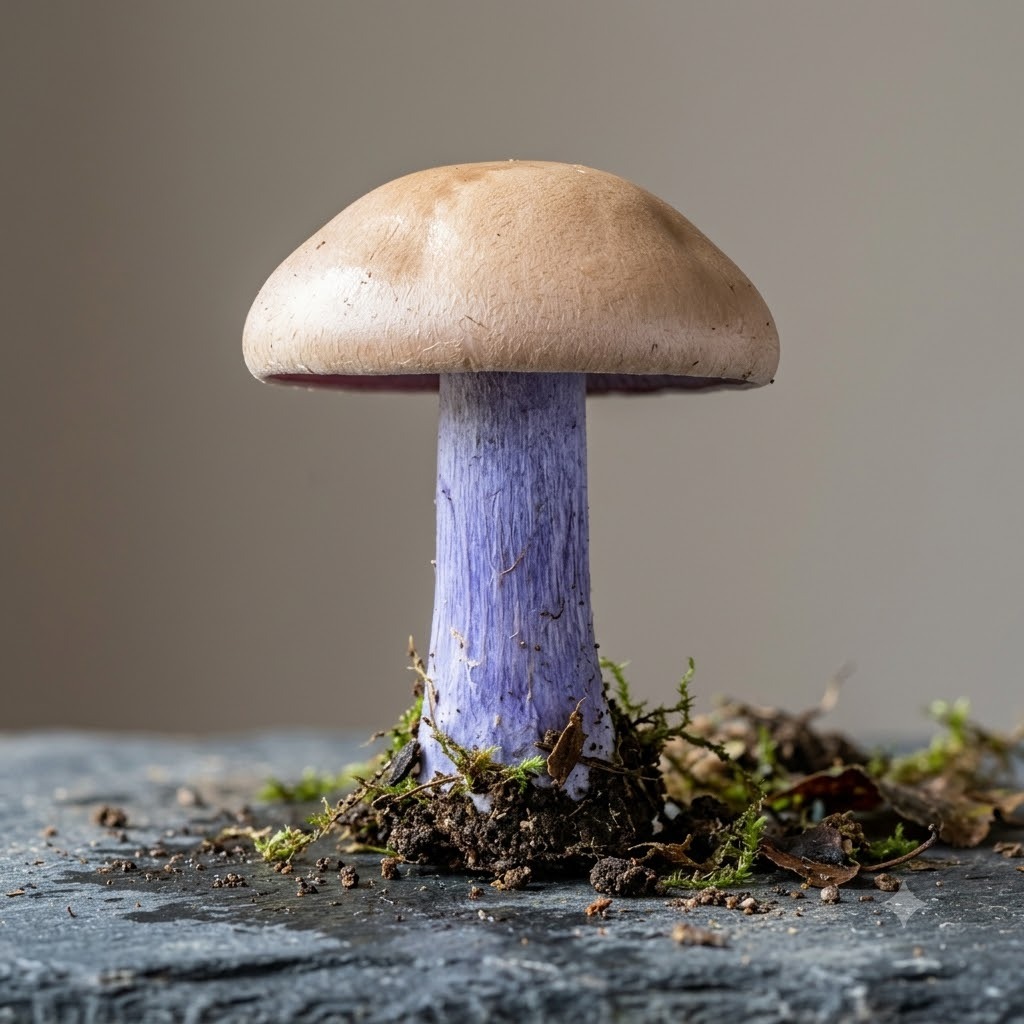
The field blewit (Lepista saeva, also known as Lepista personata and traditionally as the blue leg) is the grassland cousin of the wood blewit, and one of the last good mushrooms of the year. It appears in pasture, meadows, and old lawns from late autumn into early winter, often after the first frosts have stopped everything else, and it is gathered commercially in parts of France and Britain, where it has a long history as a market mushroom. The name comes from the stem, which is a striking lilac-blue while the cap stays plain buff, an unusual combination that makes the species easier to recognise than most grassland fungi. It is firm and well flavoured, and best used soon after picking.
Identification & Appearance
The cap is 6-15 cm across, pale buff to greyish-tan or dirty cream, smooth, slightly greasy in damp weather, convex then flattening with a wavy margin, and it does not carry any lilac tint. Gills are crowded, pale buff to greyish, and easily detached from the cap flesh, notched where they meet the stem. The stem is the identifier: stout, fibrous, and distinctly lilac to violet-blue, often streaky, sometimes fading with age. Flesh is thick, firm, and white with a pleasant strong mushroom smell. Spore print is pale pink, which is a critical check that separates the blewits from the white-spored Clitocybe and Tricholoma species and from purple Cortinarius species, several of which are dangerously toxic and give a rust-brown print. Cap buff, stem lilac, spore print pink, growing in grass: those four together make a field blewit.
Where It Grows
Field blewits are saprotrophs of grassland, fruiting in old pasture, meadows, downland, dunes, churchyards, and long-established lawns, typically in rings or arcs, from late autumn into early winter. They tolerate cold well and often fruit after the first frosts, which is a large part of their appeal. They favour calcareous and neutral soils more than acidic ones. The species is common across Europe, particularly in Britain and France where it has been sold in markets for generations, and it occurs in North America and Asia too. Because it grows in managed grassland, the ground history matters: fertilised, sprayed, or heavily grazed pasture is common habitat and not all of it is ground you want to eat from.
How to Grow at Home
There is no commercial cultivation and no spawn on the market, though as a grassland saprotroph it is more plausible in principle than any mycorrhizal species. Some growers have experimented with transplanting turf from productive rings, with mixed and largely anecdotal results. The practical approach is management: if a ring already exists in an old lawn or meadow, leave it alone, do not apply fungicide or high-nitrogen feed, and mow rather than scarify. Field blewit rings persist for many years and expand slowly outwards, so an established ring is worth protecting. As with the fairy ring champignon, there is a genuine conflict between a manicured lawn and a productive one, and it is worth choosing deliberately.
Growing Conditions
Light
Full sun to light shade, since this is an open grassland species. The fungus lives in the turf and thatch layer; what matters is that the grassland is unsprayed and undisturbed.
Watering
Fruiting follows autumn rain and continues through cold damp weather. Frost does not stop it and often seems to precede good flushes, which is why it is a reliable late-season species.
Temperature & Substrate
Fruiting spans roughly 2-14°C from late autumn into early winter. The substrate is grassland turf, thatch, and the organic layer beneath, particularly on neutral to calcareous soils.
Culinary Use
Field blewits are firm, meaty, and strongly flavoured, and they are among the best wild mushrooms for cooking simply. Slice thickly and fry hard in butter; they hold their shape, brown well, and produce a rich savoury flavour that stands on its own. They also work in stews, pies, and cream sauces, but they do not store very well and are best used soon after picking. They must be cooked thoroughly. Blewits, both field and wood, cause gastrointestinal upset if eaten raw or undercooked, and this is a well-known property rather than an individual quirk. Some people also react to properly cooked blewits, so a small first portion is sensible. Clean them with a brush; the greasy cap picks up grass and soil.
Health & Nutrition
Nutritionally a good mushroom: low calorie, with reasonable protein for a fungus, dietary fibre, B vitamins, potassium, and trace minerals, plus beta-glucans. Two health points matter. First, blewits contain compounds that cause digestive upset when raw, so thorough cooking is not optional; this is one of the species where the traditional insistence on cooking wild mushrooms is grounded in a specific, documented effect. Second, habitat: pasture and lawns are frequently treated with fertiliser, herbicide, and occasionally fungicide, and grazed pasture carries its own hygiene considerations. Gather from ground whose management you know. As always, cook fully and start with a small portion when eating any species for the first time.
Common Problems
- Stomach upset - almost always undercooking. Blewits must be cooked through; never taste them raw.
- Confusion with purple Cortinarius species - potentially serious. Take a spore print: blewits are pink, webcaps are rust-brown, and webcaps have a cobwebby veil when young.
- Confusion with white-spored funnel caps - grassland holds toxic Clitocybe species. The pink spore print and lilac stem settle it.
- Grit in the greasy cap - brush rather than wash.
- Sprayed pasture - know the ground. This species grows exactly where agricultural chemicals are used.
Pros & Cons
Pros
- Firm, meaty texture and strong flavour, excellent simply fried.
- Fruits very late, often after frost when nothing else is out.
- Holds its shape and browns well in the pan.
- Distinctive lilac stem against a plain buff cap.
Cons
- Must be cooked thoroughly; raw or undercooked specimens cause upset.
- Grows in grassland that is often chemically treated.
- Shares habitat with toxic white-spored funnel caps.
- Some people react even to well-cooked blewits.
Best Suited For
- Late-season foragers with access to old unsprayed pasture or meadow.
- Cooks who want a firm mushroom that fries well.
- Anyone learning the value of spore prints in grassland identification.
Not ideal for beginners picking from unknown lawns, or anyone who cannot commit to cooking mushrooms thoroughly.
FAQ
Is it the same as a wood blewit? No, but they are close relatives. The wood blewit is lilac all over, cap included, and grows in woodland leaf litter. The field blewit has a plain buff cap and a lilac stem, and grows in grass.
Why do I need a spore print? Because purple-tinted mushrooms include dangerous webcaps. Blewits give a pale pink print; webcaps give rust-brown. It takes a few hours and removes the main risk.
Can I eat them raw in a salad? No. Blewits cause gastrointestinal upset when raw or undercooked. Cook them through every time.
Never eat a field blewit without 100% expert identification. Confirm the buff cap, lilac stem, pink spore print, and grassland habitat with an experienced identifier, then cook thoroughly.
🪴 Foraging kit worth a look
Nothing here identifies a mushroom for you - identification stays with your field guides and local experts. These are simply the basics foragers carry.
Links go to Amazon or a partner store (such as Adagio Teas) and may earn us a commission at no extra cost to you. As an Amazon Associate we earn from qualifying purchases. We link gear types, not sponsors' picks: you choose the exact product.