Coral Tooth Fungus
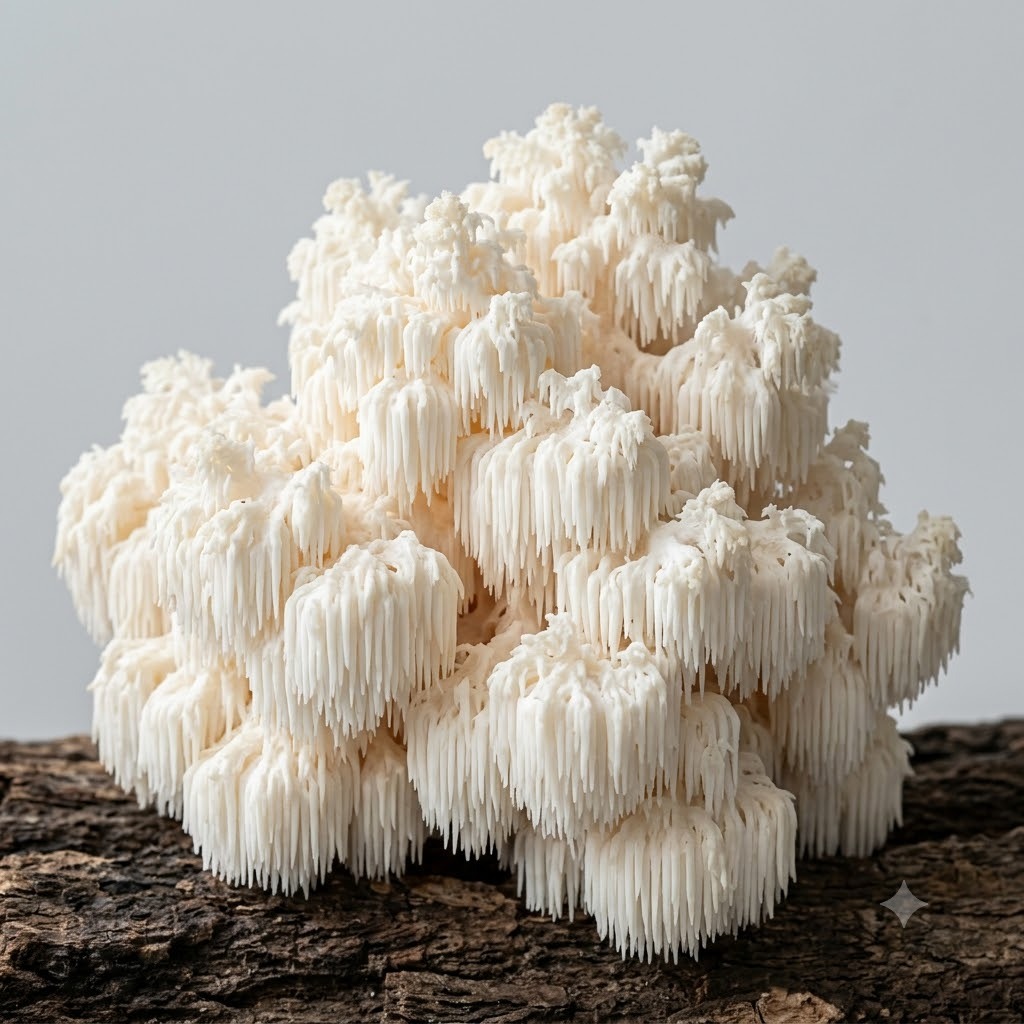
The coral tooth fungus (Hericium coralloides) is the branching, waterfall-like cousin of lion's mane, and arguably the most beautiful edible mushroom in northern forests.
🗓️ Last reviewed: August 2026
Overview
The coral tooth fungus (Hericium coralloides) is the branching, waterfall-like cousin of lion's mane, and arguably the most beautiful edible mushroom in northern forests. Where lion's mane forms a single shaggy pompom, coral tooth builds an intricate branched framework hung with rows of short white spines, looking like frozen surf or a piece of white coral stranded on a log. It is a wood-rotting saprotroph of dead hardwood, especially beech and birch, and it is edible, mild, and pleasantly seafood-like when cooked. In much of Europe it is uncommon enough to be a red-list species in some countries, so this is one to photograph and admire more often than to harvest, and the cultivated route is the honest way to eat it regularly.
Identification & Appearance
The fruit body is 10-40 cm across, a repeatedly branched white to cream structure with spines hanging in rows from the underside of the branches. The spines are short, typically 0.5-1.5 cm, which is the key separation from its relatives: lion's mane (Hericium erinaceus) is an unbranched ball with long spines, while the bear's head (Hericium americanum) has longer spines, generally over one centimetre, hanging from a more compact branching frame. Flesh is white, soft, and slightly rubbery, yellowing and browning with age. There is no cap, no gills, and no true stem, just a branched attachment to the wood. Spore print is white. The genus as a whole is unmistakable once seen, with no dangerous look-alikes in temperate forests, which makes Hericium one of the safest wild mushroom groups for a beginner to learn. That does not remove the requirement for confident identification before eating anything.
Where It Grows
Coral tooth grows on dead and dying hardwood, particularly beech, birch, maple, and occasionally other broadleaved trees, appearing on fallen logs, standing dead trunks, and large branches from late summer through autumn. It is a white-rot fungus that decays both lignin and cellulose. It is found across Europe, northern Asia, and North America, but it is genuinely uncommon in managed forests because it needs large-diameter dead wood, which intensive forestry removes. Several European countries list it as threatened or near-threatened for this reason. Where old beech woodland survives with fallen timber left in place, it can be locally regular; where woodland is tidied, it disappears. That habitat dependency is worth knowing before harvesting: taking the fruit body does not kill the fungus, whose mycelium lives on inside the log, but repeated heavy collecting from a small population is still poor practice.
How to Grow at Home
Hericium species are moderately easy to cultivate and coral tooth follows the same route as lion's mane, which is the more commonly sold culture. Sterilised hardwood sawdust supplemented with wheat bran, in bags, inoculated with grain spawn and colonised at 20-24°C for around three to four weeks is the standard indoor method. Fruiting needs high humidity, moderate fresh air, and cooler temperatures than colonisation, typically 15-20°C. The fruit bodies form at bag openings and expand over about a week, and they must be harvested before they yellow, because Hericium goes from perfect to sour surprisingly quickly. Outdoors, plug spawn in freshly cut beech, birch, or maple logs works well; logs need a year or more to colonise and then fruit each autumn for several seasons. This is a rewarding species to grow precisely because harvesting it from the wild is often the wrong choice ecologically.
Growing Conditions
Light
Indirect light for around 12 hours a day during fruiting. Hericium needs less light than oyster mushrooms, but complete darkness produces poorly branched, stunted growth with fewer spines.
Watering
High humidity, 90-95 per cent, is important because the spines dry and yellow quickly. Mist the chamber rather than the fruit body, since water pooling on the branches causes yellow-brown patches and sour spots. Airflow must be gentle; a strong draught dries the spines within hours.
Temperature & Substrate
Colonisation at 20-24°C, fruiting at 15-20°C. The temperature drop is a useful trigger for pinning. Substrate is sterilised hardwood sawdust with ten to twenty per cent bran, or hardwood logs of beech, birch, or maple outdoors. Conifer wood does not work.
Culinary Use
Coral tooth cooks like lion's mane: mild, faintly sweet, with a texture that shreds into strands and is regularly compared to crab or lobster meat. That comparison depends entirely on cooking method. The mushroom is mostly water, so it must be cooked long enough and hot enough to drive that water off, otherwise it stays spongy and bland. Tear it into pieces, dry-sear in a hot pan until the water is gone and the edges brown, then add butter or oil and season. It suits crab-cake style preparations, pan-searing in thick slabs, and folding into pasta or risotto. Do not soak or wash it; it absorbs water like a sponge and never recovers. Cook it thoroughly, harvest and use it while pure white, and discard any specimen that has yellowed or smells sour.
Health & Nutrition
Nutritionally it is a typical mushroom: low calorie, modest protein, dietary fibre, B vitamins, potassium, and zinc, with beta-glucans in the cell walls. The genus Hericium has attracted a large amount of laboratory research, most of it on lion's mane rather than this species, into compounds called hericenones and erinacines and their effect on nerve growth factor in cell and animal models. That work is genuinely interesting and genuinely preliminary; human evidence is limited and no one should treat any mushroom as a treatment for a neurological condition. Eat it because it is delicious. If you take supplements for the studied compounds, that is a separate decision to discuss with a doctor rather than something a plate of mushrooms delivers.
Common Problems
- Yellowing spines - the fruit body is past its best, or humidity dropped. Harvest earlier; yellowed Hericium turns bitter and sour.
- Stunted, poorly branched growth - usually too little fresh air or fruiting temperature too high.
- Waterlogged, spongy texture in the pan - the mushroom was washed or not cooked long enough before fat was added.
- Contamination in supplemented sawdust - bran-rich substrate needs proper sterilisation.
- Nothing fruiting on logs - normal in year one; Hericium logs are slow, and beech in particular takes time.
Pros & Cons
Pros
- One of the safest wild mushroom groups to learn, with no dangerous look-alikes.
- Striking appearance, excellent for photography and for teaching.
- Mild seafood-like flavour and shreddable texture.
- Cultivates reliably indoors or on hardwood logs.
Cons
- Uncommon and red-listed in parts of Europe, so wild collecting is often inappropriate.
- Very short window between perfect and yellowed.
- Absorbs water readily, so it is easy to cook badly.
- Needs high humidity and gentle airflow, less forgiving than oysters.
Best Suited For
- Growers who want a spectacular, high-value species after mastering oysters.
- Cooks looking for a plant-based crab or lobster substitute.
- Foragers in old beech and birch woodland who want a safe group to learn.
Not ideal for anyone in a dry growing space, or foragers in regions where the species is threatened and should be left alone.
FAQ
How is it different from lion's mane? Lion's mane is a single unbranched ball with long hanging spines. Coral tooth is a branched, coral-like structure with short spines in rows along the branches. Both are edible and both cook the same way.
Is it safe for a beginner to identify? The genus Hericium has no dangerous temperate look-alikes, which makes it unusually beginner-friendly. That still does not mean eating anything without confirmation, especially a first find.
Should I pick it if I find it in the woods? Check your local conservation status first. In several European countries it is threatened by the removal of large dead wood, and leaving it is the right call. Growing your own is the sustainable route.
Never eat a coral tooth fungus without 100% expert identification. Even in a group with no deadly twins, confirm the branched white structure, the short hanging spines, and growth on dead hardwood with an experienced identifier before eating.
🪴 Foraging kit worth a look
Nothing here identifies a mushroom for you - identification stays with your field guides and local experts. These are simply the basics foragers carry.
Links go to Amazon or a partner store (such as Adagio Teas) and may earn us a commission at no extra cost to you. As an Amazon Associate we earn from qualifying purchases. We link gear types, not sponsors' picks: you choose the exact product.