Philodendron Melanochrysum
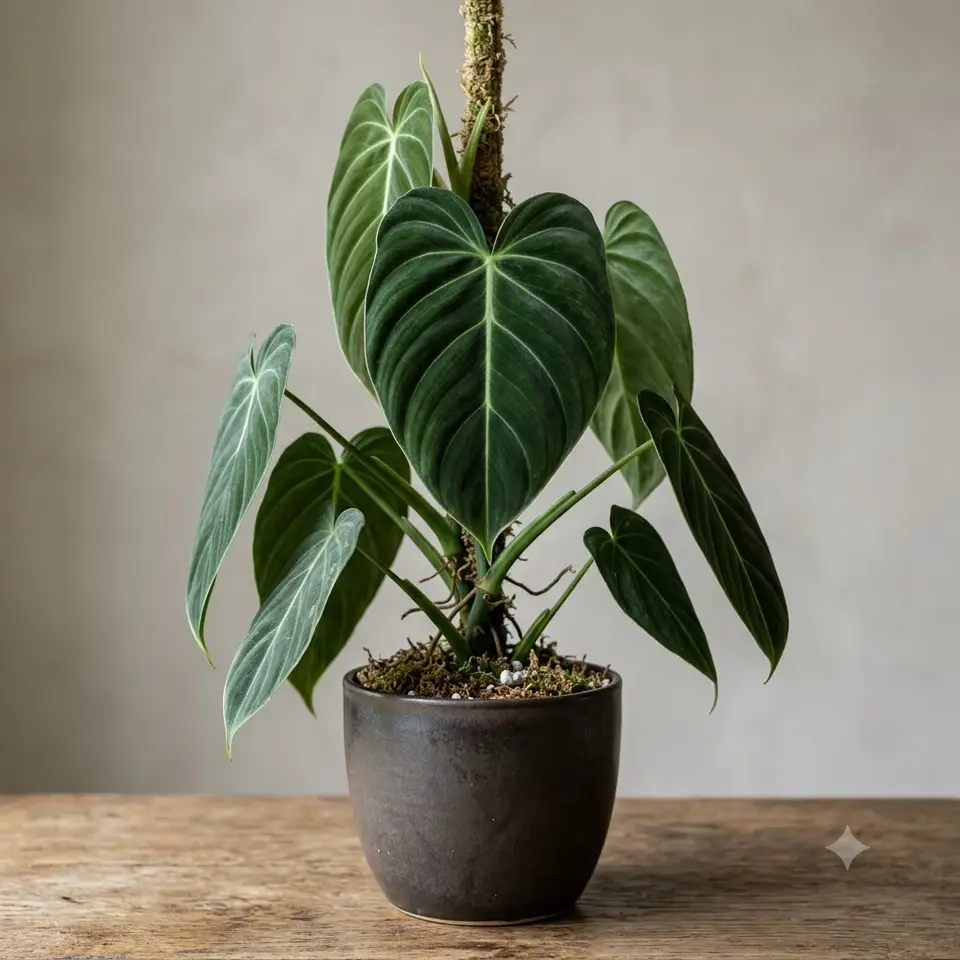
Philodendron Melanochrysum is a prized climbing aroid grown for its long, velvety, dark leaves that shimmer with gold-green veining (Philodendron melanochrysum).
Last reviewed: September 2026
 AI illustration
 Overview
Philodendron Melanochrysum is a prized climbing aroid grown for its long, velvety, dark leaves that shimmer with gold-green veining (Philodendron melanochrysum). The common name "Black Gold Philodendron" captures the deep blackish-green blades and their metallic sheen. It is a collector favourite that rewards patience but demands consistent warmth and humidity.
Origin & Natural Habitat
The species is native to the tropical rainforests of Colombia, where it grows as a hemiepiphyte on the Andean lower slopes. In the wild it germinates on the forest floor and then climbs tree trunks, its aerial roots gripping the bark as it reaches for brighter, more humid light in the canopy layer. This warm, shaded, moisture-rich understory is the environment its care aims to imitate.
Appearance
Young plants show modest heart-shaped leaves, but the plant transforms dramatically as it matures and climbs. Adult leaves become long and narrowly heart-shaped, often reaching 60 cm or more when the plant is given a tall support to climb. The surface is deep blackish-green with a velvety, light-absorbing texture, crossed by fine pale gold and copper veins. Growth is a climbing vine habit; indoors it can reach 1.5 to 2.4 m tall on a moss pole, with leaves getting progressively larger the higher it climbs.
Why People Grow It - Qualities & Benefits
- Dramatic velvety black-green leaves with glowing gold veins that read as living art.
- Leaves grow noticeably larger and more impressive as the plant matures and climbs.
- A genuine collector's plant that signals a step up from common aroids.
- Thrives on a moss pole, making it a striking vertical feature in a warm room.
Care
Light: Bright, indirect light. It needs plenty of light to keep its dramatic form, but direct midday sun scorches and bleaches the velvety leaves. An east window or a metre or so back from a bright south or west window suits it well. Water: Keep the mix lightly and evenly moist during active growth, watering when the top 2-3 cm feels barely dry. Never let it sit soggy, as the fleshy roots rot quickly in waterlogged mix; ease off in winter. Soil: A chunky, fast-draining aroid mix: orchid bark, perlite and coco coir or peat, with a little charcoal. It wants moisture retention and air around the roots at the same time. Temperature & Humidity: Warmth is non-negotiable. Aim for 18 to 27°C and never below 13°C. Humidity above 60% is strongly preferred; dry air causes small, crispy, poorly formed leaves. Feeding: Feed with a balanced diluted liquid fertiliser every 2 to 4 weeks through spring and summer, and stop in the darker, cooler months. Extra: Give it a moss pole or plank to climb; without vertical support the leaves stay small and the plant sprawls. Its aerial roots will grip the support and appreciate a moist pole. Note: this plant is toxic to cats and dogs, so keep it out of their reach.
Propagation
Propagate from stem cuttings that include at least one node (the point where a leaf and aerial root emerge). Cut just below a node, let the cut callous for an hour, then root the cutting in damp sphagnum moss, water or a light airy mix. Keep it warm, humid and bright but out of direct sun; roots typically form over several weeks, after which you can pot it up.
Common Problems & Pests
- Small or malformed leaves, usually from too little light, no climbing support, or low humidity.
- Yellowing leaves and mushy stems from overwatering and cold, soggy roots.
- Sap-sucking pests such as spider mites, thrips, mealybugs and aphids, which favour dry indoor air and hide on the undersides of leaves.
Toxicity & Safety
Philodendron Melanochrysum is toxic to cats and dogs. Like other philodendrons, all parts contain insoluble calcium oxalate crystals. When a pet chews or bites the leaves or stems, these needle-like crystals are released and embed in the mouth and throat, causing intense oral irritation and burning, pawing at the mouth, excessive drooling, and vomiting. It is also irritating to humans if chewed. Keep this plant well out of reach of pets and small children, and wash your hands after handling cuttings.
Pros & Cons
Pros
- Spectacular, unmistakable velvety foliage that few houseplants match.
- Leaves reward good care by growing dramatically larger over time.
Cons
- Demanding about warmth and humidity; struggles in dry or cool rooms.
- Toxic to cats and dogs, and slow to establish for impatient growers.
Best Suited For
- Experienced collectors who can provide steady warmth, high humidity and a moss pole.
- Pet-free homes, or growers who can keep it firmly out of animals' reach.
FAQ
Why are my Melanochrysum leaves staying small?
Small leaves almost always mean the plant lacks a climbing support, bright enough indirect light, or high enough humidity. Give it a moss pole to climb, brighter (but not direct) light and humidity above 60%, and new leaves should emerge progressively larger.
Is Philodendron Melanochrysum hard to grow?
It is considered advanced, mainly because it is fussy about warmth and humidity rather than difficult day to day. In a warm, humid room with bright indirect light and a support to climb it grows steadily; in a dry, cool home it sulks and produces stunted leaves.
Sources
Pet toxicity: checked against the ASPCA Animal Poison Control Center lists of toxic and non-toxic plants for cats and dogs, genus-wide entry "Philodendron Pertusum" (Philodendron spp): toxic to cats and dogs. Lists read on 10 October 2026.
Gear for growing philodendron melanochrysum
Links go to Amazon or a partner store (such as Adagio Teas) and may earn us a commission at no extra cost to you. As an Amazon Associate we earn from qualifying purchases. We link gear types, not sponsors' picks: you choose the exact product.