Cabomba
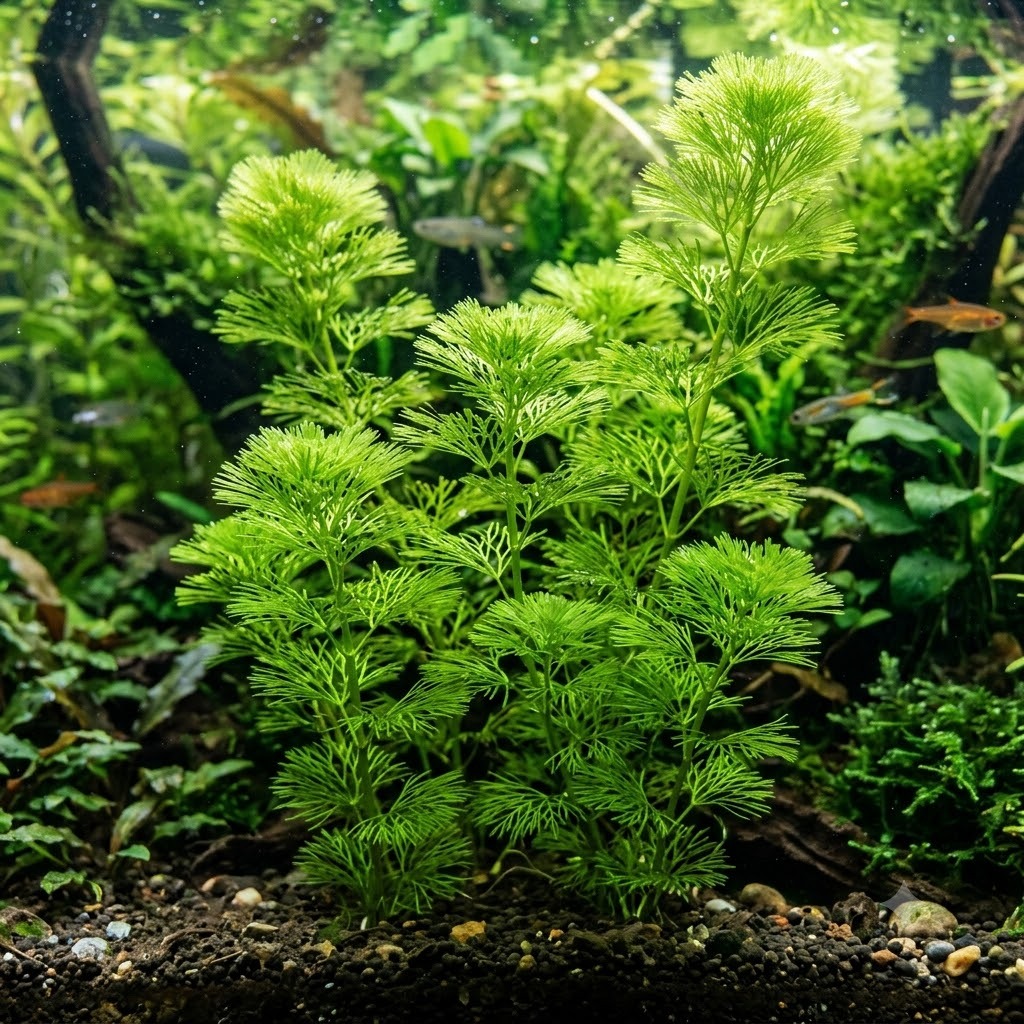
Cabomba is the feathery fan plant - opposite pairs of finely divided, fan-shaped leaves on soft stems that sway in the current like nothing else in the tank.
🗓️ Last reviewed: July 2026
Overview
Cabomba is the feathery fan plant - opposite pairs of finely divided, fan-shaped leaves on soft stems that sway in the current like nothing else in the tank. Green cabomba (Cabomba caroliniana) is the common form; it looks delicate because it is: it needs decent light, dislikes rough handling, and melts fast in gloomy tanks. It is also a listed invasive in several regions, which limits where it can legally be sold.
Origin & Natural Habitat
The Americas - Cabomba caroliniana comes from slow, still waters of the southeastern US and parts of South America. Escaped populations are a problem weed elsewhere: it is on the EU list of invasive alien species of Union concern and is prohibited in several US states and Australian jurisdictions. Never release aquarium plants into waterways.
Appearance
Upright stems carrying paired fans of hair-fine, forked leaflets, bright green and slightly glossy underwater. Healthy stands look like rows of soft green feathers; the related red cabomba (Cabomba furcata) adds pink-red tones but is much harder to keep.
Why People Grow It - Qualities & Benefits
- One of the prettiest fine-leaved background plants
- Fast growth and good nutrient uptake once settled
- Excellent spawning medium and fry cover
- Softens hardscape-heavy layouts instantly
Care
Light: Moderate to strong - this is the make-or-break factor. In low light the stems stretch, the fans shrink and the plant falls apart within weeks.
Water: 22-27°C for the green form, pH 6.0-7.5, soft to moderately hard water preferred. Gentle flow; strong current tatters the fine leaves.
Substrate: Plant stem ends in fine gravel or soil; they root lightly. Handle gently - stems snap and bruise easily during planting.
CO₂ & feeding: Green cabomba manages without CO2 under good light with liquid fertiliser. Red cabomba (C. furcata) realistically needs CO2, soft water and strong light - treat it as an advanced plant.
Placement: Background groups where the feathery texture reads against plainer leaves.
Extra: ⚠️ Fine leaves trap floating debris and mulm. Keep mechanical filtration decent and give the stand an occasional gentle swish during water changes.
Propagation
Cut healthy tops 15 cm or longer and replant; the trimmed base usually sends out side shoots. Bin all trimmings - fragments root easily, which is exactly why it is invasive.
Common Problems & Pests
Melting after shipping or in weak light; leaves dropping off the lower stem; debris and algae fouling the fans in dirty water; snapped stems from clumsy handling. Fine-leaved plants are also a favourite target for goldfish and other large plant-shredding fish.
Toxicity & Safety
Not known to be toxic to cats, dogs or aquarium livestock. Shrimp-safe.
Best Suited For
- Keepers with good light wanting a soft, feathery background
- Breeding setups needing fine spawning cover
- Low-tech tanks with strong lighting (green form only)
- Not for dim tanks, goldfish, or regions where it is prohibited
FAQ
Why did my cabomba fall apart within a month?
Almost always light. Cabomba needs moderate to strong lighting to hold its lower leaves; under weak light it stretches, thins and disintegrates. It also arrives stressed from shipping, so some initial melt is normal even in good tanks.
Is cabomba legal to buy?
Not everywhere. Cabomba caroliniana is banned in the EU and restricted in several US states and parts of Australia because escaped fragments infest waterways. Check local rules; where it is restricted, hornwort gives a similar feathery look.