Bucephalandra
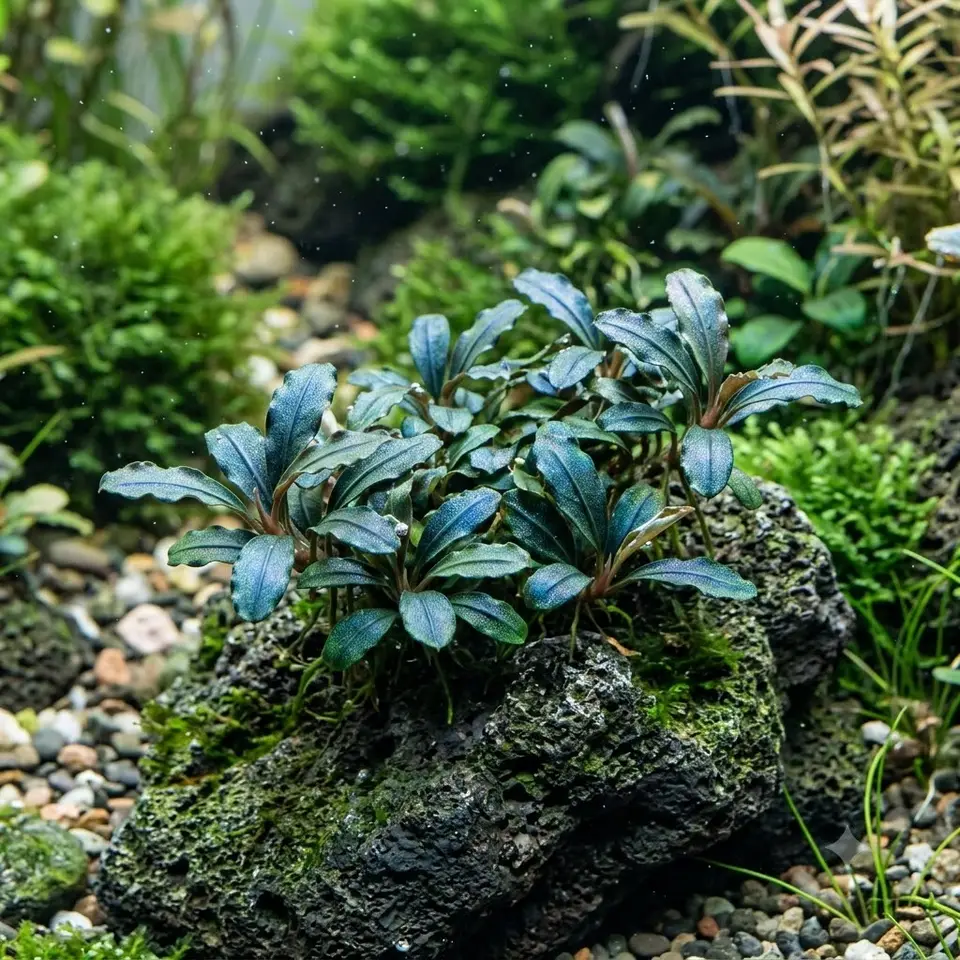
Bucephalandra is a slow rhizome epiphyte, popular with aquascaping collectors, that grows like anubias but comes in a huge range of dark greens, blues and purples with a fine glitter to the leaves.
Last reviewed: October 2026
 AI illustration
 Overview
Bucephalandra is a slow rhizome epiphyte, popular with aquascaping collectors, that grows like anubias but comes in a huge range of dark greens, blues and purples with a fine glitter to the leaves. It grows attached to hardscape in low light, is very hardy once settled, and comes in dozens of named varieties. (Bucephalandra species.)
Origin & Natural Habitat
Borneo, endemic to rocks in and beside fast, clear rainforest streams - many localised, named forms.
Appearance
Small, stiff, often iridescent leaves in green, blue, brown or purple on a creeping rhizome; leaves can show a fine sparkle. Compact and slow.
Why People Grow It - Qualities & Benefits
- Beautiful, collectible leaf colours
- Epiphyte: attaches to wood and rock
- Low light, no CO2 required
- Compact and slow, easy to place
Care
Light: Low to moderate; colours deepen with a little more light, but slow growth means algae if overdone.
Water: 22-28°C, pH 6.0-7.5, soft to moderately hard.
Substrate: None - glue or tie the rhizome to hardscape, like anubias. Never bury it.
CO₂ & feeding: Not required; CO2 and light bring out colour and slightly faster growth.
Placement: Foreground to midground detail on wood and rock.
Extra: Newly bought buce often 'melts' - old leaves dissolve while it adapts to your water. Keep the rhizome attached and unburied; fresh leaves emerge from the growth point.
Propagation
Cut the rhizome into sections, each with leaves and roots, and re-attach.
Common Problems & Pests
Initial melt after import; algae on slow old leaves in bright light. Otherwise very hardy.
Toxicity & Safety
Non-toxic to aquarium livestock; not known to be toxic to cats or dogs. Shrimp-safe.
Best Suited For
- Aquascapers and collectors
- Low-tech hardscape detail
- Shrimp tanks
- Anyone who likes anubias but wants colour
FAQ
My new bucephalandra lost most of its leaves - is that normal?
Yes. Buce commonly melts after import while adapting. Leave the rhizome attached and unburied; new leaves grow from the tip.
How do I get the blue and purple colours?
A bit more light (and CO2 if you have it) deepens the iridescence - but keep it slow enough to avoid algae.
Gear for growing bucephalandra
Links go to Amazon or a partner store (such as Adagio Teas) and may earn us a commission at no extra cost to you. As an Amazon Associate we earn from qualifying purchases. We link gear types, not sponsors' picks: you choose the exact product.