Bunny Ears Cactus
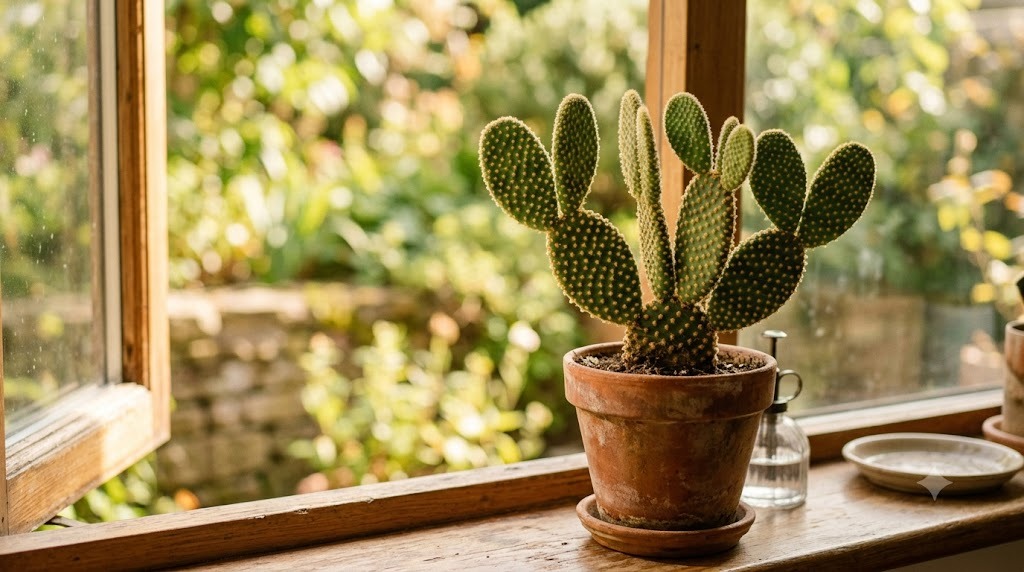
The bunny ears cactus is a charming small opuntia whose flat, oval pads sprout in pairs like a rabbit's ears, dotted with tufts of tiny golden or white glochids instead of long spines.
Last reviewed: July 2026
Overview
The bunny ears cactus is a charming small opuntia whose flat, oval pads sprout in pairs like a rabbit's ears, dotted with tufts of tiny golden or white glochids instead of long spines. Cute and easy, it is a popular beginner cactus - handled with respect for those deceptively soft-looking tufts.
Origin & Natural Habitat
Native to the deserts of northern and central Mexico, Opuntia microdasys is a compact, clumping prickly-pear relative grown worldwide as an easy, characterful houseplant.
Appearance
Flat, oval, velvety-looking green pads that branch in pairs, giving the 'bunny ears' shape. Instead of long spines, the areoles carry dense tufts of tiny barbed glochids - golden ('bunny ears') or white ('angel wings') - which look soft but are anything but.
Why People Love It - Qualities & Benefits
People adore the friendly ears shape and neat clumping habit, and its easy, forgiving care. It stays a manageable size and multiplies readily, making it a favourite gift and beginner plant.
Care
Light
Bright light with some direct sun keeps the pads firm and the colour good and encourages the plump, upright ears. Too little light gives thin, pale, floppy growth.
Watering
Water when the soil is fully dry, roughly every one to two weeks in summer, sparingly in winter. Like all opuntias it stores water in its pads and far prefers drought to soggy soil.
Soil & Potting
A gritty, fast-draining cactus mix in a pot with a drainage hole. Sharp drainage prevents the rot that overwatering causes.
Humidity & Temperature
Warm, dry air suits it; it dislikes humidity. Ordinary room air is fine; keep it above about 5-10°C and give a cooler, drier winter rest.
Feeding
A dilute cactus fertiliser once or twice in the growing season is plenty. It grows steadily and does not need heavy feeding.
Repotting
Repot every couple of years in spring, handling with great care - the glochids detach at a touch. Use thick gloves and folded newspaper, never bare hands.
Propagation
Very easy: remove a pad, callus the cut end for several days, and set it in dry gritty soil to root in a few weeks. Handle with protection throughout.
Common Problems & Pests
The glochids are the main hazard to people. For the plant, overwatering rot is the chief danger; scale and mealybugs can appear. Shrivelled pads usually mean it is thirsty (an easy fix) rather than overwatered.
Toxicity & Safety
Not toxic, but the fine barbed glochids are a serious irritant that lodge painfully in skin and are hard to remove, so keep it well away from children and pets and never handle it bare-handed. Do not let a curious pet near it.
Pros & Cons
Pros: charming shape, compact, very easy, quick to propagate. Cons: the tiny glochids are deceptively nasty, needs good light, best sited away from pets and children.
Best Suited For
A lovely, low-fuss cactus for a bright windowsill and for beginners - just place it where no one will touch those tempting fuzzy ears.
FAQ
Are the fuzzy tufts safe to touch? No - they are barbed glochids that embed in skin; always handle with thick gloves.
Why are the pads wrinkling? Usually thirst - give it a good soak and they plump up.
Gear for growing bunny ears cactus
Links go to Amazon or a partner store (such as Adagio Teas) and may earn us a commission at no extra cost to you. As an Amazon Associate we earn from qualifying purchases. We link gear types, not sponsors' picks: you choose the exact product.