Button Fern
The button fern has round, leathery, button-like leaflets on wiry arching stems and is tolerant of drier air than the diva ferns and forgiving of ordinary rooms.
Last reviewed: October 2026
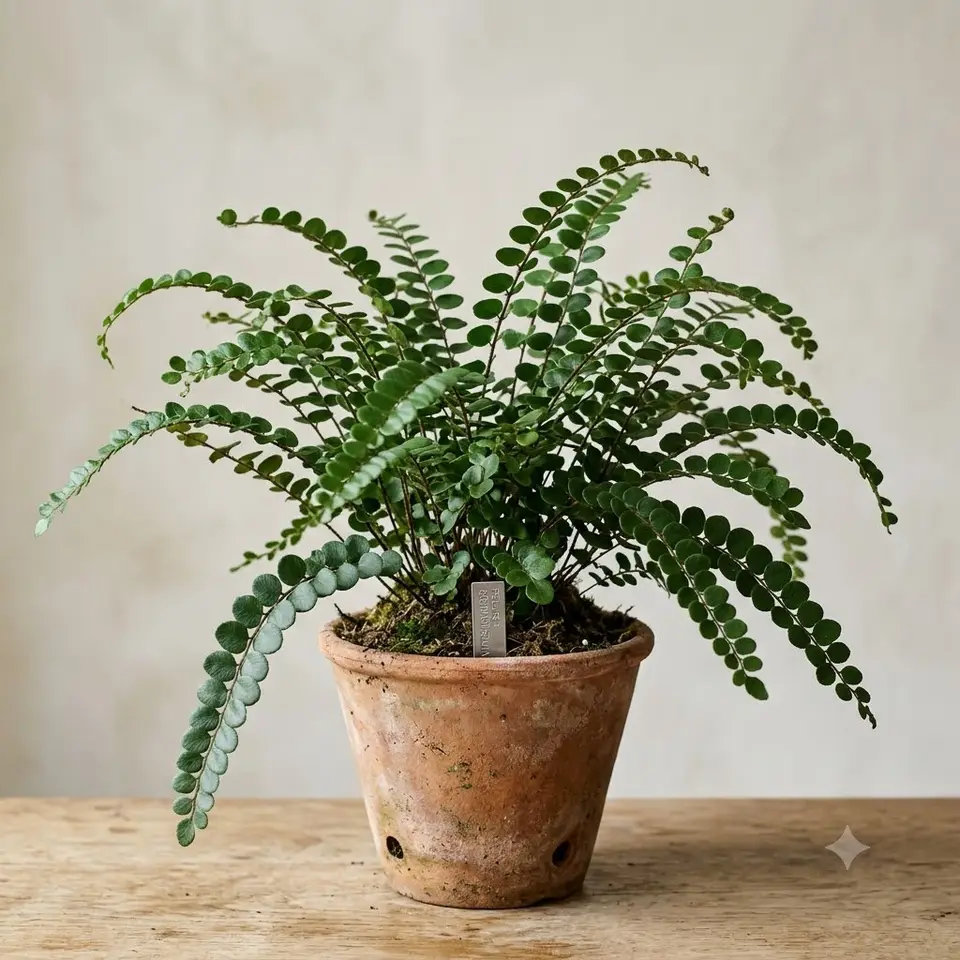 AI illustration
Overview
The button fern has round, leathery, button-like leaflets on wiry arching stems and is tolerant of drier air than the diva ferns and forgiving of ordinary rooms. If maidenhairs have broken your heart, this is the fern that forgives. (Pellaea rotundifolia.)
Origin & Natural Habitat
New Zealand, where it grows in rocky, well-drained sites - which is why it tolerates more neglect and drier air than tropical ferns.
Appearance
Wiry dark stems 20-30 cm long, lined with small round leathery 'button' leaflets; a compact, spreading habit that suits shelves and desks.
Why People Grow It - Qualities & Benefits
- More forgiving of dry air than most ferns
- Compact, tidy shelf plant
- Leathery leaves resist crisping
- Pet-safe (a true, non-toxic fern)
Care
Light: Bright indirect light; tolerates medium light. No harsh direct sun.
Water: Keep lightly, evenly moist but never soggy - it handles a bit more dryness than tropical ferns, but don't let it bone-dry.
Soil: Free-draining potting mix with some grit; unlike bog ferns it dislikes constant wetness.
Temperature & Humidity: 16-24°C; average home humidity is usually fine - its edge over fussier ferns.
Feeding: Half-strength balanced feed monthly in spring-summer.
Extra: The rounded leathery leaflets that make it tough also make it easy to over-water - the number-one killer here. When unsure, wait.
Propagation
Divide the rhizome/clump in spring; each section with roots and fronds re-establishes readily.
Common Problems & Pests
Crisping edges = too dry/too much sun; yellowing and rot = over-watering. Occasional scale.
Toxicity & Safety
Non-toxic to cats and dogs - a true fern and a pet-safe choice.
Best Suited For
- Beginners and forgiving-fern seekers
- Pet households (this fern is non-toxic)
- Shade and bright-indirect spots
- Terrariums and humid rooms
FAQ
Is the button fern easy?
By fern standards, yes - it tolerates drier air and a bit of neglect better than maidenhair or Boston ferns. Just don't over-water it.
Why are the edges crisping?
Usually too dry or too much direct sun - move it out of harsh light and keep the soil evenly (not heavily) moist.
Sources
Pet toxicity: checked against the ASPCA Animal Poison Control Center lists of toxic and non-toxic plants for cats and dogs, entry "Cliff Brake" (Pellaea rotundifolia): non-toxic to cats and dogs. Lists read on 10 October 2026.
Gear for growing button fern
Links go to Amazon or a partner store (such as Adagio Teas) and may earn us a commission at no extra cost to you. As an Amazon Associate we earn from qualifying purchases. We link gear types, not sponsors' picks: you choose the exact product.