Bulbophyllum Orchid
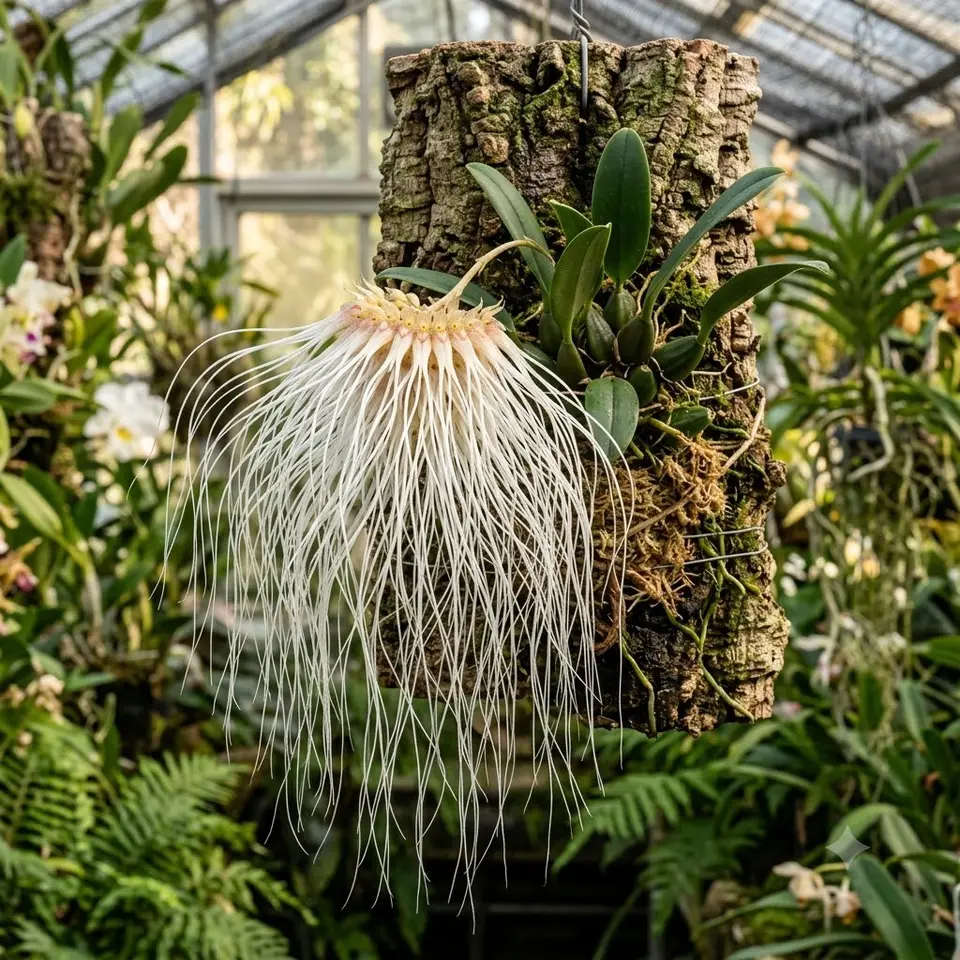
Bulbophyllum is an orchid genus of 2,000+ species with hinged, wobbling, fly-pollinated blooms, some smelling of carrion (medusae's tentacled showstoppers among them).
Last reviewed: October 2026
 AI illustration
 Overview
Bulbophyllum is an orchid genus of 2,000+ species with hinged, wobbling, fly-pollinated blooms, some smelling of carrion (medusae's tentacled showstoppers among them). This is orchid growing as cabinet-of-curiosities: warm, humid, mounted culture for collectors bored of pretty. (Bulbophyllum.)
Origin & Natural Habitat
Pantropical - the largest orchid genus on earth, densest in Southeast Asia and New Guinea's warm wet forests.
Appearance
Creeping rhizomes with single-leaf pseudobulbs; blooms from wobbling single 'hinged tongues' to medusae's fireworks of threadlike tails; colors and (often meaty) scents evolved for flies.
Why People Grow It - Qualities & Benefits
- The strangest flowers in the family, full stop
- Collector depth: thousands of species
- Hinged lips that seesaw in the breeze
- Conversation pieces beyond any houseplant
Care
Light: Moderate-bright indirect; many are understory plants.
Water: Frequent - thin roots on creeping rhizomes like near-daily moisture in warmth with instant drainage: mounted or basket culture shines.
Potting medium: Mounts (cork/fern) or shallow baskets of moss - the rambling rhizome hates deep pots.
Temperature & Humidity: Most commonly grown species: warm 18-30°C, humidity 60%+; they're greenhouse/cabinet plants in dry homes.
Feeding: Dilute frequent feeding in growth.
Rest & rebloom: Species-dependent; the common warm growers run near-continuous. Bloom smells are... an event - site medusae away from dinner guests.
Propagation
Rhizome divisions with several bulbs; keikis on some.
Common Problems & Pests
- Dry-home desiccation of thin roots
- Some blooms genuinely stink (feature, warning, both)
- Sprawl outgrows mounts: remount, don't confine
- Species care varies: research your exact one
Toxicity & Safety
Orchids are non-toxic to cats and dogs - one of the safest flowering houseplant families.
Pros & Cons
Pros
- Peak botanical strangeness
- Deep collecting rabbit hole
- Vigorous once suited
Cons
- Humidity infrastructure helps a lot
- Carrion notes on bloom days
- Not a beginner's neat pot-plant
Best Suited For
- Orchidarium and greenhouse keepers
- Species collectors
- Lovers of the weird
- Mounted-culture enthusiasts
FAQ
Do they all smell bad?
No - the carrion perfume belongs to the fly-pollinated showpieces (medusae, phalaenopsis-the-species). Many are neutral; a few even please. Bloom-day ventilation solves social issues.
Why do the lips wobble?
Hinged lips seesaw with breeze and visiting flies, tipping pollinators into the column - a mechanical trap in slow motion, mesmerizing to watch.
Gear for growing bulbophyllum orchid
Links go to Amazon or a partner store (such as Adagio Teas) and may earn us a commission at no extra cost to you. As an Amazon Associate we earn from qualifying purchases. We link gear types, not sponsors' picks: you choose the exact product.